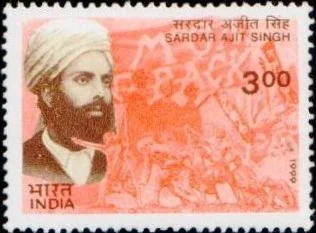
Sardar Ajit Singh (1881-1947)
Technical Data
| Stamp Set | India's Struggle for Freedom |
|---|---|
| Date of Issue | August 15, 1999 |
| Denomination | Rs. 3 |
| Quantity | 400,000 |
| Perforation | comb 13½ x 13 |
| Printer | Security Printing Press, Nashik |
| Printing Process | Photogravure |
| Watermark | No Watermark |
| Colors | Multicolor |
| Credit (Designed By) | Maj. S. Ramachand |
| Catalog Codes |
Michel IN 1694 Stamp Number IN 1758 Yvert et Tellier IN 1461 Stanley Gibbons IN 1857 |
| Themes | Famous people | Freedom Fighters | Headgear | Men | Revolutionaries |
A Revolutionary Honoured in India’s Struggle for Freedom Stamp Series
India’s freedom struggle was a powerful movement that united people across the nation in the pursuit of independence. Spanning nearly a century, it gave rise to courageous leaders who challenged colonial rule and inspired mass resistance. To honour these heroes, the Department of Posts has issued a series of commemorative stamps celebrating their contributions.
Early Life and Rise as a Revolutionary
Sardar Ajit Singh (d. 1947), a prominent freedom fighter from Jalandhar district in Punjab, emerged as a powerful voice against British colonial policies. He gained national attention in 1907 through a fiery speech in Rawalpindi, where he strongly opposed the British government’s increased land revenue policies.
His activism led to his arrest and deportation to Mandalay in Burma (now Myanmar), where he was imprisoned for six months. However, this did not deter his revolutionary spirit.
Contribution to the Freedom Movement
After his release, Ajit Singh intensified his efforts to mobilize resistance against British rule. He actively contributed to the revolutionary movement through publications such as Peshwa, which was later banned by the British authorities. Undeterred, he continued publishing under different names like Bharat Mata and Sahaik to spread nationalist ideas.
He also founded the Bharat Mata Society, a revolutionary organization aimed at uniting Indians against colonial rule. Facing the threat of re-arrest, he left India and continued his struggle from abroad, expanding his activities to Persia, Europe, South America, and the United States.
During the Second World War, he was imprisoned in Italy and Germany. Despite these hardships, he remained committed to India’s independence.
Final Years and Legacy
After years in exile and imprisonment, Sardar Ajit Singh was finally allowed to return to India. In a poignant moment of history, he passed away on the very day India achieved independence in 1947. His final words, “Thank God my mission is fulfilled,” reflect his lifelong dedication to the nation.
He was also the uncle of Bhagat Singh, one of India’s most iconic freedom fighters, further highlighting his influence on the revolutionary movement.
Commemorative Postage Stamp Recognition
To honour his immense contribution, the Department of Posts issued a commemorative postage stamp titled:
“Sardar Ajit Singh Sandhu – India’s Struggle for Freedom Series”
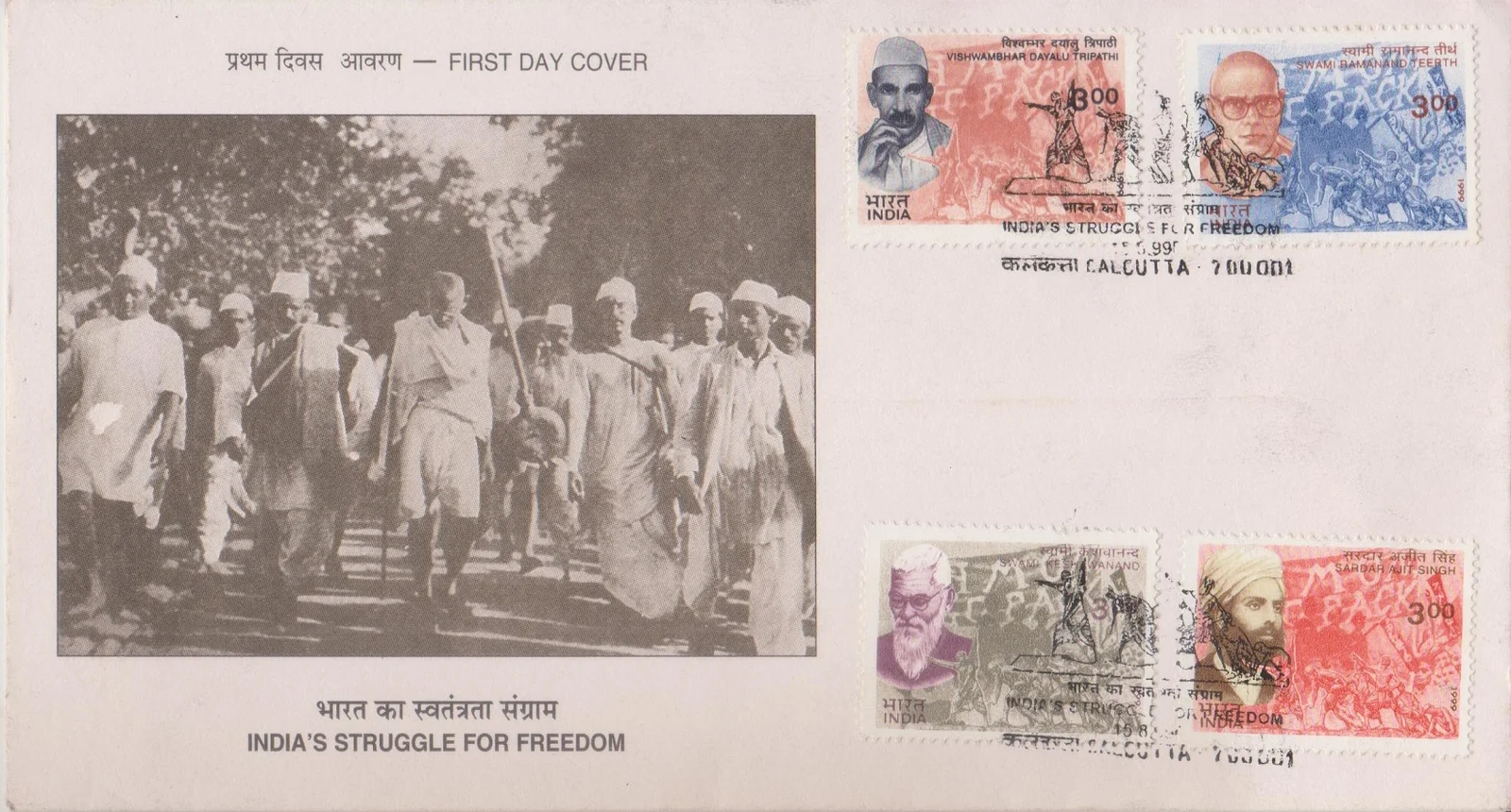
This stamp symbolically represents his role and sacrifices in India’s fight for independence. The First Day Cover of the stamp features a powerful depiction of the Dandi March, one of the most iconic events of the freedom struggle.
Remembering a National Hero
Sardar Ajit Singh’s life remains a testament to courage, sacrifice, and unwavering patriotism. His contributions, both within India and abroad, played a crucial role in strengthening the freedom movement.
The commemorative stamp serves as a tribute to his enduring legacy and reminds future generations of the sacrifices made in the journey toward a free India.
First Day Cover