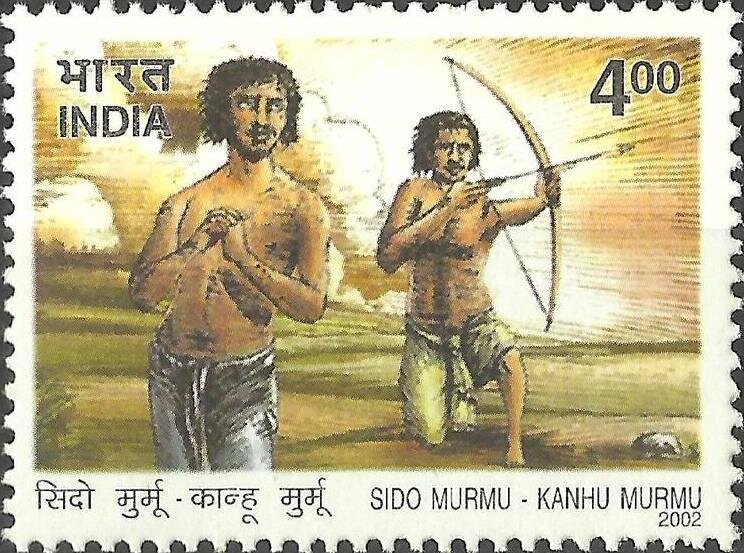
Sido Murmu and Kanhu Murmu Commemoration
Technical Data
| Date of Issue | April 6, 2002 |
|---|---|
| Denomination | Rs. 4 |
| Quantity | 400,000 |
| Perforation | comb 13¼ x 13 |
| Printer | Eagle Press Ltd. |
| Printing Process | Offset Lithography |
| Watermark | No Watermark |
| Colors | Multicolor |
| Credit (Designed By) | Shri Kamleshwar Singh |
| Catalog Codes |
Michel IN 1898 Stamp Number IN 1951 Yvert et Tellier IN 1663 Stanley Gibbons IN 2063 WADP Numbering System - WNS IN010.02 |
| Themes | Archery | Commemoration | Famous people | Hands | Men | Revolutionaries |
The Santal Hul (1855–57) stands as a heroic chapter in India’s long struggle for freedom. It was led by the brave Murmu brothers—Sido Murmu and Kanhu Murmu—who mobilized the Santal community against British colonial rule and its oppressive systems.
Background of the Revolt
The roots of the uprising lay in the exploitation that followed the expansion of the East India Company in India. Indigenous communities, especially the Santals, were subjected to harsh treatment by moneylenders, traders, and revenue collectors who acted as agents of colonial control.
In the Santal Parganas, resentment had been building since the early 19th century due to land alienation, heavy taxation, and social injustice. The arrival of Sido and Kanhu Murmu, young and charismatic leaders from Bhognadih, gave direction and strength to this growing unrest.
Outbreak of the Uprising
On 30 June 1855, under the leadership of the Murmu brothers, thousands of Santals gathered and declared themselves free from British authority. They took a solemn oath to fight against colonial rulers and their collaborators.
The revolt escalated on 7 July 1855, when a police agent attempted to arrest the leaders. The enraged Santals retaliated, killing the agent and his men. This incident ignited a widespread rebellion, quickly turning into a full-scale confrontation with British forces.
Course of the Rebellion
Initially, the Santals achieved remarkable success under the leadership of Sido and Kanhu. They captured vast territories stretching from Colgong (Kahalgaon) to the Rajmahal Hills, and as far south as Raniganj and Sainthia.
However, their resistance eventually faced the overwhelming military power of the British. The British Indian Army launched brutal operations to suppress the uprising. Despite their courage and determination, the Santals were overpowered.
It is believed that Sido Murmu was captured through treachery, while Kanhu Murmu was arrested after an encounter at Uparbanda. Both were later killed in captivity. By 1856, the rebellion had been largely suppressed, though sporadic resistance continued into 1857.
Legacy and Impact
Though the revolt was crushed, the Santal Hul left a lasting legacy. It exposed the injustices of colonial rule and led to administrative reforms, including the enactment of the Santal Parganas Tenancy Act, aimed at protecting tribal land rights.
The uprising remains a symbol of tribal resistance, courage, and sacrifice, and occupies a significant place in India’s freedom movement.
Commemorative Postage Stamp
To honour the valiant martyrs, India Post issued a commemorative postage stamp dedicated to Sido Murmu and Kanhu Murmu.
This stamp pays tribute to their leadership and immortalizes their contribution to India’s struggle for independence, reminding future generations of their bravery and sacrifice.
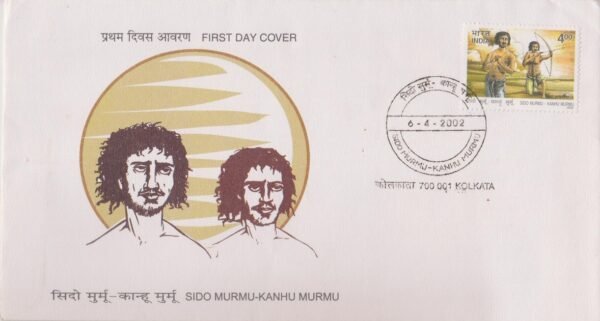
First Day Cover