
Spices of India
Technical Data
| Date of Issue | April 29, 2009 |
|---|---|
| Denomination | Rs. 40 |
| Quantity | 200,000 |
| Perforation | 13 |
| Printer | India Security Press, Nasik |
| Printing Process | Photo Gravure |
| Watermark | No Watermark |
| Colors | Multicolor |
| Credit (Designed By) | Mr. Suresh Kumar |
| Catalog Codes |
Michel IN BL68 Stamp Number IN 2321f Stanley Gibbons IN MS2588 WADP Numbering System - WNS IN024MS.2009 |
| Themes | Food | Herbs and Spices |
Stamps in this Miniature Sheet
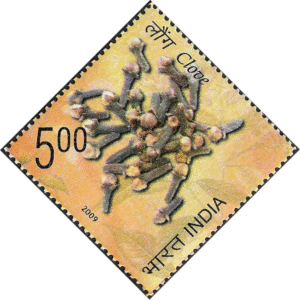
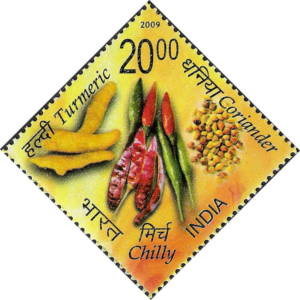
The Spice Bowl of the World
India, home to more than 50 varieties of spices grown across diverse agro-climatic zones—from tropical to temperate—rightly earns the title “Spice Bowl of the World.” With an estimated production of 2.7 million tonnes and exports of nearly 0.25 million tonnes to over 150 countries, India accounts for more than 45% of the global spice trade in both value and volume.
For centuries, Indian spices have shaped global trade, exploration, diplomacy, and cuisine. They inspired navigators to discover sea routes, connected East and West through commerce, and became symbols of wealth, prestige, and cultural exchange.
A Glorious History of Indian Spices
The story of spices is interwoven with romance, bravery, traditions, rivalries, and exploration. From royal kitchens to international markets, spices were once prized treasures. Monarchs considered exotic spices as marks of glamour and grandeur.
It was the quest for black pepper—often called “black gold”—that brought Portuguese explorer Vasco da Gama to Kozhikode (Calicut) in 1498, opening a new chapter in global trade history.
Indian spices continue to stand apart due to their unique aroma, composition, flavor, and quality shaped by favorable soil and climatic conditions.
Major Spices of India
Pepper – The King of Spices
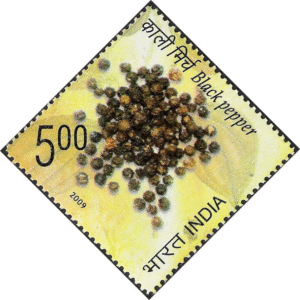
Piper nigrum is indigenous to India and produces black pepper from its dried berries. The vine can grow up to ten feet tall, and the berries are harvested about nine months after flowering.
- Black Pepper: Plucked green and dried until black
- White Pepper: Outer skin removed after soaking
- Green Peppercorns: Immature berries preserved in brine or freeze-dried
Pepper is a universal condiment used worldwide. Its oils and oleoresins are used in beverages, pharmaceuticals, processed foods, and cosmetics.
Cardamom – The Queen of Spices
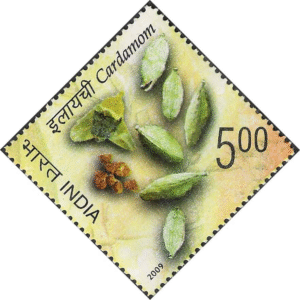
Elettaria cardamomum is a tropical plant from the ginger family. Its aromatic seeds are enclosed in small green pods.
Cardamom is widely used in:
- Indian curries and biryanis
- Middle Eastern Arabic coffee
- Scandinavian bakery products
Cardamom oil from India is a valued ingredient in international food and fragrance industries.
Cloves – The Fragrant Flower Bud
Cloves are the dried, unopened flower buds of Syzygium aromaticum. Though grown in Madagascar, Malaysia, Sri Lanka, and India, Indian cloves are known for their quality.
Cloves are used in:
- Pharmaceuticals
- Beverages and confectionery
- Indonesian kretek cigarettes
- Hygiene and medicinal products
Clove oil is a prized ingredient in food processing and healthcare industries.
Turmeric – The Golden Spice of India
Derived from the rhizome of Curcuma longa, turmeric is one of India’s most important spices. India is the world’s largest producer of turmeric.
Often called “Indian Saffron,” turmeric:
- Adds color and flavor to curries
- Acts as a natural dye (curcumin extract)
- Possesses significant therapeutic properties
- Is widely used in food, cosmetics, and medicine
Its mildly aromatic, slightly bitter flavor makes it indispensable in Indian and Southeast Asian cuisine.
Coriander – The Essential Curry Ingredient
Coriander seeds come from Coriandrum sativum, a member of the parsley family.
Used extensively in:
- Curry powders
- Sausages and processed foods
- Beverages
- Industrial oil extraction
India is one of the largest producers of coriander, valued for its mild citrus aroma and flavor.
Chilli – The Fiery Flavor
Chillies belong to the Capsicum family and are widely cultivated in India, with over 50 distinct varieties differing in color and pungency.
Also known as red pepper or cayenne pepper, chillies:
- Provide natural color and heat
- Supply oleoresins for food and non-food industries
- Are widely used in spice blends and processed products
Indian chillies are globally recognized for their rich color and sharp heat profile.
Miniature Sheet on Spices of India
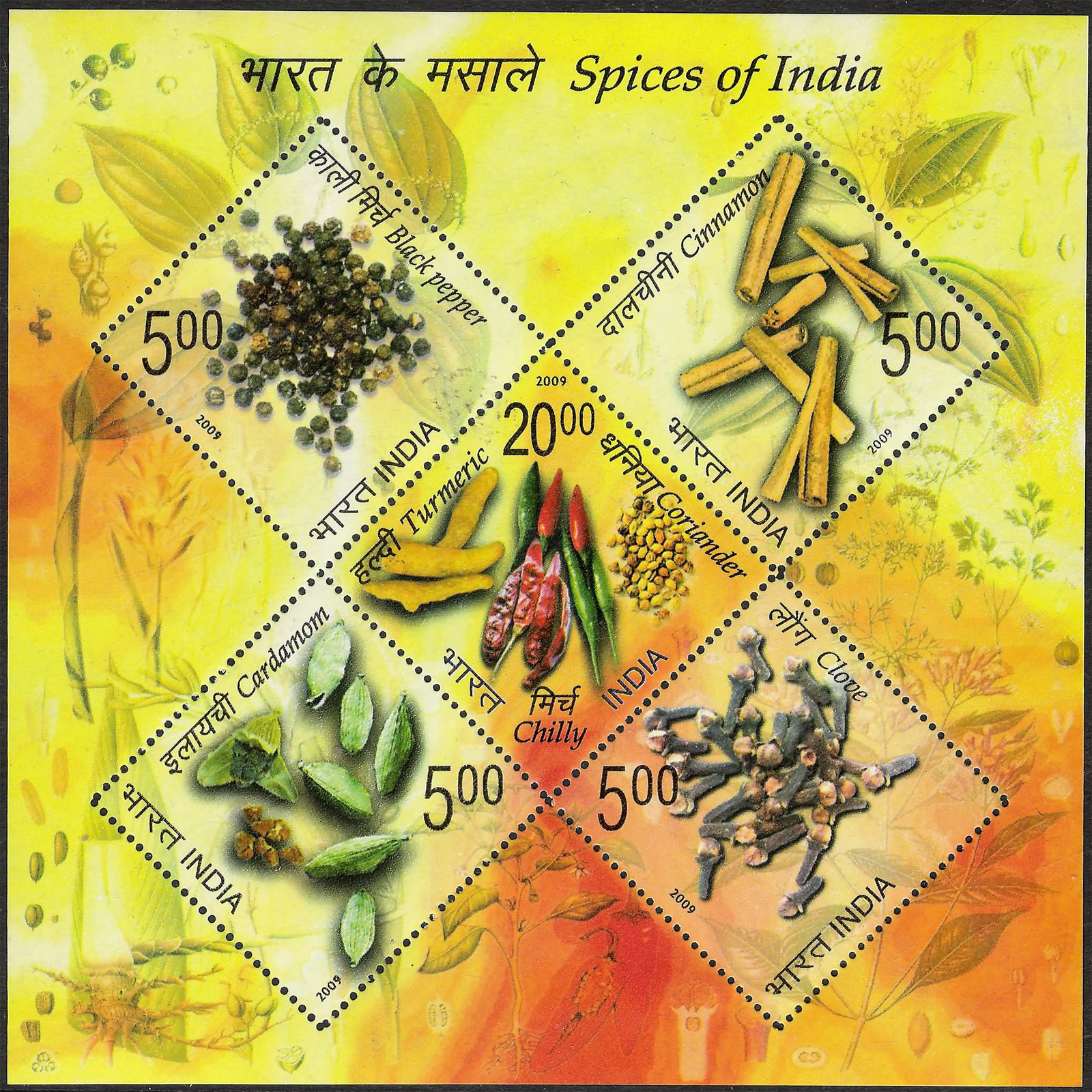
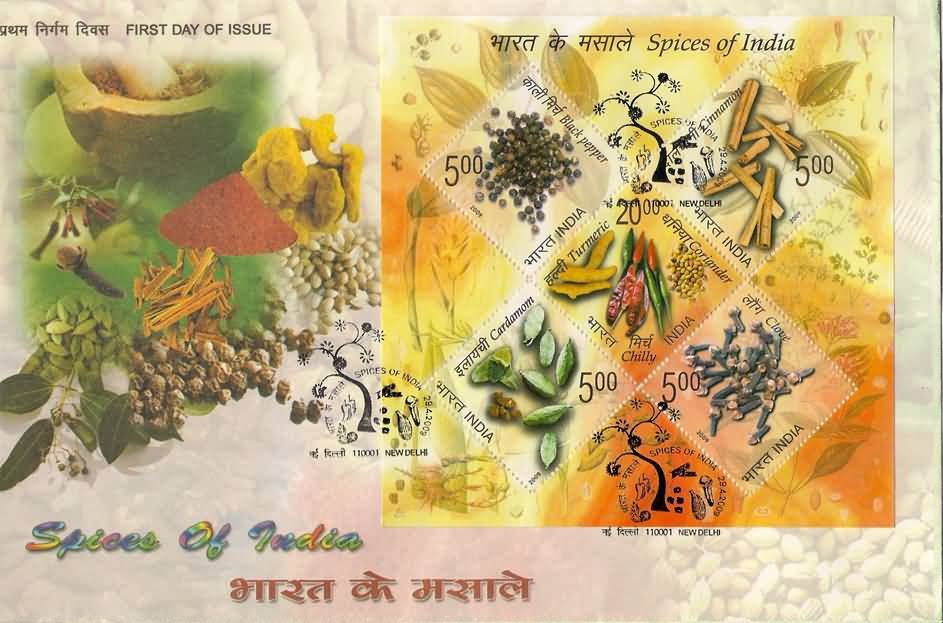
To celebrate India’s rich spice heritage and its global contribution to trade and cuisine, India Post proudly issued a Miniature Sheet consisting of five commemorative postage stamps on “Spices of India.”
These stamps honor the agricultural excellence, historical significance, and international prominence of Indian spices, showcasing their enduring importance in global commerce and culture.
India: The Global Leader in Spices
With its diverse climate, fertile soil, and centuries-old cultivation practices, India continues to dominate the global spice trade. Indian spices are not only culinary essentials but also raw materials, natural preservatives, color agents, medicinal ingredients, and industrial bases.
From ancient trade routes to modern export markets, the legacy of Indian spices remains vibrant—flavoring dishes, healing traditions, and shaping economies worldwide.
First Day Cover
Leave a Comment
You must be logged in to post a comment.