
Black Pepper

Technical Data
| Date of Issue | April 29, 2009 |
|---|---|
| Denomination | Rs. 5 |
| Quantity | 400,000 |
| Perforation | 13 |
| Printer | India Security Press, Nasik |
| Printing Process | Photo Gravure |
| Watermark | No Watermark |
| Colors | Multicolor |
| Credit (Designed By) | Mr. Suresh Kumar |
| Catalog Codes |
Michel IN 2364 Stamp Number IN 2321a Stanley Gibbons IN 2583 WADP Numbering System - WNS IN020.2009 |
| Themes | Food | Herbs and Spices |
The King of Spices
Black Pepper is one of the most important and historically significant spices of India. Known as the “King of Spices,” black pepper has shaped global trade, inspired sea voyages, and played a vital role in India’s dominance in the international spice market. Indigenous to India, black pepper remains one of the country’s most valuable spice exports.
Botanical Origin and Characteristics
Black pepper is derived from the dried berries of Piper nigrum, a flowering vine that can grow up to ten feet tall. The berries are harvested about nine months after flowering.
Depending on processing methods, pepper is classified into:
- Black Pepper – Green berries dried until they turn black
- White Pepper – Outer skin removed after soaking
- Green Peppercorns – Immature berries preserved by freeze-drying or brining
Its sharp aroma and pungent taste come from piperine, the active compound responsible for its heat.
Historical Significance of Black Pepper
Black pepper once held immense value in global commerce and was often referred to as “Black Gold.” The desire to control the pepper trade led to the discovery of new sea routes.
The Portuguese explorer Vasco da Gama arrived in Kozhikode (Calicut) in 1498 in search of a direct sea route to India to trade in black pepper. This marked a turning point in world trade and maritime history.
For centuries, black pepper symbolized wealth, prestige, and economic power.
Culinary Uses of Black Pepper
Black pepper is a universal table condiment used across cuisines worldwide. It enhances:
- Soups and sauces
- Meat and vegetable dishes
- Marinades and spice blends
- Processed foods and snacks
Its versatility makes it one of the most widely consumed spices globally.
Industrial and Commercial Applications
Beyond culinary use, black pepper plays a major role in industrial applications. Its oils and oleoresins are used in:
- Food processing industries
- Beverage production
- Pharmaceuticals
- Cosmetic and personal care products
The spice serves as a natural flavor enhancer, preservative, and raw material for numerous formulations.
India’s Role in the Global Pepper Trade
India’s favorable tropical climate and centuries-old cultivation traditions have made it one of the leading producers of high-quality black pepper. The spice continues to be a major export commodity, contributing significantly to India’s share in the global spice trade.
Indian black pepper is globally recognized for its strong aroma, high oil content, and superior pungency.
Commemorative Postage Stamp
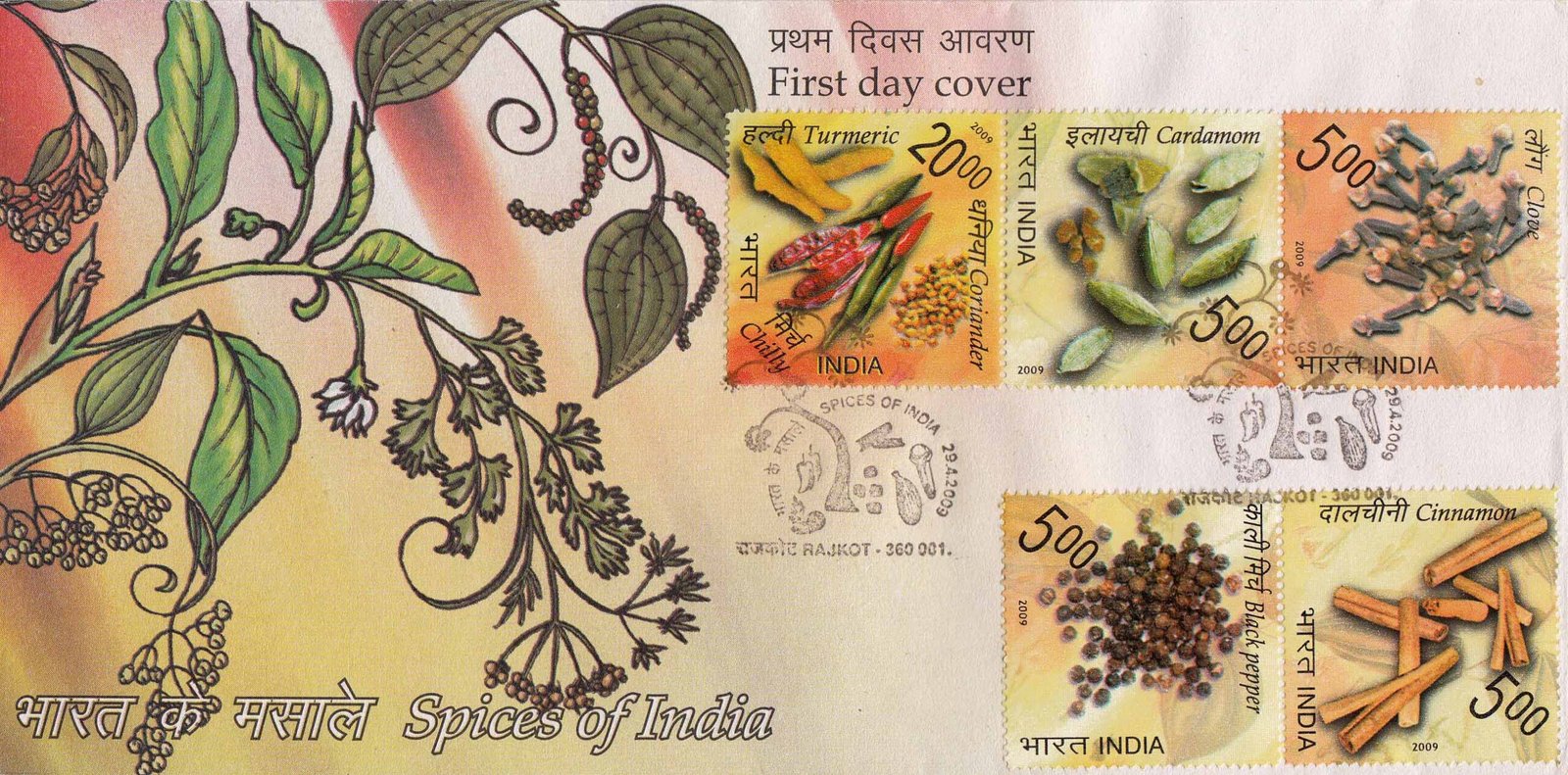
To honor India’s rich spice heritage, including black pepper, India Post issued a commemorative postage stamps on “Spices of India.”
This stamp celebrate the agricultural excellence, historical importance, and global influence of Indian spices, with black pepper holding a distinguished place among them.
Conclusion
Black pepper stands as a timeless symbol of India’s spice legacy. From ancient maritime trade routes to modern global markets, this powerful spice continues to define India’s identity as the Spice Bowl of the World.
First Day Cover
Leave a Comment
You must be logged in to post a comment.