
Spinning-wheel and Cloth
Technical Data
| Stamp Set | Inauguration of Republic of India |
|---|---|
| Date of Issue | January 26, 1950 |
| Denomination | 12 ANNAS |
| Quantity | 2,500,000 |
| Perforation | comb 13 |
| Printer | India Security Press,Nasik |
| Watermark | Star of India Multiple [Inv] |
| Colors | Claret |
| Catalog Codes |
Stanley Gibbons IN 332 |
| Themes | Special Occasions | Textile | Textile Industry |
Charkha and India’s Cottage Industry Symbol
The 12 Annas Stamp is an important issue in the Republic of India 1950 commemorative stamp series, released by India Post to mark the inauguration of the Republic of India on 26 January 1950.
Design and Symbolism
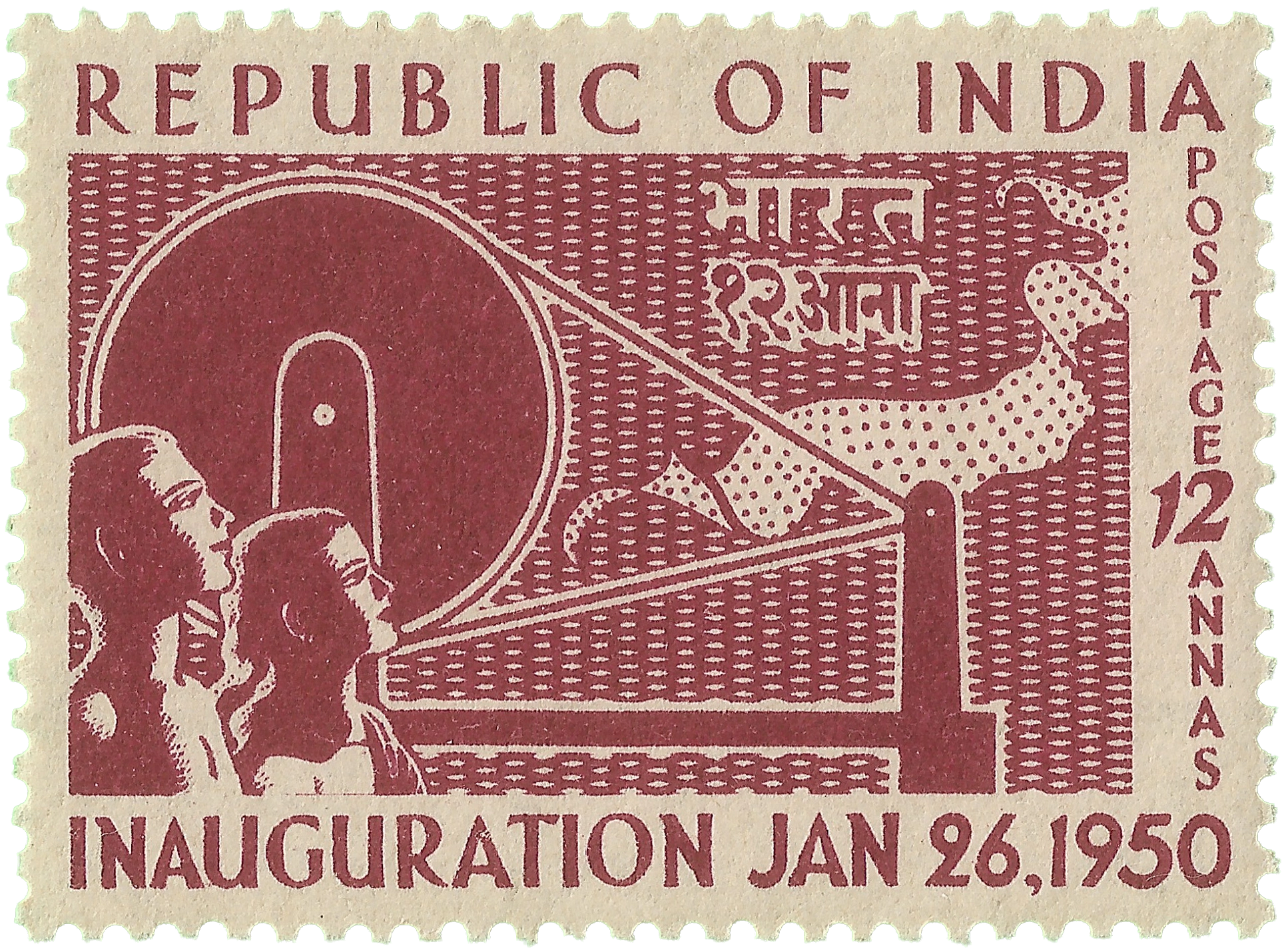
This stamp features an indigenous handloom (Charkha) as its central motif. The spinning wheel is placed prominently, while the background shows hand-spun and hand-woven cloth. Together, these elements symbolize the importance of India’s cottage industry and rural self-reliance.
The Charkha represents continuous progress and the idea of nation-building through self-sufficiency, particularly in rural India. It also reflects the economic ideals strongly associated with Mahatma Gandhi, who promoted hand-spinning as a symbol of independence and empowerment.
Purpose and Usage
The 12 annas stamp was issued specifically for:
- Foreign air mail
This made it the highest denomination in the series, intended for international postal communication.
Colour and Features
- Colour: Maroon
- Series: Republic of India Inauguration (1950)
- Inscription: “Republic of India” and “Inauguration January 26, 1950”
- Includes “POSTAGE” and value in English, along with “BHARAT” and denomination in Hindi (Devanagari script)
Philatelic Importance
The stamp holds great significance as it highlights India’s commitment to rural development, cottage industries, and economic self-reliance in the early years of independence. Its symbolic design makes it a prized item among collectors.
Conclusion
The 12 Annas Stamp beautifully represents India’s vision of progress rooted in traditional craftsmanship and rural industries. It remains a powerful philatelic symbol of the nation’s economic and cultural identity during the early Republic era.