
Stop Child Labor

Technical Data
| Date of Issue | December 26, 2006 |
|---|---|
| Denomination | Rs. 5 |
| Quantity | 1,600,000 |
| Perforation | comb13¼ |
| Printer | India Security Press, Nashik |
| Printing Process | Wet Offset |
| Watermark | No Watermark |
| Colors | Multicolor |
| Credit (Designed By) | Sh. Brahm Prakash |
| Catalog Codes |
Michel IN 2182 Stamp Number IN 2180b Yvert et Tellier IN 1947 Stanley Gibbons IN 2373 WADP Numbering System - WNS IN062.2006 |
| Themes | Children |
Child labour remains a serious social challenge, particularly in developing countries and rural areas where enforcing schooling and minimum age requirements for employment can be difficult. Poverty often compels families to send their young children to work in order to support household income. As a result, many children are deprived of education and childhood, becoming victims of exploitation and hazardous working conditions.
Recognizing the gravity of this issue, India has consistently followed a proactive policy to combat child labour through constitutional provisions, legislation, and developmental initiatives. The country has also demonstrated its commitment at the international level by ratifying several conventions of the International Labour Organization related to child labour, some of them as early as the first quarter of the twentieth century.
National Commitment to Children’s Rights
As a signatory to the United Nations Declaration on the Rights of the Child, India adopted the National Policy on Children in 1974. The policy reaffirmed the constitutional commitment to ensuring the welfare of children and declared that the State would provide adequate services for children both before and after birth, throughout their developmental years. The goal was to ensure their full physical, mental, and social development, enabling every child to enjoy balanced growth and equal opportunities.
Legislative Measures Against Child Labour
India’s efforts to address child labour began with early legislative initiatives such as the Children (Pledging of Labour) Act of 1933 and the Employment of Children Act of 1938. Over the years, additional laws were enacted to strengthen the protection of children in workplaces.
Various labour laws—including the Factories Act, Mines Act, and Plantation Labour Act—introduced provisions to regulate working hours, improve wages, and prohibit the employment of children in hazardous industries that could harm their health and development.
A landmark step was the enactment of the Child Labour (Prohibition and Regulation) Act. This legislation aimed to prohibit the employment of children below the age of fourteen in hazardous occupations and processes, while regulating working conditions in non-hazardous sectors. The Act also established penalties for violations and provided a uniform definition of “child” in related labour laws.
Further strengthening these measures, the Government of India issued notifications in July and October 2006 prohibiting the employment of children as domestic workers and in establishments such as tea shops, dhabas, restaurants, hotels, resorts, and recreational centres.
Rehabilitation and Social Initiatives
Alongside legislative action, the Government has implemented several programmes to rehabilitate child labourers. Under the National Child Labour Policy, numerous projects have been launched across the country to withdraw children from work and integrate them into education.
A major initiative under the National Child Labour Project (NCLP) involves establishing special schools where rescued child workers receive non-formal education, vocational training, and supplementary nutrition. These programmes help prepare children for mainstream education while supporting their overall development.
In addition, the government collaborates with non-governmental organizations (NGOs), providing financial assistance to run special schools and rehabilitation programmes, thereby encouraging broader participation from civil society.
Towards a Child Labour-Free Society
The challenge of child labour is deeply connected with poverty, illiteracy, and lack of opportunities. Therefore, legislation alone cannot eliminate it. A holistic and multi-pronged approach involving government agencies, communities, educational institutions, and civil society is essential.
Most importantly, the collective resolve of citizens to refuse child labour in any form is vital for ending this practice and safeguarding the rights and dignity of children.
Spreading Awareness Through Philately
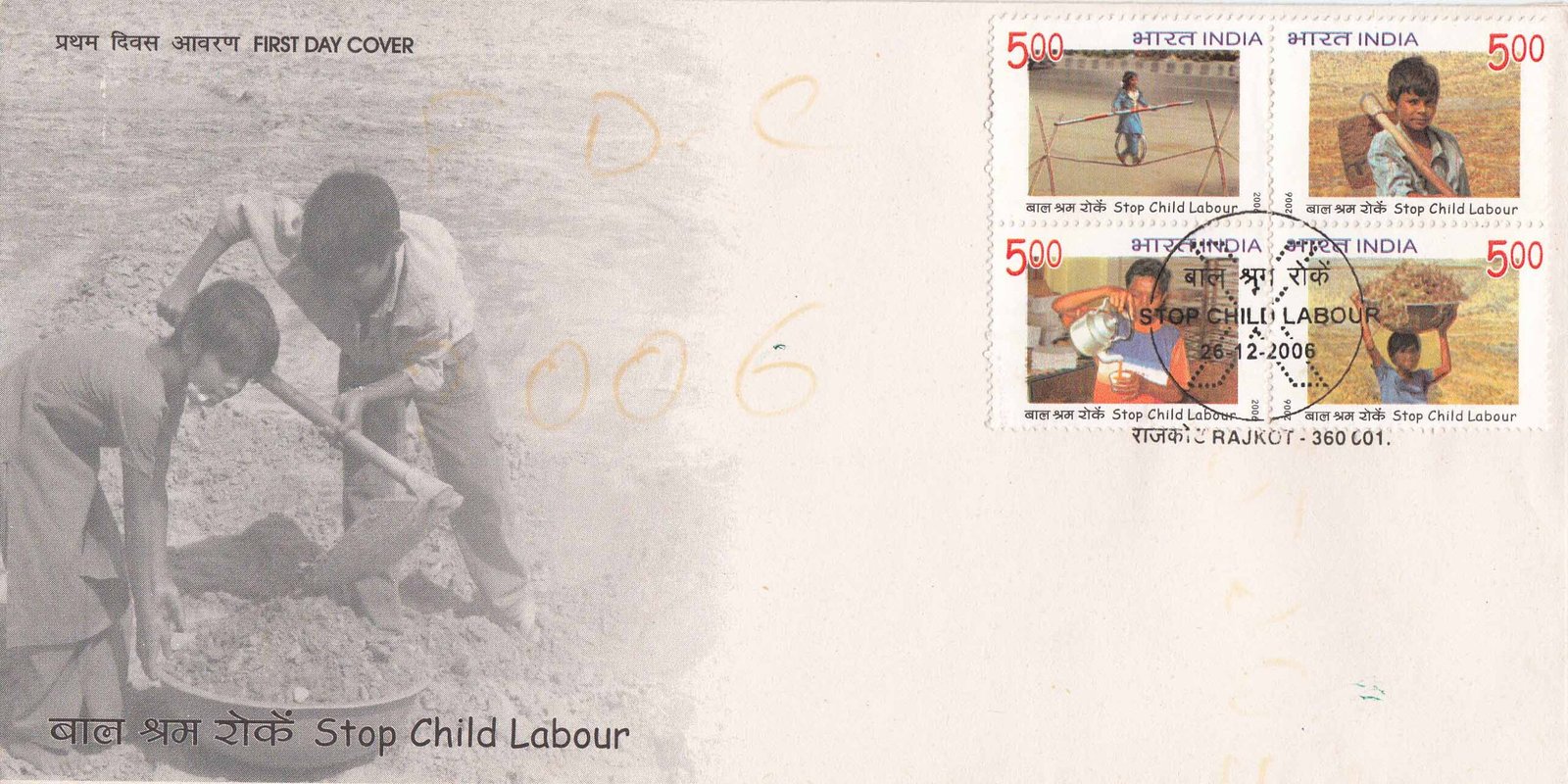
To highlight the importance of protecting children and promoting their rights, the Department of Posts issued a commemorative postage stamp dedicated to the message “Stop Child Labour.” This stamp serve as a powerful reminder of the nation’s commitment to creating a society where every child enjoys education, freedom, and a safe environment for growth.
First Day Cover
Leave a Comment
You must be logged in to post a comment.