
String Puppets
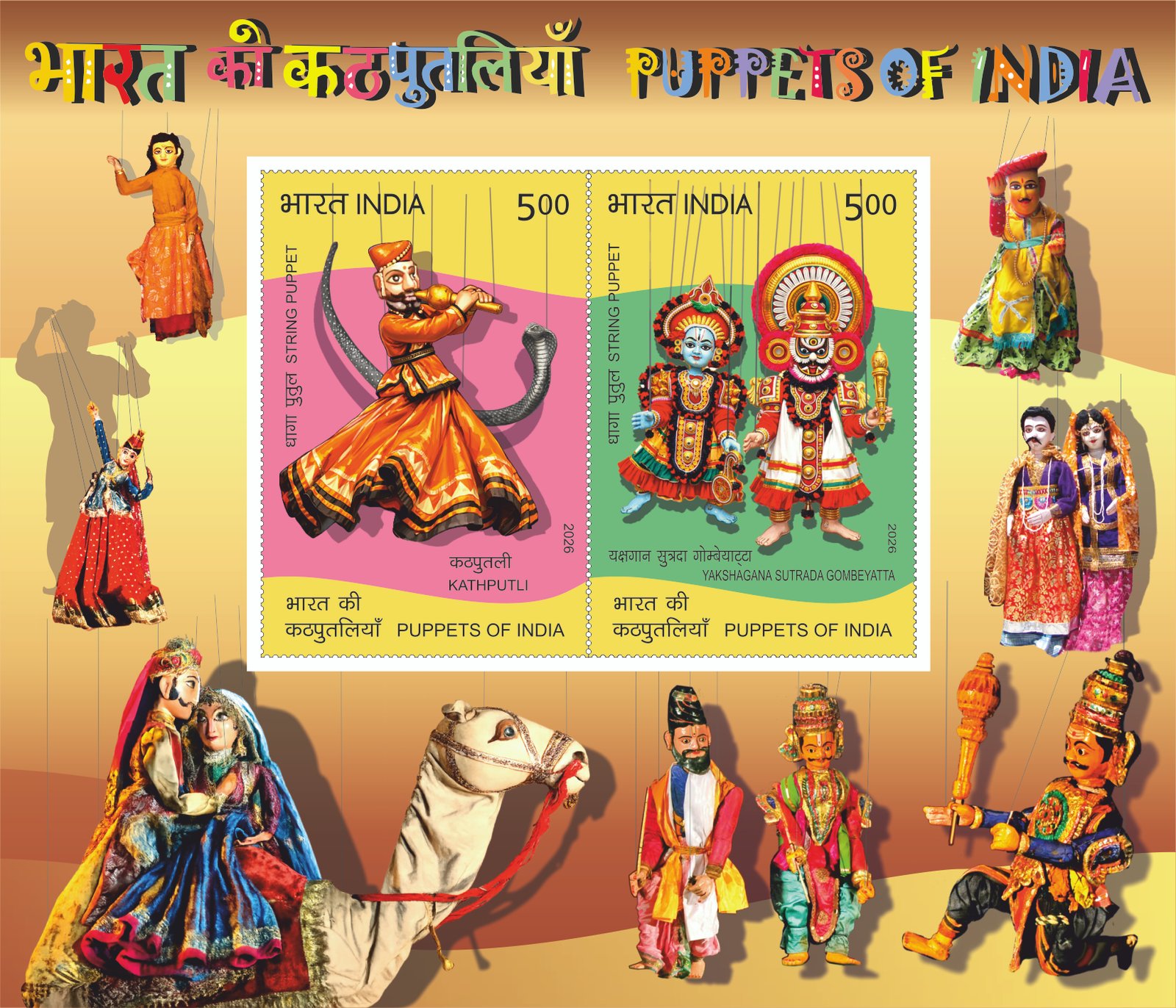
Technical Data
| Date of Issue | February 13, 2026 |
|---|---|
| Denomination | Rs. 10 |
| Quantity | 111,000 |
| Printer | Security Printing Press, Hyderabad |
| Printing Process | Wet Offset |
| Colors | Multicolor |
| Credit (Designed By) | Sh. Sankha Samanta |
| Catalog Codes |
Colnect codes IN 2026.02.13-04 |
| Themes | Puppets |
The Art of Marionette Tradition
String puppetry—one of the most widespread and visually striking forms of Indian puppetry—represents a vibrant confluence of sculpture, theatre, music, and storytelling. Controlled by strings attached to various parts of the puppet’s body, these marionettes are capable of graceful dance movements, dramatic gestures, and expressive characterization.
The concept of the string manipulator is deeply embedded in Indian thought. In classical Sanskrit theatre, the Sutradhara, or “holder of strings,” introduces and directs the play—symbolizing both artistic control and cosmic order. String puppetry thus carries philosophical resonance alongside its theatrical appeal.
Across India, string puppets traditionally enact episodes from the Ramayana, Mahabharata, and the Puranas, along with local legends and heroic ballads. Through these performances, puppeteers transmit cultural memory, moral values, and social commentary.
Distinctive Features of String Puppets
- Manipulation by Strings: Threads attached to the head, hands, and sometimes legs allow fluid and rhythmic movement.
- Carved Wooden Figures: Usually made from lightweight, durable wood.
- Elaborate Costumes: Reflect regional dress and theatrical styles.
- Dance-like Movements: Particularly suited for dramatic and rhythmic storytelling.
- Live Music and Narration: Performances include singers and percussionists who enhance the dramatic atmosphere.
String puppetry traditions are prevalent in Andhra Pradesh, Assam, Karnataka, Maharashtra, Manipur, Odisha, Rajasthan, Tamil Nadu, and West Bengal, each region contributing distinctive styles and narratives.
Major String Puppet Traditions
Kathputli (Rajasthan)
Kathputli, the most recognizable string puppet tradition of northern India, originates in Rajasthan. The term combines kath (wood) and putli (doll). Traditionally performed by the nats or bhats—wandering communities who perform during the dry season—Kathputli theatre flourished under royal patronage.
The repertoire celebrates legendary rulers and local heroes, especially Amar Singh Rathore of Nagaur, whose valor and dramatic death remain central themes. The puppets are known for their vibrant attire, bold facial features, and swift, swirling movements.
Sutrada Gombeyatta (Karnataka)
Sutrada Gombeyatta is Karnataka’s string puppet theatre, closely related in theme and style to the classical dance-drama tradition of Yakshagana.
Large wooden puppets—sometimes up to one metre high and weighing several kilograms—are manipulated with multiple strings. The puppets’ articulated hip and knee joints enable complex dance movements, reflecting Yakshagana’s dramatic costumes and musical style. Stories are primarily drawn from the Ramayana, Mahabharata, and Puranas.
Cultural and Artistic Significance
String puppetry embodies a synthesis of craftsmanship and performance. The making of the puppet—carving, painting, costume design—is as important as the theatrical presentation. The puppeteer serves as narrator, singer, and manipulator, animating inanimate figures into compelling characters.
Traditionally, the art is transmitted within families, with children learning by observing and assisting elders. Through generations, this practice has preserved not only epic narratives but also regional dialects, music traditions, and performance techniques.
Philatelic Recognition
In recognition of India’s rich puppetry heritage, India Post has issued a Miniature Sheet on Puppets of India, celebrating the diverse traditions of string, glove, rod, and shadow puppets.
This commemorative issue honours string puppetry as a dynamic and enduring form of artistic expression—one that continues to keep alive India’s epic storytelling traditions and vibrant cultural legacy.
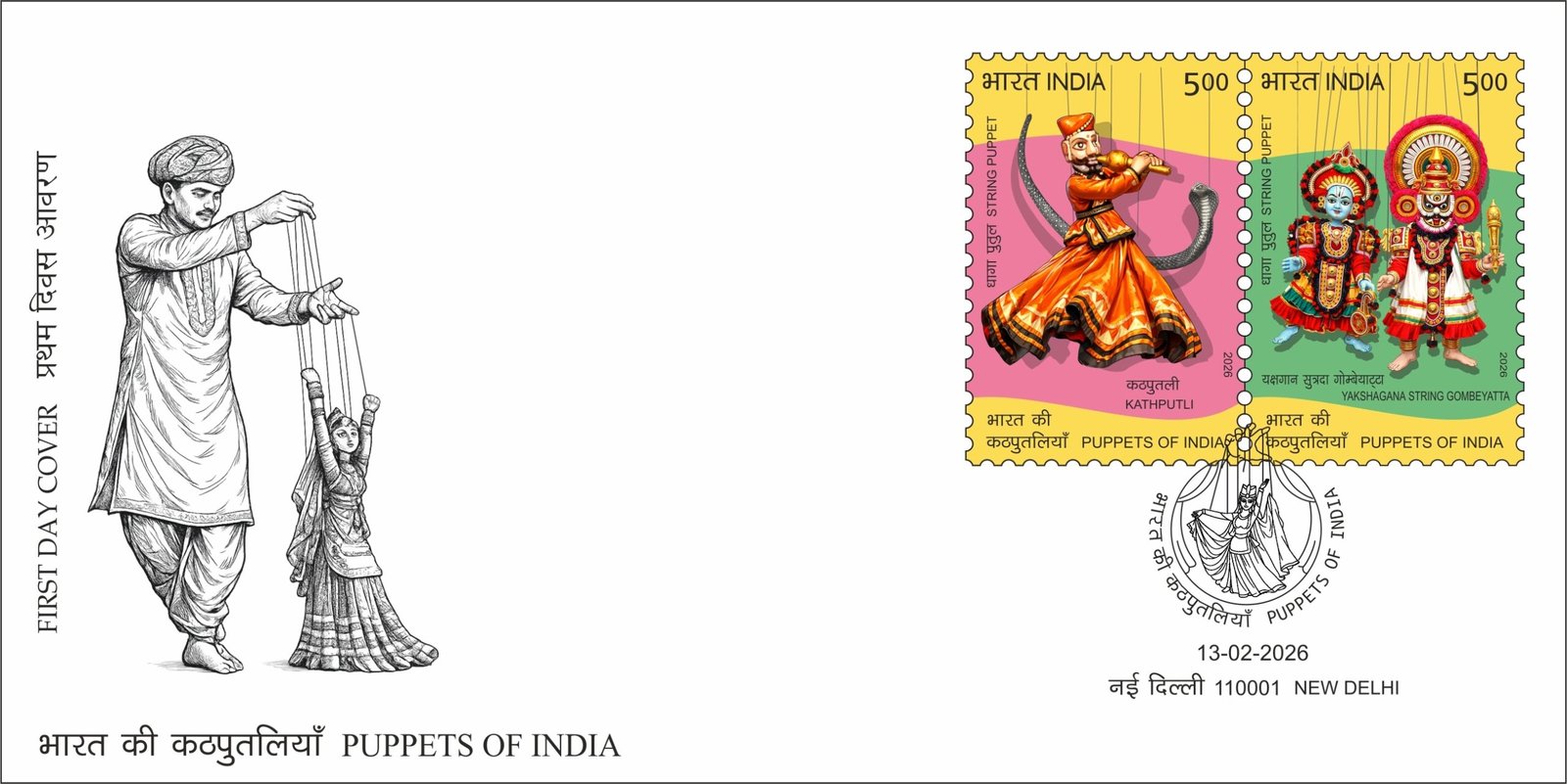
First Day Cover
Leave a Comment
You must be logged in to post a comment.