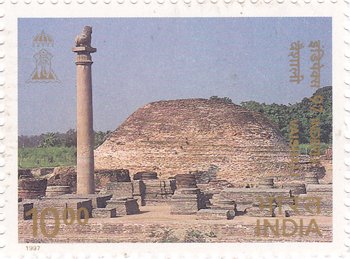
Centres of Culture and Tourism: Stupa and Pillar, Vaishali
Technical Data
| Stamp Set | INDIPEX 97 |
|---|---|
| Date of Issue | June 6, 1997 |
| Denomination | Rs. 10 |
| Quantity | 500,000 |
| Perforation | comb 13½ x 13 |
| Printer | Calcutta Security Printers Ltd |
| Printing Process | Offset Lithography |
| Watermark | No Watermark |
| Colors | Multicolor |
| Credit (Designed By) | |
| Catalog Codes |
Michel IN 1551 Stamp Number IN 1630 Yvert et Tellier IN 1324 Stanley Gibbons IN 1715 |
| Themes | Elephants | Logos | Philatelic Exhibitions | Temples |
Symbols of Ancient Heritage and Buddhism
Stupa and Pillar of Vaishali in Vaishali are among India’s most significant historical and spiritual monuments. These sacred structures reflect the region’s deep connection with Gautama Buddha and its remarkable place in ancient political history.
Vaishali is celebrated as one of the earliest republics in the world and an important center of Buddhist heritage.
Historical Importance of Vaishali
Vaishali was the capital of the ancient Licchavi Republic, widely recognized as one of the world’s earliest republican systems of governance.
The city became famous for:
- Democratic traditions in ancient India
- Association with Lord Buddha
- Important Buddhist events
- Rich archaeological heritage
The Ashokan Pillar of Vaishali
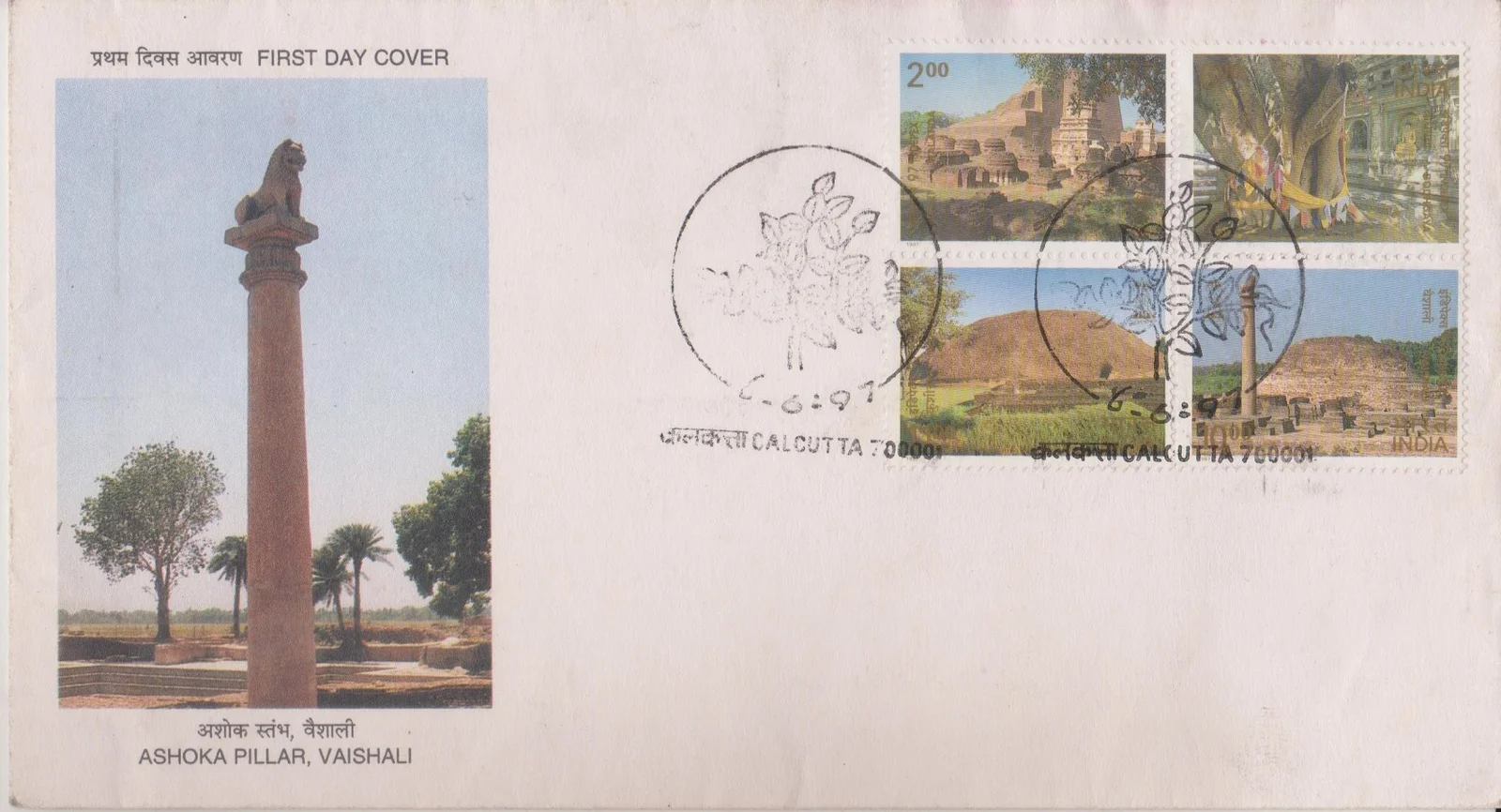
One of the most iconic monuments in Vaishali is the Ashokan Pillar of Vaishali, erected by Emperor Ashoka.
Significance of the Pillar
- Marks the site of the last prayer meeting of Gautama Buddha
- Represents Ashoka’s devotion to Buddhism
- Symbolizes peace, morality, and dharma
- Important archaeological landmark in Bihar
The pillar stands as a lasting reminder of India’s Buddhist legacy.
The Stupa of Vaishali
The Stupa of Vaishali is another sacred monument associated with Buddhist tradition.
Importance of the Stupa
- Built in memory of events connected to Buddha
- Important pilgrimage destination
- Symbol of reverence and spiritual remembrance
- Preserves the sacred history of Vaishali
The stupa continues to attract visitors, historians, and pilgrims from across the world.
Vaishali and Lord Buddha
Gautama Buddha visited Vaishali several times during his lifetime. The city played a major role in the spread of Buddhist teachings and is closely linked to his final years.
Because of this connection, Vaishali remains one of the most respected Buddhist pilgrimage sites in India.
Architectural and Cultural Value
The Stupa and Pillar of Vaishali represent:
- Ancient Indian engineering
- Mauryan artistic excellence
- Buddhist devotion
- Historical continuity
- Cultural pride of Bihar
These monuments offer valuable insight into India’s early civilization and spiritual history.
Vaishali in Philately
The Stupa and Pillar of Vaishali were featured in a commemorative stamp issued in the Indepex ’97 World Philatelic Exhibition stamp series.
The stamp honored Vaishali as a center of democracy, Buddhist faith, and India’s rich cultural heritage.
Legacy of Stupa and Pillar, Vaishali
Today, Stupa and Pillar of Vaishali continue to stand as timeless symbols of peace, governance, and spirituality.
They remind the world that ancient India contributed not only to religion and philosophy, but also to democratic ideals and cultural progress.
First Day Cover