
Tenneti Viswanatham (1896-1979)
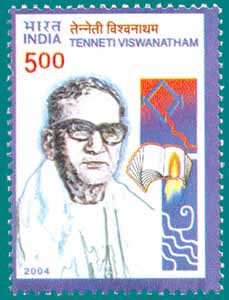
Technical Data
| Date of Issue | November 10, 2004 |
|---|---|
| Denomination | Rs. 5 |
| Quantity | 600,000 |
| Perforation | comb 13½ |
| Printer | Security Printing Press, Nashik |
| Printing Process | Photogravure |
| Watermark | No Watermark |
| Colors | Multicolor |
| Credit (Designed By) | Sh. Bharati Mirchandani Smt. Alka Sharma |
| Catalog Codes |
Michel IN 2058 Stamp Number IN 2085 Yvert et Tellier IN 1823 Stanley Gibbons IN 2238 WADP Numbering System - WNS IN044.04 |
| Themes | Anniversaries and Jubilees | Famous people | Men | Optical Instruments | Politicians |
Freedom Fighter and Statesman of Andhra Pradesh
Tenneti Viswanatham was a distinguished freedom fighter, scholar, and political leader who played a significant role in the political and social development of Andhra Pradesh. Known for his integrity, intellect, and commitment to public service, he left a lasting legacy in legislative governance, social reform, and cultural development.
Early Life and Education
Tenneti Viswanatham was born on 21 September 1895 in Lakkavaram, in Visakhapatnam District, to Gowripati Sastry and Chittemma. He suffered a personal tragedy early in life when his wife passed away soon after their marriage, when he was only sixteen years old. He chose not to remarry and devoted himself to public service.
He pursued higher education, earning a Master’s degree in English Literature and a Bachelor’s degree in Law. In 1921, he began practicing law in Madras, but soon abandoned his legal career to join the national freedom struggle.
Influence of National Leaders
Viswanatham was deeply influenced by several great thinkers and leaders, including Annie Besant, Sri Aurobindo, Rabindranath Tagore, and Mahatma Gandhi. Inspired by Gandhi’s call for national awakening, he joined the Non-Cooperation Movement in 1922, giving up his professional career.
He also served as a lecturer at Gujarat Vidyapith during 1922–1923.
Participation in the Freedom Struggle
Tenneti Viswanatham actively participated in several major movements against British rule. For his role in these struggles, he spent about five years in prison between 1930 and 1946.
He was imprisoned for participating in:
- Salt Satyagraha (1930)
- Individual Satyagraha (1940)
- Quit India Movement (1942)
Political Career
Viswanatham began his legislative career in 1937, when he was elected to the Madras Legislative Assembly from Visakhapatnam.
He later held several prominent political positions:
- Leader of the Opposition in the Madras Legislative Assembly (1951)
- Minister for Finance, Law, and Religious Endowments in the Andhra Legislative Assembly after the separation of Andhra from the Madras Presidency in 1953
- Leader of the Opposition in the Andhra Pradesh Legislative Assembly in 1962
- Member of the Lok Sabha in 1967
In these roles, he earned great respect for his insightful speeches, wit, wisdom, and deep understanding of public affairs.
Contributions to Development
Tenneti Viswanatham worked tirelessly for the development of Andhra Pradesh. Several major projects associated with the state’s progress are linked to his vision and advocacy, including:
- Prakasam Barrage at Vijayawada
- Nagarjuna Sagar Dam
- Establishment of Sri Venkateswara University
- Development of the Visakhapatnam Steel Plant
He also worked for the equitable distribution of waters from the Krishna River and Godavari River.
Intellectual and Social Contributions
An intellectual of exceptional calibre, Viswanatham prepared an 18-volume report on Zamindari Abolition, which became an important reference for modern land reform policies in India.
At the national level, he served as:
- Chairman of the Company Law Advisory Committee
- Chairman of the All India Coffee Board
- Member of several important administrative and legislative committees.
A staunch secularist, he opposed caste discrimination and supported social equality. He also donated land to the Bhoodan Movement.
Role During the Emergency
During the Indian Emergency 1975–1977, Tenneti Viswanatham strongly opposed the suspension of civil liberties. As the convenor of the movement for civil liberties led by Jayaprakash Narayan, he protested against the Emergency and was arrested under the Maintenance of Internal Security Act. He spent six months in prison during this period.
Literary and Cultural Interests
Viswanatham was not only a politician but also a scholar and writer. He was proficient in Vedic literature, Sanskrit, and Telugu, and was known as a poet, dramatist, and linguist.
He founded the literary forum Visakha Saraswata Vedika in 1960, which continues to promote literary activities and cultural enrichment.
Despite being offered honours such as the Tamrapatra, freedom fighters’ pension, and the Padma Bhushan, he declined them, adhering to his principle of simple living and high thinking.
Legacy
Tenneti Viswanatham passed away peacefully in Visakhapatnam on 10 November 1979 at the age of 84. His life remains a symbol of integrity, scholarship, and dedicated public service.
To honour his contributions to India’s freedom struggle and democratic institutions, India Post issued a commemorative postage stamp on his death anniversary, paying tribute to one of the most respected political leaders of Andhra Pradesh.
First Day Cover
