
Terracotta Temples of India

Technical Data
| Date of Issue | August 8, 2020 |
|---|---|
| Denomination | Rs. 49 |
| Quantity | 110,000 |
| Perforation | 14½ |
| Printer | Security Printing Press, Hyderabad |
| Printing Process | Wet Offset |
| Watermark | No Watermark |
| Colors | Multicolor |
| Credit (Designed By) | Ms. Gulistaan |
| Catalog Codes |
Michel IN BL230 Stamp Number IN 3230a Yvert et Tellier IN BF214 Stanley Gibbons IN MS3757 Phila-India IN 3724 |
| Themes | Architecture | Temples |
Stamps in this Miniature Sheet


Terracotta, or baked clay, has been in constant use since prehistoric times and is regarded as one of the oldest building materials known to humankind. In regions where stone was scarce, Indian architects and artisans transformed this limitation into an opportunity by crafting bricks and clay tiles embellished with vivid terracotta panels. These panels narrate episodes from mythology, epics and everyday life, giving rise to a distinctive and vibrant tradition of terracotta temple architecture in India.
Indralath Temple, Ranipur Jharial (Odisha)
The Indralath Temple at Ranipur Jharial is one of the tallest ancient brick temples in India. Standing at about 80 feet, including its sandstone platform, the temple is dedicated to Lord Shiva. The innermost sanctum houses a Shivalinga along with images of Lord Vishnu, Kartikeya and Uma–Maheshwara. According to belief, Lord Shiva was first worshipped at this site, making it an important centre of Shaivite devotion.
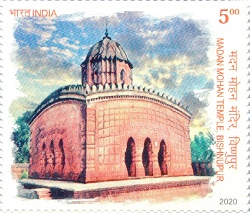
Madan Mohan Temple, Bishnupur (West Bengal)
Built in 1694 AD by the Malla king Durjan Singha, the Madan Mohan Temple is an Eka-Ratna style terracotta temple. It has a square base measuring 12.2 m × 12.2 m and rises to a height of 10.7 m. The temple features a traditional Bengali chala-style roof topped with a single tower. Its façade is richly decorated with terracotta plaques depicting epic and Puranic scenes, especially episodes from Krishna Leela.
Jor Bangla (Kesta Rai) Temple, Bishnupur
The Jor Bangla Temple, also known as the Kesta Rai Temple, was built in 1655 AD by Malla King Raghunath Singha. The structure resembles two traditional do-chala huts joined together, with a char-chala shikhara rising above. Measuring approximately 11.8 m × 11.48 m, the temple’s walls are adorned with elaborate terracotta sculptures portraying scenes from the epics, Krishna Leela, hunting scenes and contemporary social life.
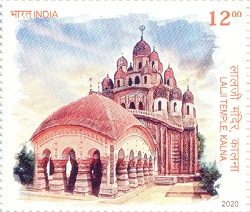
Lalji Temple, Kalna (West Bengal)
The Lalji Temple, built in 1739 AD by Braja Kishori Devi, is among the oldest surviving terracotta temples at Kalna. Dedicated to Radha and Krishna, the temple is notable for its 25 roof peaks. Miniature temples surrounding the base depict scenes from the Ramayana, while a striking yellow Garuda faces the main shrine, adding to the temple’s unique visual appeal.
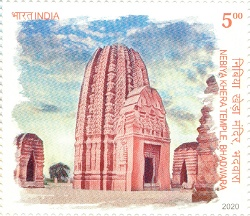
Nebiya Khera Temple, Bhadaura (Uttar Pradesh)
Dating back to the 9th–10th century AD, the Nebiya Khera Temple is built in the panchayatana style, comprising a central shrine and four subsidiary shrines. The central shrine is a fine example of the Latina shikhara (Nagara style) and houses a Shivalinga. Panels inside the sanctum are believed to depict Karttikeya and Veerbhadra. The subsidiary shrines feature low roofs and triangular entrances, reflecting early temple architectural experimentation.
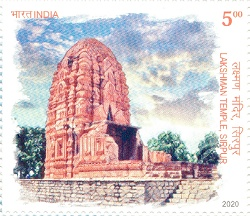
Lakshman Temple, Sirpur (Chhattisgarh)
The Lakshman Temple, a 7th century AD brick temple dedicated to Lord Vishnu, stands on a large stone jagati allowing circumambulation. The temple is renowned for its intricate carvings, including Anantashayi Vishnu, scenes from the Bhagavata Purana, and the ten avatars of Vishnu carved around the entrance. While primarily built of brick, stone is used around the sanctum, highlighting a refined blend of materials.
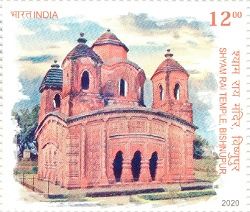
Shyam Rai Temple, Bishnupur
Built in 1643 AD by King Raghunath Singha, the Shyam Rai Temple stands on a low square platform and features a char-chala roof with a central shikhara. The four corner towers are square, while the central tower is octagonal, creating a distinctive closed roof form. The temple is celebrated for its extensive terracotta panels depicting Krishna Leela, Ramayana, Mahabharata, and vivid scenes of the social, economic and political life of the period.
Cultural Significance
Together, these terracotta temples represent a remarkable architectural and artistic tradition where baked clay was transformed into a storytelling medium. They stand as enduring symbols of regional craftsmanship, religious devotion and the creative ingenuity of Indian artisans.
Commemorative Postage Stamps
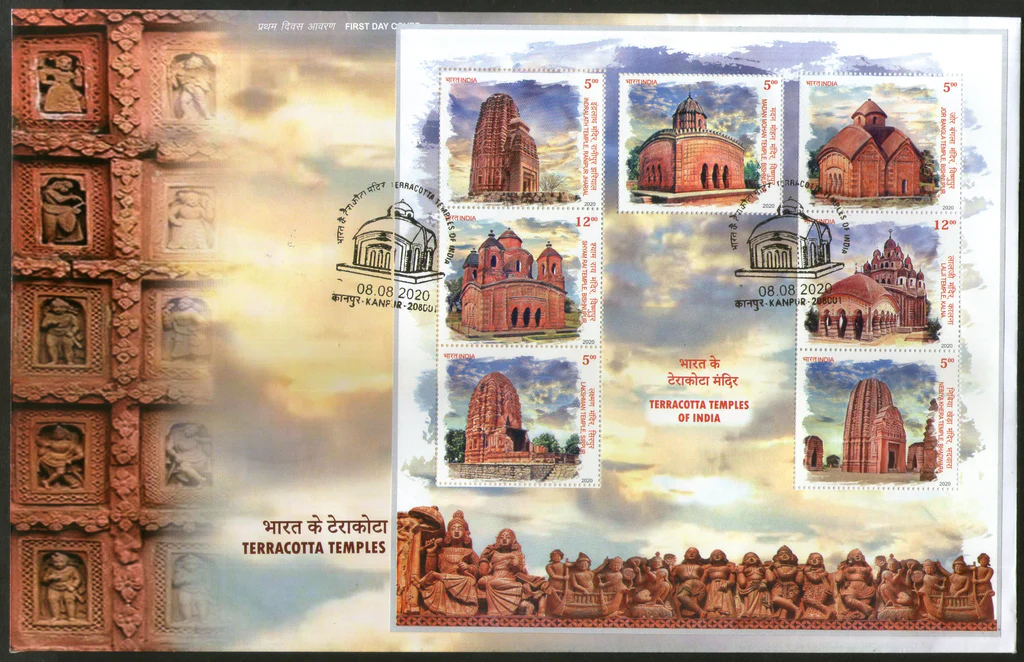
To celebrate this rich heritage, a Miniature Sheet consisting of 7 commemorative postage stamps has been issued on the Terracotta Temples of India, highlighting these architectural marvels and their enduring legacy.
First Day Cover
Leave a Comment
You must be logged in to post a comment.