The Khalsa Panth
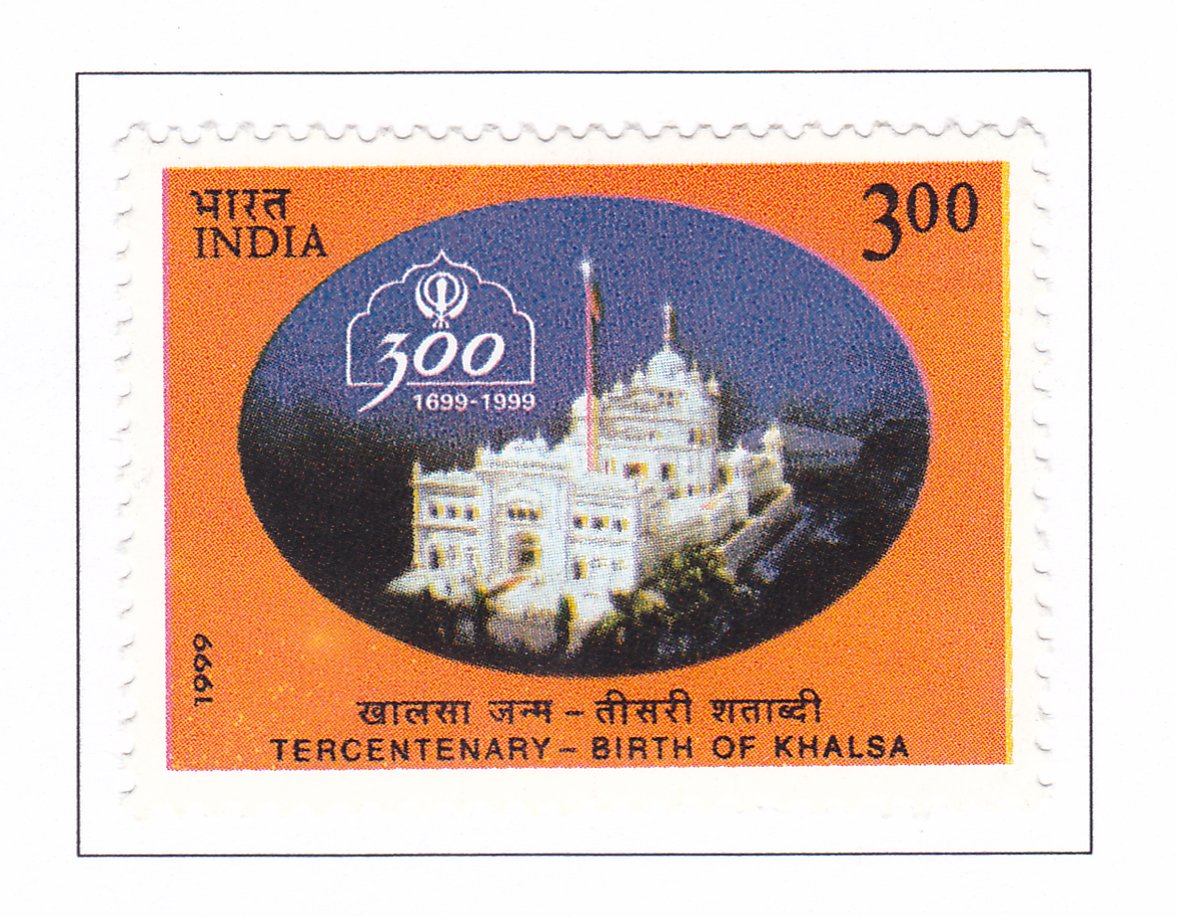
Technical Data
| Date of Issue | April 9, 1999 |
|---|---|
| Denomination | Rs. 3 |
| Quantity | 1,500,000 |
| Perforation | comb 13½ x 13 |
| Printer | Security Printing Press, Nashik |
| Printing Process | Photogravure |
| Watermark | No Watermark |
| Colors | Multicolor |
| Credit (Designed By) | |
| Catalog Codes |
Michel IN 1683 Stamp Number IN 1743 Yvert et Tellier IN 1450 Stanley Gibbons IN 1846 |
| Themes | Anniversaries and Jubilees | Architecture | Temples |
The Historic Birth of the Khalsa Panth in 1699
The Khalsa Panth, one of the most significant institutions in Sikh history, was founded by Guru Gobind Singh on the festival of Baisakhi in 1699. The creation of the Khalsa marked a turning point in Sikhism and gave rise to a community dedicated to courage, equality, justice, and spiritual discipline.
To commemorate 300 years of this historic event, the Department of Posts issued a special commemorative postage stamp on the Tercentenary of the Birth of the Khalsa.
Origins of Sikhism
Sikhism, one of the world’s youngest religions, was founded by Guru Nanak in 1469. After Guru Nanak, nine successive Sikh Gurus carried forward his message of universal love, peace, harmony, equality, and moral living.
The Sikh Gurus worked for the spiritual upliftment and moral regeneration of society. However, their teachings challenged the existing social order, including the caste system and the oppression practiced by feudal rulers.
As a result, the Sikh movement faced hostility from powerful groups who opposed equality and social reform.
Why Guru Gobind Singh Created the Khalsa
During the time of Guru Gobind Singh, the tenth Sikh Guru, oppression and injustice had become widespread. Tyranny by rulers and attacks on personal freedom made it necessary to defend the weak and resist injustice.
Guru Gobind Singh realized that it was essential to create a disciplined community of saint-soldiers who would combine spiritual strength with courage in battle.
For this purpose, he chose the festival of Baisakhi in 1699 to formally establish the Khalsa identity.
The Historic Baisakhi of 1699 at Anandpur Sahib
Guru Gobind Singh invited his followers from all over India to gather at Fort Kesgarh in Anandpur Sahib, Punjab, during the annual Baisakhi festival.
A large gathering of nearly eighty thousand people assembled to hear the Guru.
In a dramatic and unforgettable moment, Guru Gobind Singh unsheathed his sword and asked for volunteers willing to sacrifice their heads for the sake of Dharma.
One by one, five men came forward. These five volunteers later became known as the Panj Pyare, or the Five Beloved Ones.
The five came from different regions of India and different social backgrounds. Four of them belonged to communities considered oppressed by the caste system. Their participation symbolized Guru Gobind Singh’s rejection of caste distinctions and his vision of equality.
Formation of the Khalsa Panth
Guru Gobind Singh initiated the Five Beloved Ones through a new ceremony. He prepared Amrit, the sacred nectar of initiation, in a steel bowl using a double-edged sword.
After the initiation, the Guru established a new, casteless community known as the Khalsa Panth.
The members of the Khalsa were called God’s chosen people and became the foundation of a new social and spiritual order.
Guru Gobind Singh gave all male members of the Khalsa the common surname “Singh,” meaning “lion,” to symbolize courage and equality.
He also prescribed the Five Ks, the five visible symbols that gave the Khalsa a distinct identity:
- Kesh (uncut hair)
- Kangha (comb)
- Kara (steel bracelet)
- Kirpan (sword)
- Kachera (special undergarment)
These symbols continue to define the Khalsa identity today.
Guru Gobind Singh instructed the Khalsa to uphold the highest moral and ethical standards and to always stand against tyranny, injustice, and oppression.
“The Khalsa is the Guru, and the Guru is the Khalsa”
After initiating the Five Beloved Ones, Guru Gobind Singh did something extraordinary. He stood before them and asked to be initiated into the Khalsa himself.
After receiving initiation, he declared:
“From now on the Khalsa is the Guru, and the Guru is the Khalsa.”
This statement established the deep spiritual bond between the Guru and the Khalsa community.
The creation of the Khalsa transformed ordinary people into fearless defenders of truth, justice, and freedom.
Legacy of the Khalsa
The birth of the Khalsa inspired countless acts of courage, sacrifice, and heroism. Over the years, the Khalsa played an important role in resisting oppression and protecting the rights of the people.
In later periods, Sikhs made major contributions to India’s struggle for freedom from British rule. After independence, the Sikh community continued to contribute to India’s unity, strength, and development.
The ideals of the Khalsa continue to be reflected in the Sikh prayer “Sarbat da Bhala,” which means “welfare of all mankind.”
Tercentenary of the Khalsa Commemorative Stamp
The commemorative postage stamp issued by the Department of Posts honors the 300th anniversary of the birth of the Khalsa.
The stamp celebrates the vision of Guru Gobind Singh and the founding of the Khalsa Panth in 1699, one of the most important events in the history of Sikhism.
It stands as a tribute to the Sikh values of equality, sacrifice, courage, faith, and service to humanity.
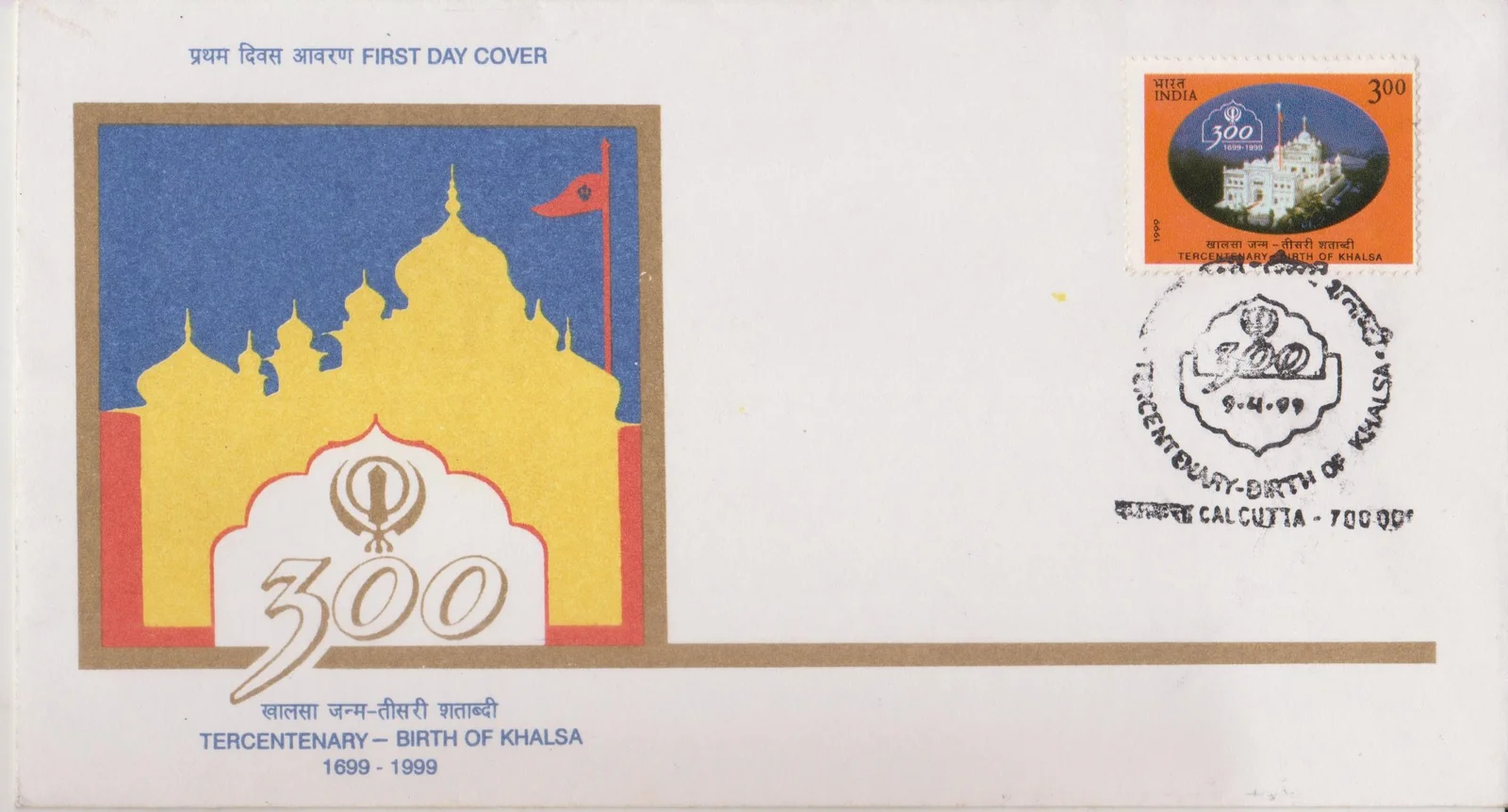
First Day Cover