
The Ramayana

Technical Data
| Date of Issue | September 22, 2017 |
|---|---|
| Denomination | Rs. 65 |
| Quantity | 300,000 |
| Perforation | 13¾ |
| Printer | Security Printing Press, Hyderabad |
| Printing Process | Wet Offset |
| Watermark | No Watermark |
| Colors | Multicolor |
| Credit (Designed By) | Sh. Sankha Samanta Smt. Alka Sharma |
| Catalog Codes |
Michel IN BL169 Yvert et Tellier IN 2893-2903 Michel IN MS3357 |
| Themes | Literature |
Stamps in this Miniature Sheet

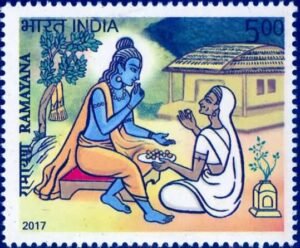
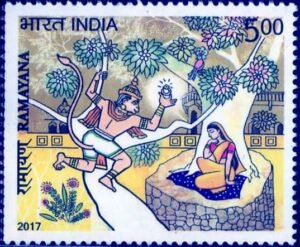
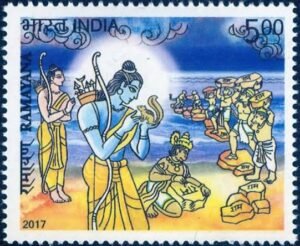
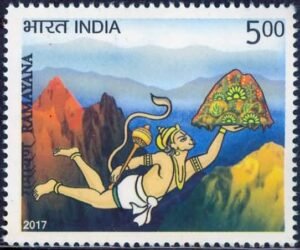

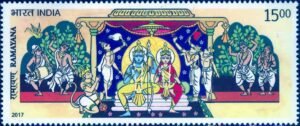
The Eternal Epic of Maryada Purushottam Ram
“Ram” — a sacred chant, a divine presence, a noble king, and the embodiment of righteousness. Revered across generations, Lord Ram is worshipped as the omnipresent force who resides in every grain of sand. His life, as narrated in the Ramayana, continues to inspire millions across India and the world.
The Ramayana, first composed by Maharshi Valmiki around 500 B.C., is one of the greatest Sanskrit epics of ancient India. Over centuries, it has been retold, reinterpreted, and adapted into numerous languages and cultural traditions, enriching its legacy and universal appeal.
Global Influence of the Ramayana
The power of the Ramayana extends far beyond India. Early Indian migrants carried its sacred narrative to countries such as Surinam, Fiji, Guyana, and Mauritius, where it became a spiritual anchor for communities living far from their homeland.
Several Asian nations including Burma (Myanmar), Indonesia, Cambodia, Laos, Thailand, Malaysia, Vietnam, and the Philippines have adopted the Ramayana into their cultural traditions, adding local interpretations and artistic expressions.
Within India itself, diverse linguistic and cultural communities have embraced the epic, presenting their own distinctive versions while preserving the core message of dharma (righteousness).
Major Literary Versions of the Ramayana
While the original Valmiki Ramayana in Sanskrit follows a straightforward narrative, many other celebrated versions have emerged over time:
- Adhyatma Ramayana (attributed to Vyasa)
- Kamba Ramayana by poet Kambar (12th century, Tamil)
- Krittivasi Ramayana by Krittibas Ojha (Bengali)
- Ramcharitmanas by Goswami Tulsidas (15th century, Awadhi)
Among these, Ramcharitmanas remains the most popular. Tulsidas emphasized devotion (bhakti), moral conduct, and the supreme human qualities of Lord Ram. The focus is on how a righteous individual performs his duties with dignity and compassion.
The Story of Lord Ram
Birth and Early Life
Ram, the prince of Ayodhya, is portrayed as the ideal son, brother, husband, and king — the embodiment of Maryada Purushottam (the perfect upholder of moral values).
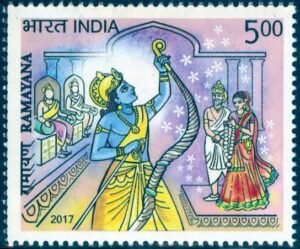
Under the guidance of Maharishi Vishwamitra, Ram and his brother Laxman mastered the use of divine weapons. During their journey to Mithila, King Janak introduced them to the mighty Shiva Dhanush. Ram effortlessly lifted and strung the bow, winning the hand of Princess Sita in marriage.
Exile and Devotion
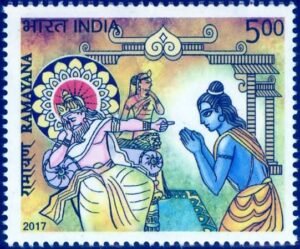
King Dashrath wished to crown Ram as the Yuvraj (Crown Prince). However, due to Queen Kaikeyi’s demands influenced by her maid Manthara, Ram was exiled for fourteen years. Accepting his father’s word as sacred, Ram left Ayodhya accompanied by Sita and Laxman.
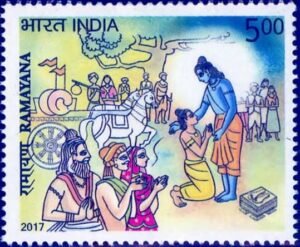
Bharat, heartbroken by these events and their father’s demise, met Ram at Chitrakut and requested him to return. Ram refused, honoring his commitment. Bharat then placed Ram’s wooden paduka (sandals) on the throne as a symbol of rightful authority.
Encounters During Exile
- Kewat, the humble boatman, ferried Ram across the Ganga.
- Shabari, a devoted disciple of Sage Matang, offered sweet berries to Ram after tasting them to ensure their sweetness — a symbol of pure devotion.
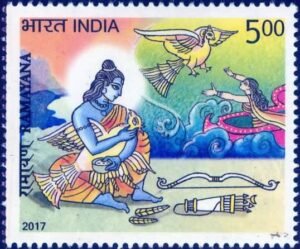
- Jatayu, the valiant bird, sacrificed his life attempting to rescue Sita from Ravana.
Hanuman and the Search for Sita
Hanuman leaped across the ocean to Lanka in search of Sita. Finding her in Ashok Vatika, he presented Ram’s ring to gain her trust. This meeting strengthened hope and marked a turning point in the epic.
Victory and Ram Rajya
After defeating Ravana and rescuing Sita, Ram returned to Ayodhya. His reign, known as Ram Rajya, became synonymous with justice, prosperity, equality, and happiness. The kingdom flourished under his righteous rule.
Later narratives, particularly in the Uttar Kand and Uttar Ramcharit, describe Sita’s life in Sage Valmiki’s ashram, further deepening the emotional and philosophical dimensions of the epic.
Ideals and Philosophy
The Ramayana is not merely a story; it is a moral compass. It teaches:
- Upholding dharma in adversity
- Devotion and loyalty
- Duty towards family and society
- Justice and equality in governance
- Emotional balance and equanimity
Lord Ram stands as the eternal symbol of righteousness and ideal conduct.
Commemorative Postage Stamps on Ramayana
To celebrate this timeless epic, the Department of Posts released a Miniature Sheet and Sheetlet consisting of 11 Special Postage Stamps based on the Ramayana.
These commemorative postage stamps beautifully depict significant episodes and characters from the ancient Sanskrit epic written by Maharshi Valmiki. The release honors the cultural, spiritual, and literary heritage of India and preserves the enduring legacy of Lord Ram for future generations.
First Day Cover

Leave a Comment
You must be logged in to post a comment.