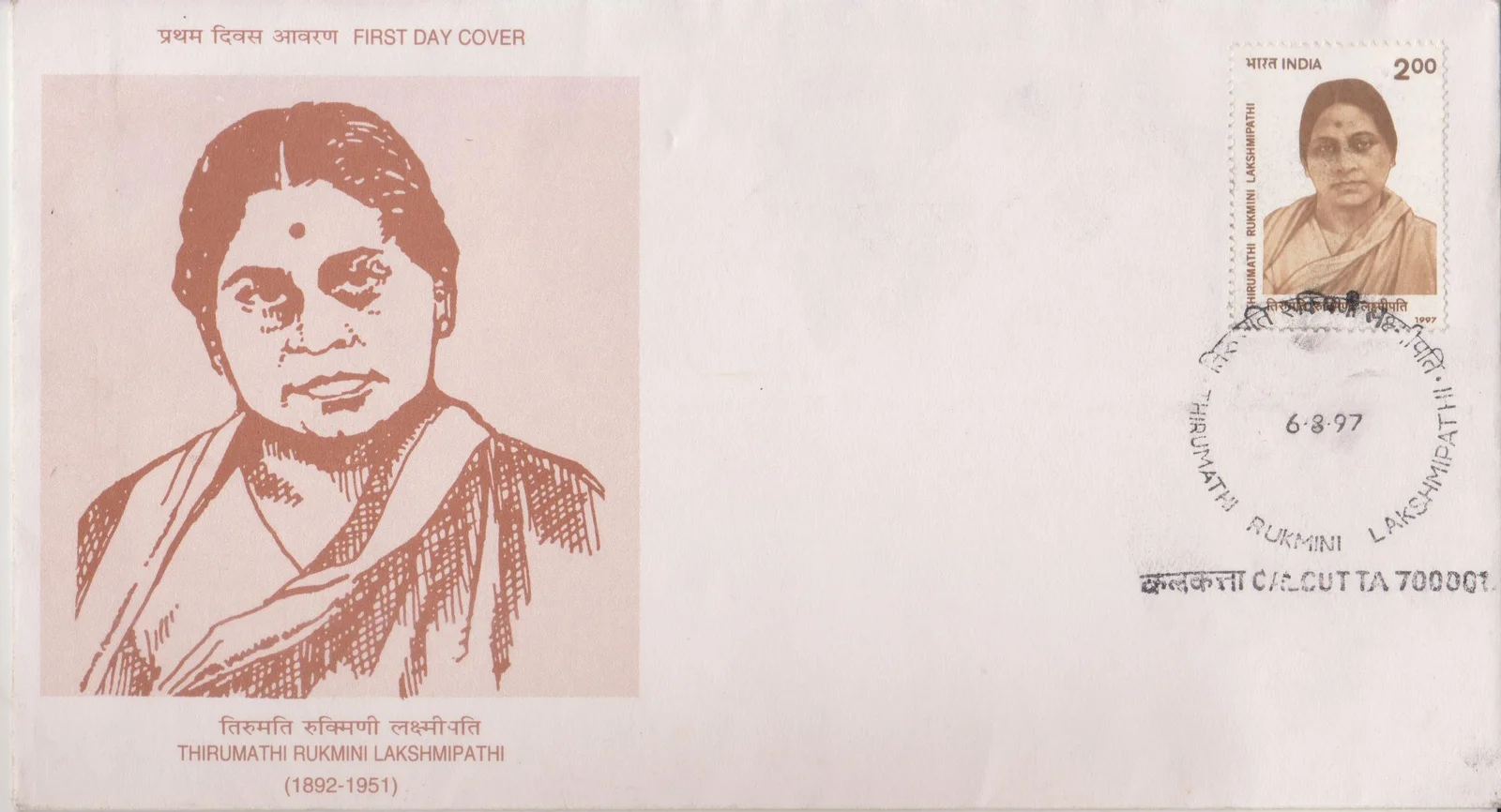
Thirumathi Rukmini Lakshmipathi (1892-1951)
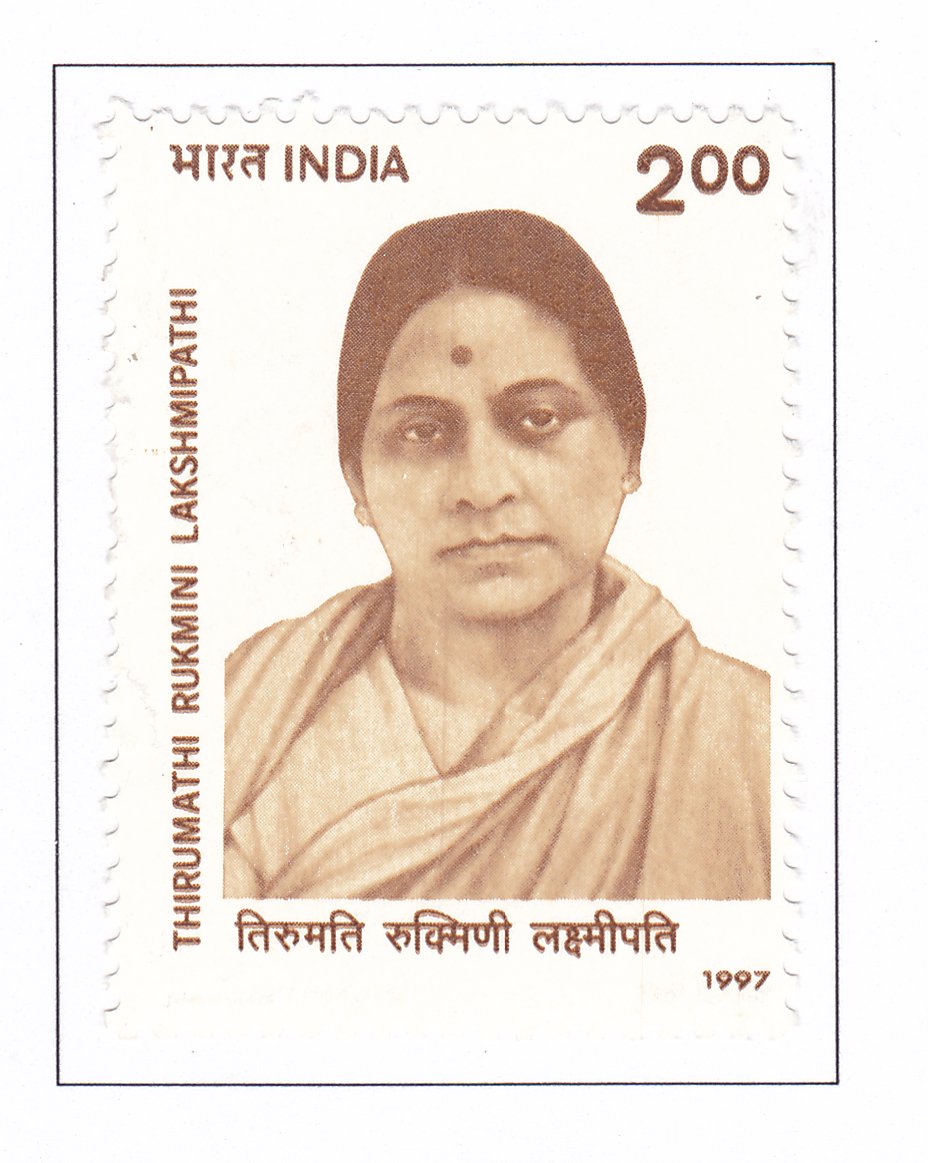
Technical Data
| Date of Issue | August 6, 1997 |
|---|---|
| Denomination | Rs. 2 |
| Quantity | 400,000 |
| Perforation | comb 13 x 13½ |
| Printer | Security Printing Press, Nashik |
| Printing Process | Photogravure |
| Watermark | No Watermark |
| Colors | Multicolor |
| Credit (Designed By) | |
| Catalog Codes |
Michel IN 1556 Stamp Number IN 1612 Yvert et Tellier IN 1328 Stanley Gibbons IN 1720 |
| Themes | Commemoration | Famous people | Reformers | Women |
Early Life and Education
Smt. Rukmini Lakshmipathi was born on 6 December 1892 in a landlord’s family from Madurai. She graduated from Presidency College, Madras, and later married Dr. Achanta Lakshmipathi, a committed nationalist. This marriage marked the beginning of her active involvement in India’s freedom movement. She was deeply inspired by leaders such as Mahatma Gandhi, Sarojini Naidu, and C. Rajagopalachari.
Role in Social Reform
Rukmini Lakshmipathi first became known for her social reform work. She served as Secretary of the Bharata Stri Mahamandal, Madras, and was an important member of the Women’s Indian Association from its inception. She also served as President of the Youth League in Madras, which worked for women’s upliftment.
She played a significant role in promoting social legislation related to raising the age of marriage and age of consent. She also presided over the Youth Tamil Conference held at Madurai.
Participation in Freedom Struggle
She joined the Indian National Congress in 1923, donating all her jewellery to Gandhiji’s Harijan Welfare Fund. She actively participated in the Salt Satyagraha at Vedaranayam in 1931, for which she was sentenced to one year’s imprisonment. She was again jailed for six months during the Civil Disobedience Movement.
In 1940, she was once more imprisoned for one year for taking part in the Satyagraha Movement.
Political Career
Smt. Lakshmipathi served as Vice President of the Tamil Nadu Congress Committee during 1935–36 and was elected as a Municipal Councillor. She presided over the Tamil Nadu Provincial Committee session at Karaikudi in 1936.
In 1937, she was elected to the Madras Legislative Assembly and became a member of the Working Committee of the Indian National Congress. She also served as the Deputy Speaker of the Madras Legislative Assembly during the first Congress Ministry.
Later, in 1946, she became the Minister for Health in the ministry of T. Prakasam. After independence, she continued to serve as an MLA until her death.
Contribution to Education and Public Service
She strongly supported the extension of the Elementary Education Act, adult education, and compulsory education for girls. She also served in local bodies such as the Corporation of Madras, Chinglepet District Board, and as an Honorary Presidency Magistrate at Madras.
Death and Legacy
Smt. Rukmini Lakshmipathi passed away on 6 August 1951. She is remembered as a fearless freedom fighter, social reformer, and pioneer in women’s political leadership in South India.
Commemorative Stamp
The Department of Posts released a special postage stamp in August 1997 to commemorate her death anniversary.
A commemorative postage stamp on the Death Anniversary of Smt. Rukmini Lakshmipathi, first female prisoner in the Salt Satyagraha movement and first woman to be elected to the Madras Legislature.
First Day Cover