
Traditional Indian Textiles
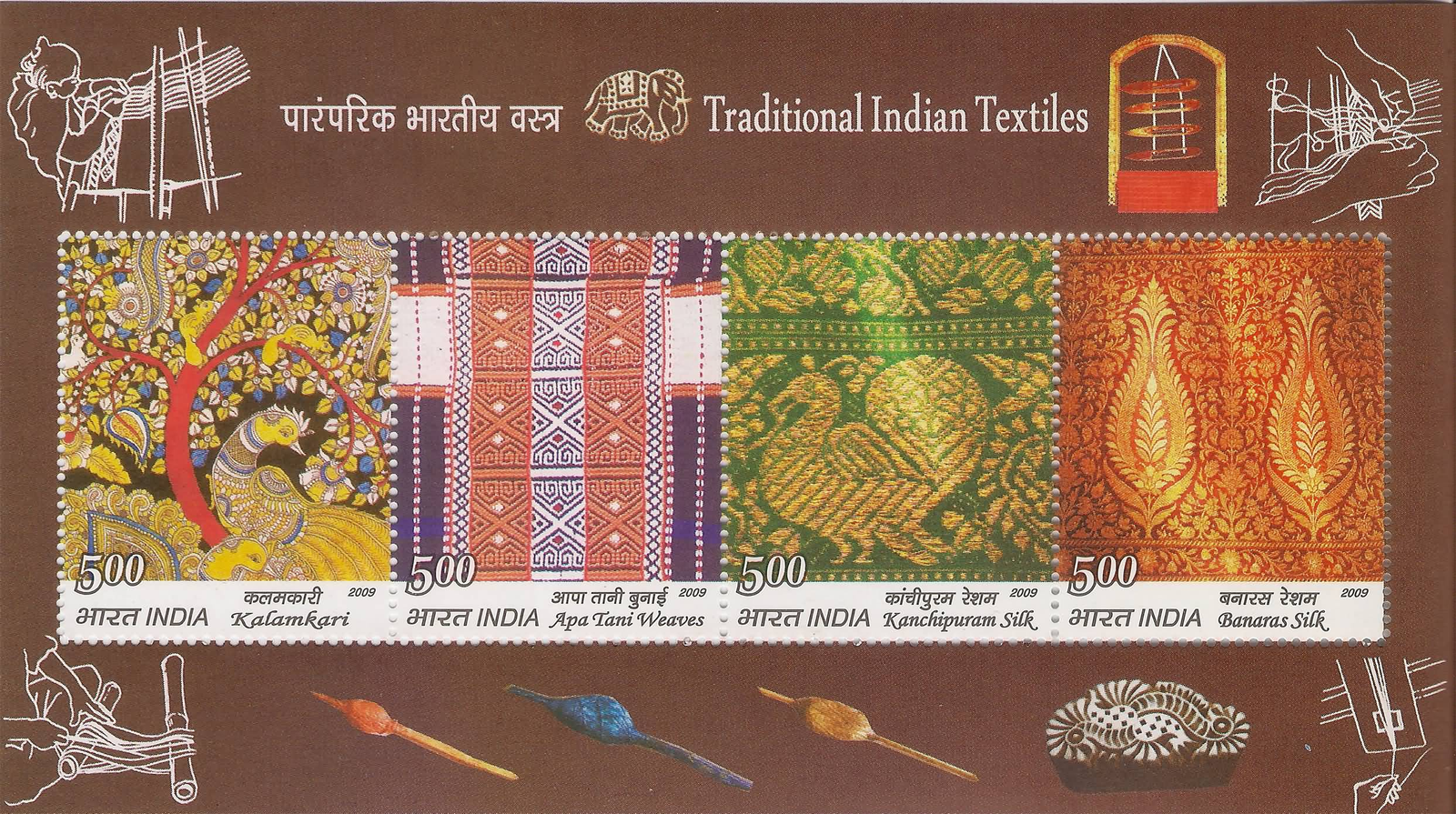
Technical Data
| Date of Issue | December 10, 2009 |
|---|---|
| Denomination | Rs. 20 |
| Quantity | 400,000 |
| Perforation | 13 |
| Printer | India Security Press, Nasik |
| Printing Process | Wet Offset |
| Watermark | No Watermark |
| Colors | Multicolor |
| Credit (Designed By) | Sh. Sankha Samanta |
| Catalog Codes |
Michel IN BL77 Stamp Number IN 2386a Stanley Gibbons IN MS2675 WADP Numbering System - WNS IN101MS.2009 |
| Themes | Textile |
Stamps in this Miniature Sheet
A 5000-Year Legacy of Craftsmanship and Creativity
India has one of the world’s oldest and richest traditions of textile production, spanning nearly 5,000 years. Indian textiles reflect the country’s diverse geo-climatic conditions, cultural practices, and historical influences. Across regions, anonymous master craftsmen and women have created textiles that are not only utilitarian but also artistic masterpieces.
This commemorative set of postage stamps celebrates four iconic traditions of Indian textiles—Kalamkari, Apa Tani Weaves, Kanchipuram Silks, and Varanasi Brocades—each representing a unique facet of India’s weaving and dyeing heritage.
Kalamkari (Andhra Pradesh)
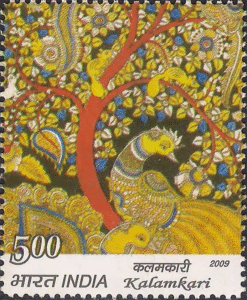
Kalamkari, meaning “pen work,” refers to the painted and printed textiles of Andhra Pradesh. The craft developed under two distinct schools:
- Masulipatnam style, patronized by Muslim rulers and influenced by Persian art and Islamic aesthetics.
- Sri Kalahasti style, supported by Hindu temples and known for depicting scenes from Hindu mythology.
Traditionally created using a kalam (pen-like tool), Kalamkari textiles involve intricate hand drawing and natural dyes. While Masulipatnam artisans often adopted wooden blocks for repetitive patterns, Sri Kalahasti craftsmen continue to rely on freehand drawing.
Beyond decorative appeal, Kalamkari textiles play an important role in rural rituals and ceremonies, demonstrating remarkable adaptability while preserving traditional techniques.
Apa Tani Weaves (Arunachal Pradesh)
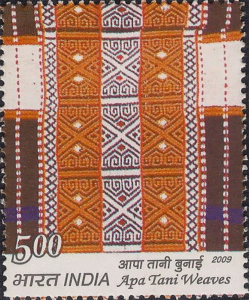
The Apa Tani community inhabits the Lower Subansiri district of Arunachal Pradesh in Northeast India. Weaving is a household tradition passed down from mother to daughter, and nearly every family owns one or two looms.
The loom is a simple, portable loin loom—single heddle and reed-less—considered a family heirloom inherited by women. The weaving technique primarily uses plain weave (tabby), with patterning achieved through the extra weft technique.
Traditional Apa Tani textiles feature bold stripes and geometric patterns in red, green, and yellow—originally derived from natural sources such as leaves, roots, creepers, and tree bark. Today, dyed yarns offer expanded colour choices while maintaining the identity of the craft.
Kanchipuram Silks (Tamil Nadu)
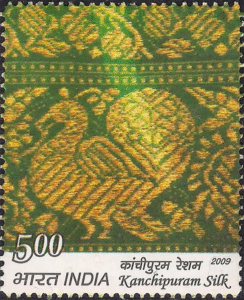
The brocaded silk saris of Kanchipuram in Tamil Nadu are as celebrated as the temples of this historic pilgrimage town. References to rich southern silks date back to the 2nd century, though the craft evolved through waves of migrating weavers and temple patronage.
Historically supported by royal courts and temple institutions, Kanchipuram’s silk industry flourished through trade along the river Palar. Artisans produced temple cloths, wall hangings, chariot decorations, furnishings, and the iconic nine-yard sari.
Weaving a Kanchipuram sari is a meticulous process performed on pit looms. Traditionally, two weavers work together using multiple shuttles, guided by a designer reading from a graph. Today, jacquard and dobby mechanisms are also employed.
Kanchipuram Silks are distinguished by:
- Contrasting borders and body colours
- Intricate motifs of animals, birds, flowers, creepers, and geometric patterns
- Thick, richly textured fabric made from twisted three-ply silk yarn
The brilliance of colour and natural lustre of silk give Kanchipuram saris their timeless identity.
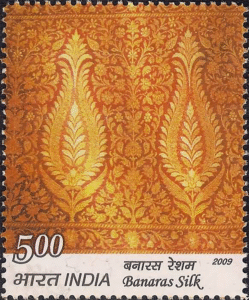
Varanasi Brocades (Uttar Pradesh)
Varanasi—also known as Banaras or Kashi—has long been a spiritual and cultural centre along the sacred river Ganga. Among its many artistic traditions, Varanasi brocades hold global renown.
The hallmark of this craft is the complex draw loom used for weaving elaborate figured textiles. Designs, known as naqshas, guide the weaving process. In brocade weaving, extra weft threads—often silk or zari (metallic threads)—are inserted into selected areas to create ornate patterns.
The richness of Varanasi brocades depends on:
- The type of metallic thread used
- The base fabric (silk or cotton)
- The quality of yarn
Today, mulberry silk from Karnataka, Bengal, and imports from China are commonly used. The shimmering interplay of silk and zari gives Varanasi brocades their characteristic opulence.
Government Initiatives for Handloom Development
Recognizing the importance of the handloom sector to India’s cultural and economic fabric, the Government of India introduced five comprehensive schemes during the 11th Five Year Plan:
- Integrated Handlooms Development Scheme – Skill upgradation and sustainable development of weaver groups.
- Handloom Weavers Comprehensive Welfare Scheme – Insurance coverage for accidents, disability, and death.
- Marketing and Export Promotion Scheme – Brand development, publicity, and financial assistance.
- Mill Gate Price Scheme – Ensuring yarn availability at reasonable rates.
- Diversified Handloom Development Scheme – Design development, R&D, and training initiatives.
These efforts aim to strengthen livelihoods, preserve traditional skills, and promote Indian textiles globally.
Commemorative Postage Stamps on Indian Textiles
To honour India’s extraordinary textile heritage, India Post has issued a Miniature Sheet consisting of set of commemorative postage stamps on Indian Textiles, featuring Kalamkari, Apa Tani Weaves, Kanchipuram Silks, and Varanasi Brocades.
This philatelic release celebrates:
- India’s 5000-year-old textile tradition
- Regional diversity in weaving and dyeing techniques
- The craftsmanship of handloom artisans
- The cultural and economic significance of the handloom sector
Through this commemorative stamp issue, the Department of Posts pays tribute to India’s enduring textile legacy—an artistic heritage woven through generations and cherished across the world.
First Day Cover

Leave a Comment
You must be logged in to post a comment.