
V. Subbiah
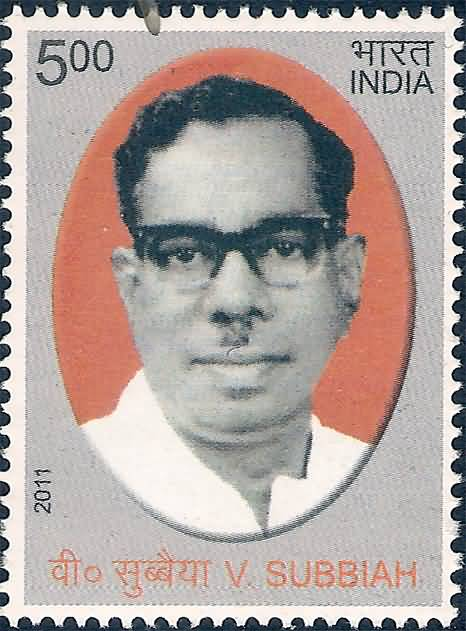
Technical Data
| Date of Issue | February 7, 2011 |
|---|---|
| Denomination | Rs. 5 |
| Quantity | 300,000 |
| Perforation | 13½ |
| Printer | Security Printing Press, Hyderabad |
| Printing Process | Wet Offset |
| Watermark | No Watermark |
| Colors | Multicolor |
| Credit (Designed By) | Ms. Nenu Gupta |
| Catalog Codes |
Michel IN 2552 Stamp Number IN 2489 Yvert et Tellier IN 2315 Stanley Gibbons IN 2794 WADP Numbering System - WNS IN006.2011 |
| Themes | Anniversaries and Jubilees | Commemoration | Famous people | Men | Optical Instruments | Politicians |
Freedom Fighter and People’s Leader of Puducherry
Early Life and Education
V. Subbiah was born on 7 February 1911 to Shri Varatharajalu and Smt Bangaru Ammal. He began his education at Calve College High School, Puducherry. His involvement in public life and politics started early, inspired by nationalist ideals during his student days.
Entry into the Freedom Movement
Subbiah’s political awakening began with his participation in the Congress Conference held in Chennai during 1927–28. His deep sense of nationalism soon led him to actively work for Puducherry’s liberation from French rule, a cause that would define his life.
Social Reform and Gandhian Influence
In 1933, he founded the Harijan Welfare Association, reflecting his commitment to social equality. In the same year, he played a key role in arranging the first visit of Mahatma Gandhi to Puducherry, a landmark event that strengthened the freedom movement in the region.
Journalism and Political Ideology
In 1934, Subbiah launched a Tamil magazine titled “Swathanthiram” (Independence), which became a powerful medium for spreading nationalist ideas. During this period, he came into contact with Arneer Hyder Khan and S. V. Chellam, and subsequently joined the Communist movement, expanding his engagement with workers’ rights and social justice.
Champion of Labour Rights
Subbiah emerged as a leading voice for workers, spearheading agitations demanding the eight-hour workday, better wages, and trade union rights. His tireless efforts resulted in the successful introduction of the eight-hour work system, a significant achievement in labour welfare.
United Political Front and Anti-Fascist Movement
On the advice of Jawaharlal Nehru, Subbiah founded the Mahajana Sabha in 1938, a united political front aimed at strengthening the freedom struggle. He also launched an anti-fascist movement known as ‘Combat’, opposing authoritarian and fascist principles.
Struggle for Puducherry’s Independence
Between 1936 and 1954, Subbiah played a prominent role in intensifying the struggle against French colonial rule. During this prolonged movement, he was imprisoned multiple times by both the British and French authorities for his revolutionary activities.
Legislative Career and Public Service
Following Puducherry’s liberation in 1954, V. Subbiah was elected to the first Puducherry Legislative Assembly. He remained a Member of the Assembly until 1978 and also served as a Minister, contributing significantly to governance and public welfare.
Writer, Thinker and National Recognition
Subbiah was a prolific writer and authored several books reflecting his political and social thought. In 1986, the Government of India recognized his contribution by listing him among 97 original-thinking Freedom Fighters from across the country.
Legacy
Revered by the people of Puducherry as the “Leader of the People”, V. Subbiah passed away on 12 October 1993. His life remains a symbol of courage, social commitment and unwavering dedication to freedom.
Commemorative Postage Stamp
In recognition of his invaluable contribution to the freedom movement and public life, India Post is pleased to issue a commemorative postage stamp on V. Subbiah.
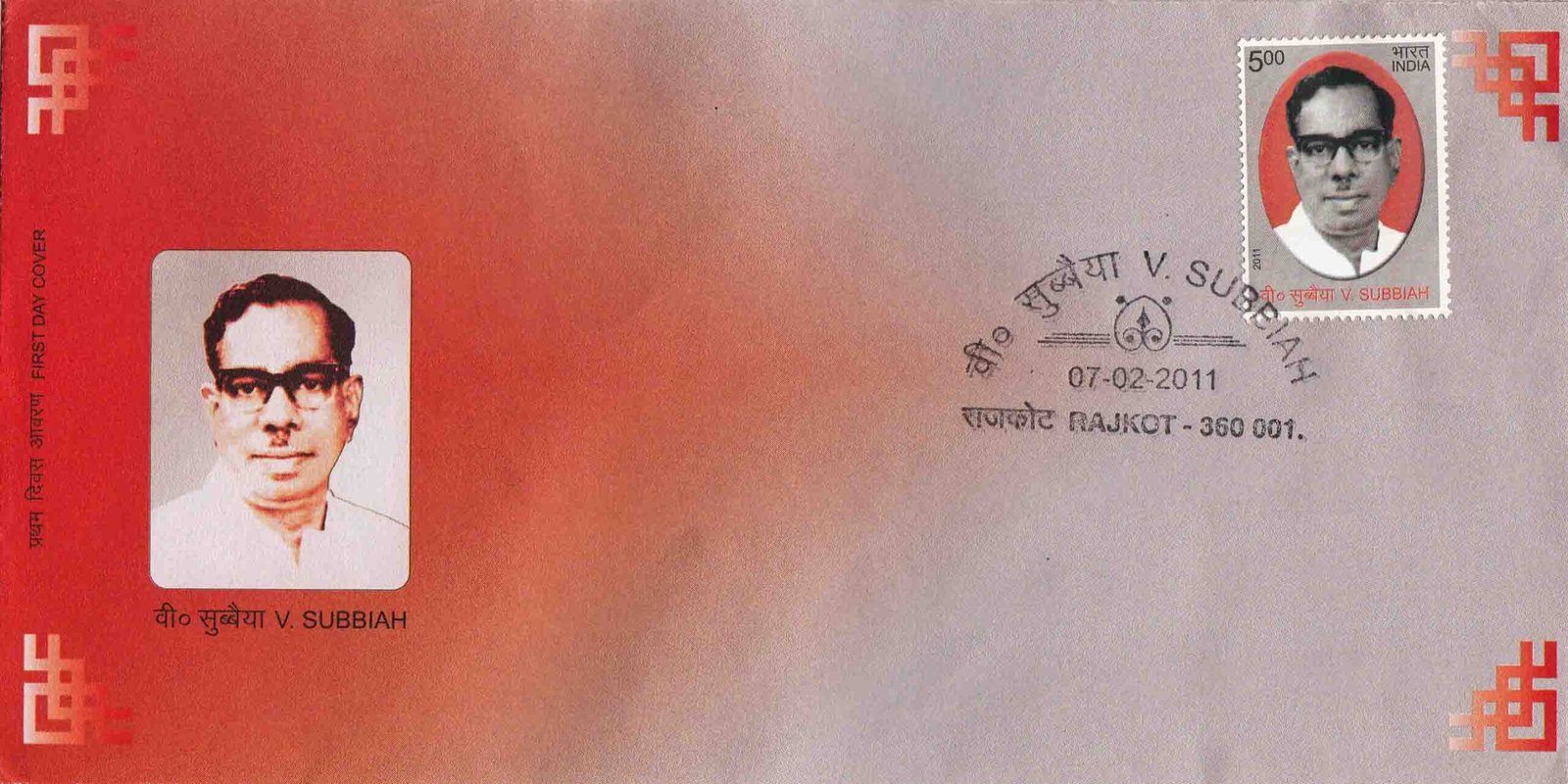
First Day Cover
Leave a Comment
You must be logged in to post a comment.