
Velu Thampi
Technical Data
| Date of Issue | May 6, 2010 |
|---|---|
| Denomination | Rs. 5 |
| Quantity | 300,000 |
| Perforation | 13 |
| Printer | India Security Press, Nasik |
| Printing Process | Wet Offset |
| Watermark | No Watermark |
| Colors | Multicolor |
| Credit (Designed By) | Mr. Suresh Kumar |
| Catalog Codes |
Michel IN 2479 Stamp Number IN 2417 Yvert et Tellier IN 2242 Stanley Gibbons IN 2242 WADP Numbering System - WNS IN024.2010 |
| Themes | Anniversaries and Jubilees | Famous people | Men | Politicians |
Early Life and Scholarship
Velu Thampi Dalawa, born as Velayudhan Chempakaraman Thampi on 6 May 1765 at Thalakkulam village in Kanyakumari District, Tamil Nadu, was a distinguished administrator and patriot. Though his mother tongue was Malayalam, he was proficient in English, Tamil, and Sanskrit. A man of wide learning, he was well versed in Ayurveda, Astrology, Tarka Sastra, and Mathematics, and was also skilled in Kalaripayattu, the traditional martial art of Kerala.
Rise in Administration
At the age of 24, during the reign of Dharma Raja Karthika Thirunal, he was appointed Tehsildar, locally known as “Karyakkar.” In 1799, he led an agitation to the Travancore Palace demanding firm action against corruption and strongly opposed the Government’s tax hike policies. His relentless crusade against maladministration impressed the king, who elevated him to the post of Mulakumadiseela Sarvadi Karyakkar (Finance Minister).
In 1801, Balarama Varma appointed him as Dalawa (Diwan) of Travancore, a position through which he earned enduring fame.
Administrative Reforms
As Diwan of the Travancore, Velu Thampi introduced several pioneering reforms. He established a systematic census to record paddy fields and other crops, strengthening revenue administration. In 1803, he implemented a new revenue code known as Chattuneettole and Nalvazhi, laying the foundation for efficient governance. During his tenure, trade centres such as Kollam, Changanassery, and Vaikom flourished, enhancing the region’s economic vitality.
Resistance Against British Rule
Compelled to accept the Subsidiary Alliance imposed by the British, the kingdoms of Travancore and Cochin united in opposition. Velu Thampi organized and trained local forces to resist British interference. In 1809, he issued the historic Kundara Proclamation (Kandara Vilamparam), a stirring call to arms against British rule—an early and significant episode in India’s freedom struggle.
Despite military setbacks, his resolve remained unshaken. On 29 March 1809, when British forces surrounded him at Mannady in Pathanamthitta District, Kerala, he chose not to surrender. Instead, he embraced martyrdom, becoming a symbol of courage and resistance in India’s struggle for freedom.
Commemoration
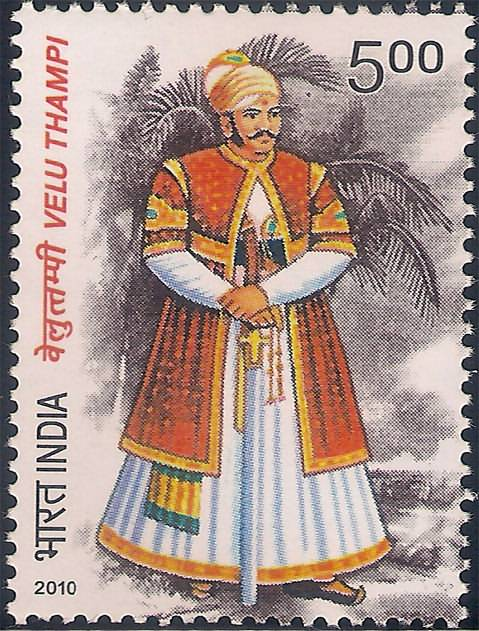
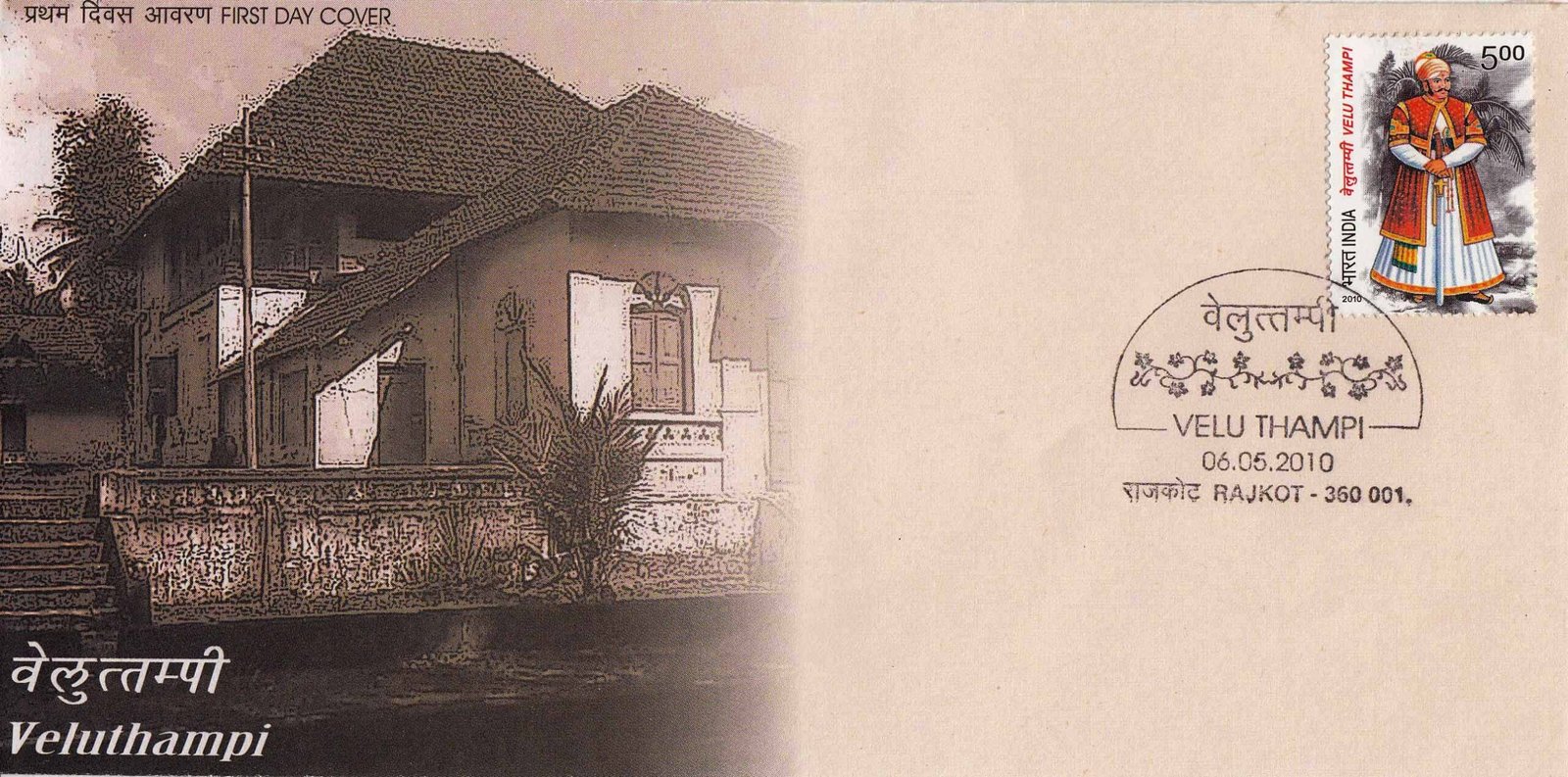
In recognition of his valiant leadership and sacrifice, the Department of Posts issued a commemorative postage stamp in honour of Velu Thampi Dalawa, paying tribute to one of the earliest heroes of India’s freedom movement.
First Day Cover
Leave a Comment
You must be logged in to post a comment.