
Wall Paintings
Technical Data
| Date of Issue | June 20, 2012 |
|---|---|
| Denomination | Rs. 25 |
| Quantity | 100,000 |
| Perforation | 13 |
| Printer | Security Printing Press, Hyderabad |
| Printing Process | Wet Offset |
| Watermark | No Watermark |
| Colors | Multicolor |
| Credit (Designed By) | Sh. Sankha Samanta |
| Catalog Codes |
Michel IN 2656-2657 Stamp Number IN 2580-2581 Stanley Gibbons IN 2877a |
| Themes | Art | Elephants | Horses | Paintings | Stylized Animals |
Stamps in this Sheetlet
Celebrating India’s Rich Artistic Heritage
Shekhawati Paintings of Rajasthan
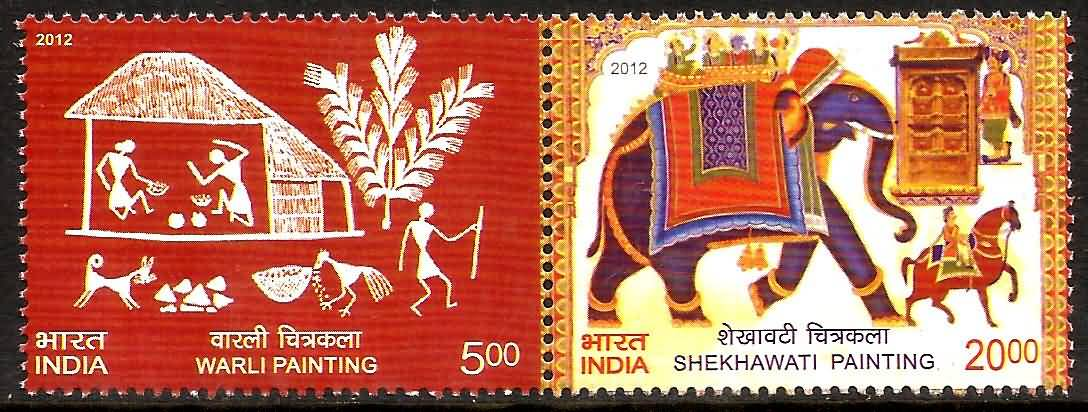
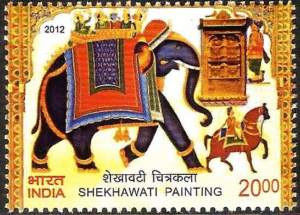
Shekhawati Paintings originate from the historic Shekhawati region of Rajasthan, where palaces, forts, havelis, and public buildings are adorned with magnificent frescoes dating back to the eighteenth and nineteenth centuries. These wall paintings are a defining feature of the region’s cultural landscape and stand as enduring testaments to artistic excellence.
Influenced by the Persian, Jaipur, and Mughal schools of painting, Shekhawati frescoes are remarkable for their finesse, intricate detailing, and durability. Artists used pigments derived from naturally available materials, a technique that has ensured the vibrancy and preservation of colours even after centuries.
The thematic content of these paintings reflects a fascinating evolution over time. Early works, created around 1750, predominantly depict mythological tales, local legends, hunting scenes, portraits, and everyday life. As the region came under British influence, the later paintings began to incorporate elements of modernity and technology, portraying motor cars, aeroplanes, trains, ships, bicycles, balloons, and other symbols of a changing world. Together, these frescoes offer a vivid visual chronicle of shifting tastes, cultural interactions, and historical transitions.
Warli Paintings of Maharashtra
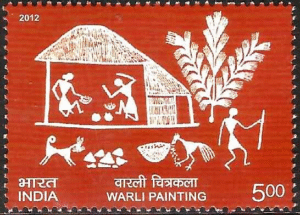
Warli Painting is an ancient form of tribal art practiced by the Warli tribe, primarily residing in Dahanu region of Thane district, Maharashtra. Traditionally created on the walls of tribal homes during festivals and special occasions, Warli art reflects a deep connection with nature and community life.
These paintings are executed on a background of red mud, using rice paste mixed with water or milk as the primary pigment. The colour white, symbolizing purity, is reserved for depictions of gods and goddesses, while red and yellow, sourced from red mud and turmeric, are used for other figures. A simple straw serves as the painting tool, highlighting the art form’s elegance through minimalism.
Warli art is highly symbolic. Every motif carries meaning, forming a visual language rooted in tradition. Human figures arranged in spiral formations and concentric circles represent the cycle of life, harmony, and continuity—central themes in Warli philosophy.
Commemorative Stamp Design
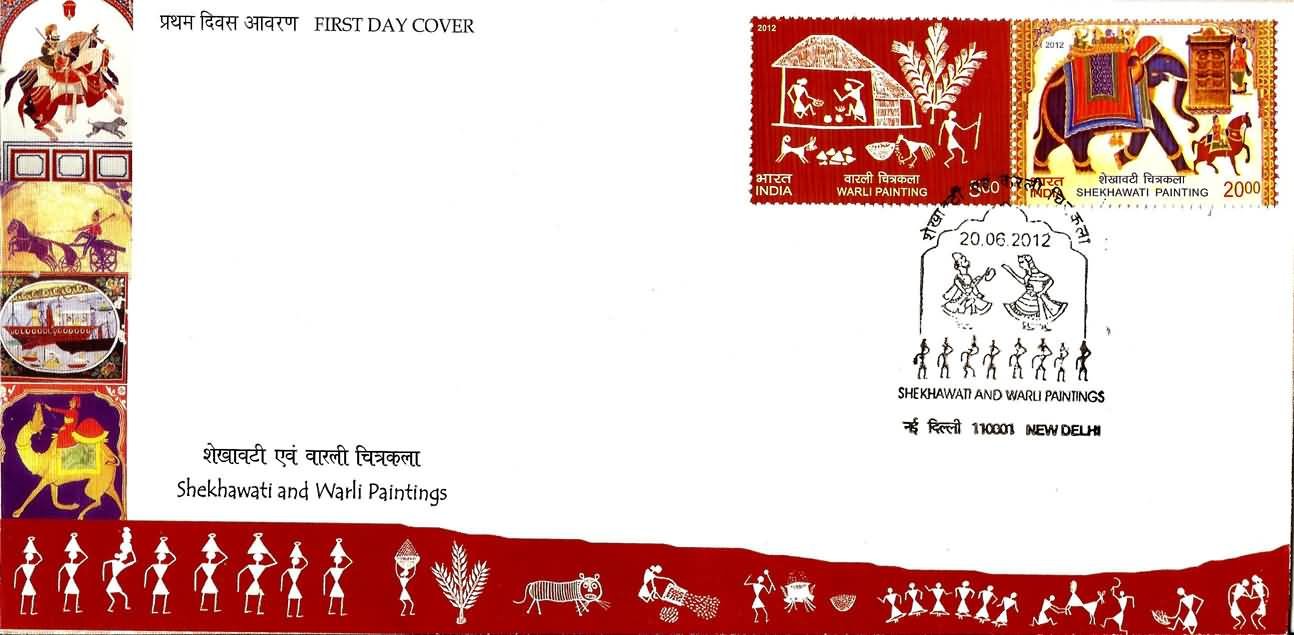
The designs of the commemorative stamps and sheetlet featuring Shekhawati and Warli Paintings beautifully capture the cultural essence and artistic traditions of Rajasthan and Maharashtra. This philatelic issue celebrates the diversity, creativity, and timeless legacy of Indian paintings, paying tribute to two distinct yet equally powerful expressions of India’s artistic heritage.
First Day Cover
Leave a Comment
You must be logged in to post a comment.