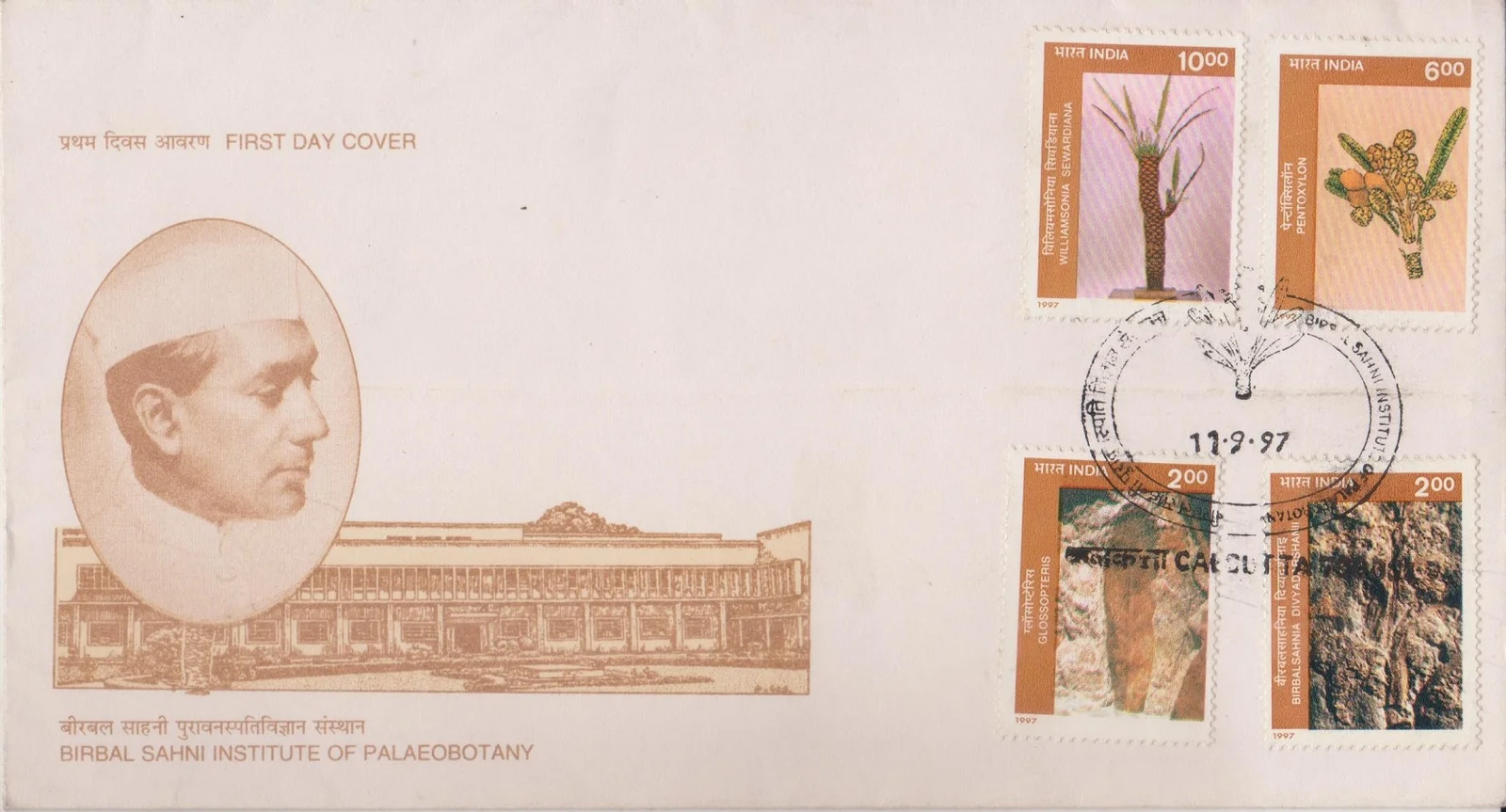
Model of Fossil of Williamsonia sewardiana
Technical Data
| Stamp Set | 50th Ann. of Birbal Sahni Institute of Palaeobotany, Lucknow |
|---|---|
| Date of Issue | September 11, 1997 |
| Denomination | Rs. 10 |
| Quantity | 400,000 |
| Perforation | comb 13 x 13½ |
| Printer | Security Printing Press, Nashik |
| Printing Process | Photogravure |
| Watermark | No Watermark |
| Colors | Multicolor |
| Credit (Designed By) | |
| Catalog Codes |
Michel IN 1571 Stamp Number IN 1625 Yvert et Tellier IN 1341 Stanley Gibbons IN 1735 |
| Themes | Anniversaries and Jubilees | Fossils | Plants (Flora) |
Introduction
Williamsonia sewardiana was an extinct prehistoric plant species that once flourished in ancient India. It is one of the important fossil plants studied in Indian palaeobotany and helps scientists understand plant life from millions of years ago.
Geological Age
This plant lived around 140 million years ago during the Mesozoic era, a time when large reptiles and dinosaurs inhabited the Earth and ancient forests covered many regions.
Discovery and Location
Fossil remains of Williamsonia sewardiana were found in the Rajmahal region of Bihar, an area known for its rich deposits of fossil plants and geological importance.
Model Reconstruction
A model of Williamsonia sewardiana was prepared based on the scientific reconstruction envisioned by Professor Birbal Sahni. The model presents the likely form and structure of the plant, helping researchers and students visualize how it appeared in prehistoric times.
Scientific Importance
The study of Williamsonia sewardiana provides valuable information about extinct seed plants and the evolution of plant groups that existed before the dominance of flowering plants. It also contributes to understanding ancient climates and ecosystems of the Indian subcontinent.
Commemorative Stamp
The Department of Posts included the model of fossil of Williamsonia sewardiana in a commemorative stamp series issued on the Golden Jubilee of the Birbal Sahni Institute of Palaeobotany, Lucknow, highlighting India’s rich fossil heritage.
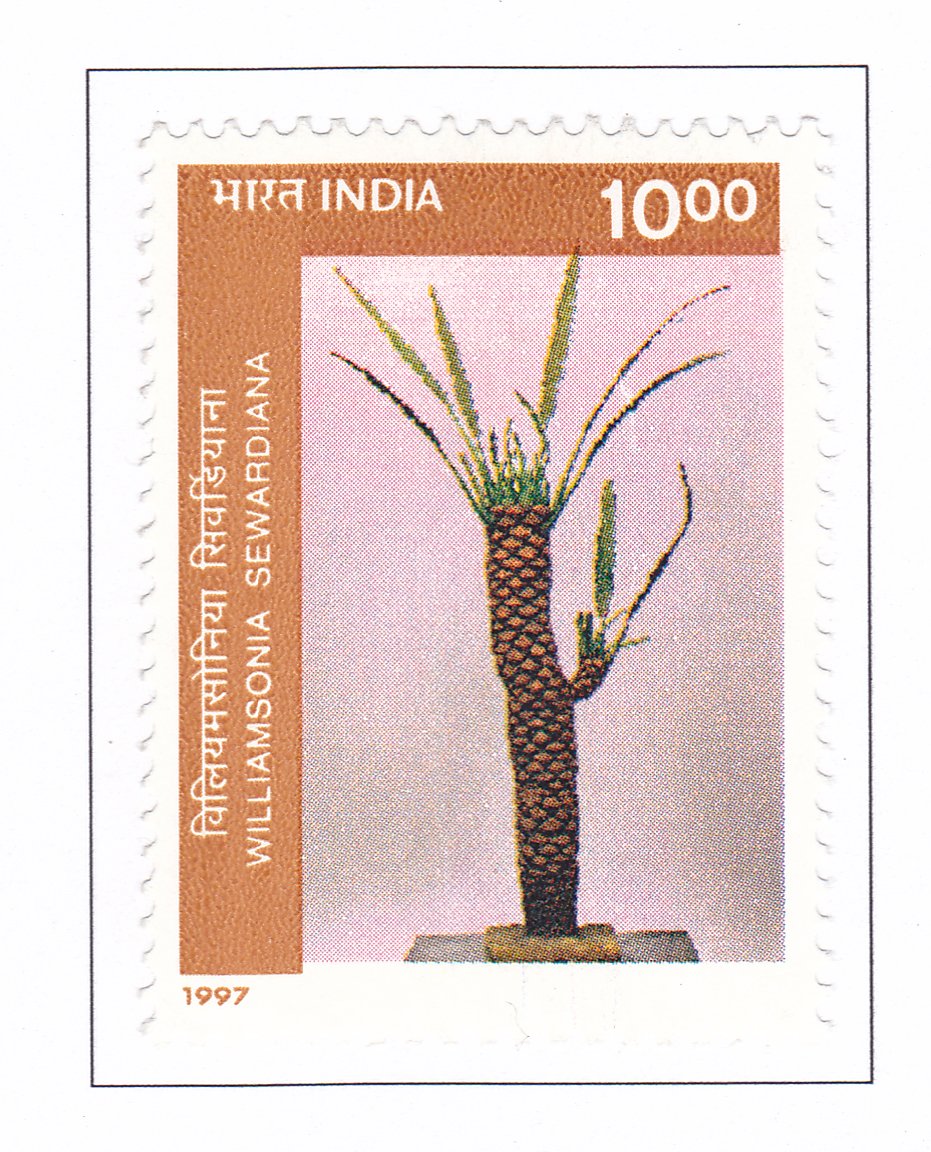
First Day Cover