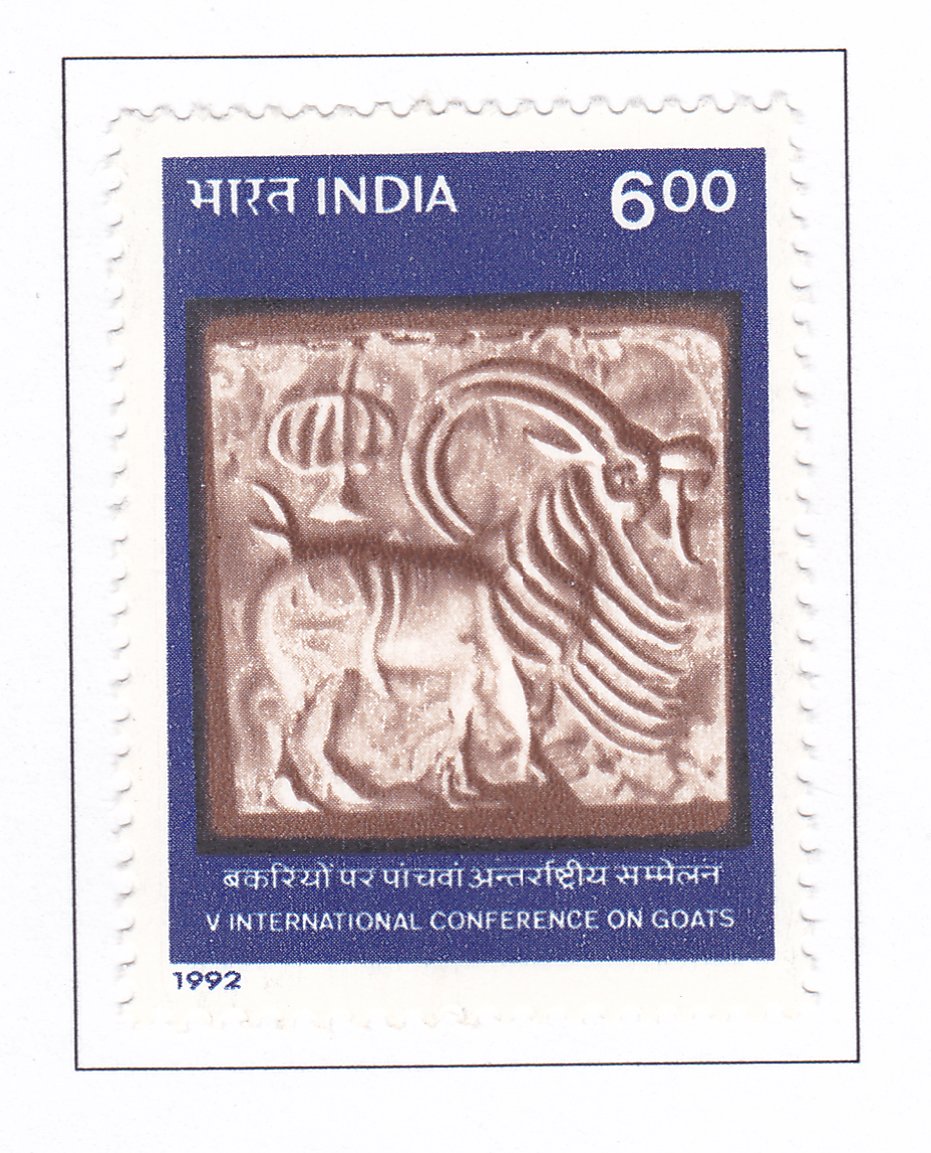
About this stamp
The Goat: An Essential Livestock Species
Domestication and Distribution
- Earliest Domesticated Ruminant: The goat is among the first ruminants to be domesticated.
- Ecological Range: Apart from dogs, goats have the widest ecological range of all domesticated animals.
Importance in Developing Countries
- Geographical Concentration: Asia and Africa host 90% of the goat population and derive a significant portion of their meat (90%) and milk (70%) from goats.
- Support for Small Holders and Landless Poor: Goats are vital for providing subsistence to these groups by offering meat, milk, skins, fibre, and manure.
Misconceptions and Environmental Impact
- Vegetation Destruction: The role of goats in causing desertification is often overstated.
- Positive Contributions: Goats aid in revegetation through seed dispersal, prevent forest fires, and help make unutilized vegetative areas accessible for other livestock species.
Socio-Economic Importance
- Growth and Human Welfare: The increasing number of goats and their contributions highlight their importance to human welfare, especially over the past decade.
International Conferences
- International Goat Association: Organizes conferences every five years in collaboration with the host country.
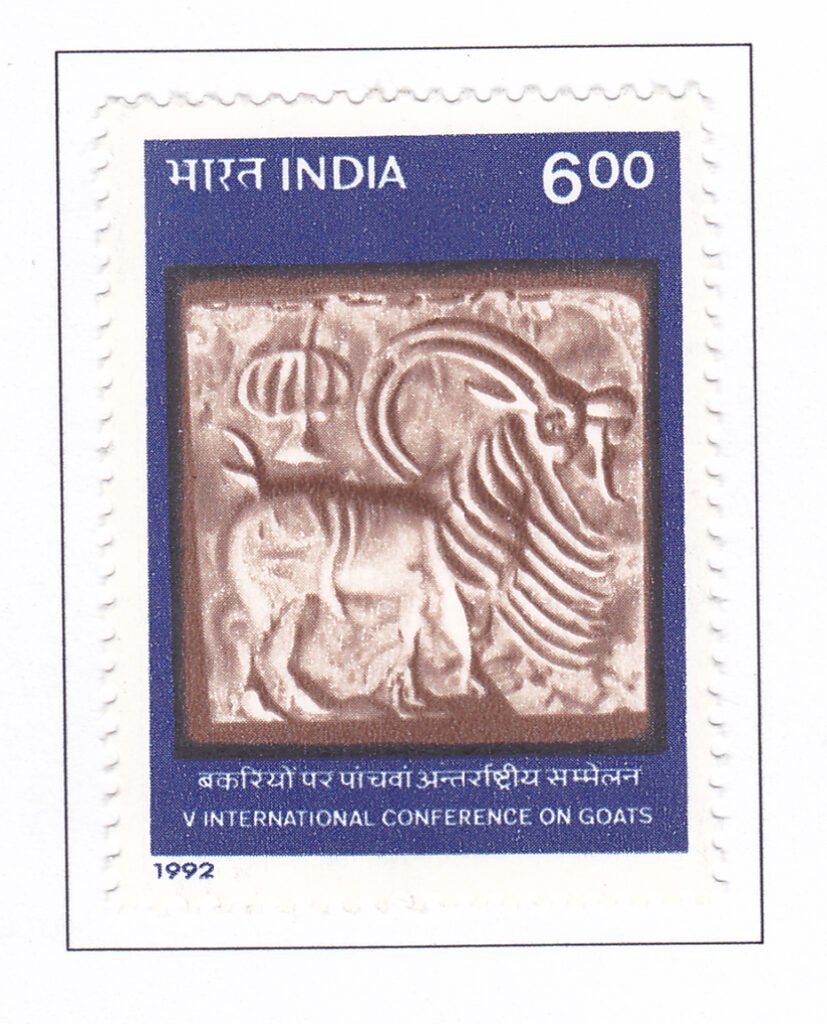
- V International Conference on Goats:
- Theme: “Goat and Rural Prosperity”.
- Date and Venue: March 2 to 8, 1992, in New Delhi.
- Participants: 1,000 attendees, including 700 from India and 300 from other countries.
Conference Objectives
- Scholarly Exchange: To share information on all aspects of goats and their product utilization for human benefit.
- International Cooperation: To encourage and promote international collaboration in goat research and development.
- Socio-Economic Awareness: To highlight the value of goats in reducing rural poverty.
Commemorative Stamps and Designs
- Stamp Design: Features a seal from the Harappa Culture (2500 to 1500 B.C.), designed by India Security Press, Nashik.
- First Day Cover: Displays a stone carving from around 1 B.C., depicting King Daksha with a goat head, his consorts, and their worship of Lord Shiva.
- Cancellation Design: Shows another Harappa Culture seal, designed by Alka Sharma.
Conclusion
Goats play a crucial role in the livelihoods of small holders and the landless poor in developing countries. They provide essential products and contribute positively to the environment. The V International Conference on Goats aims to promote the benefits of goats and foster international cooperation for the betterment of rural communities.