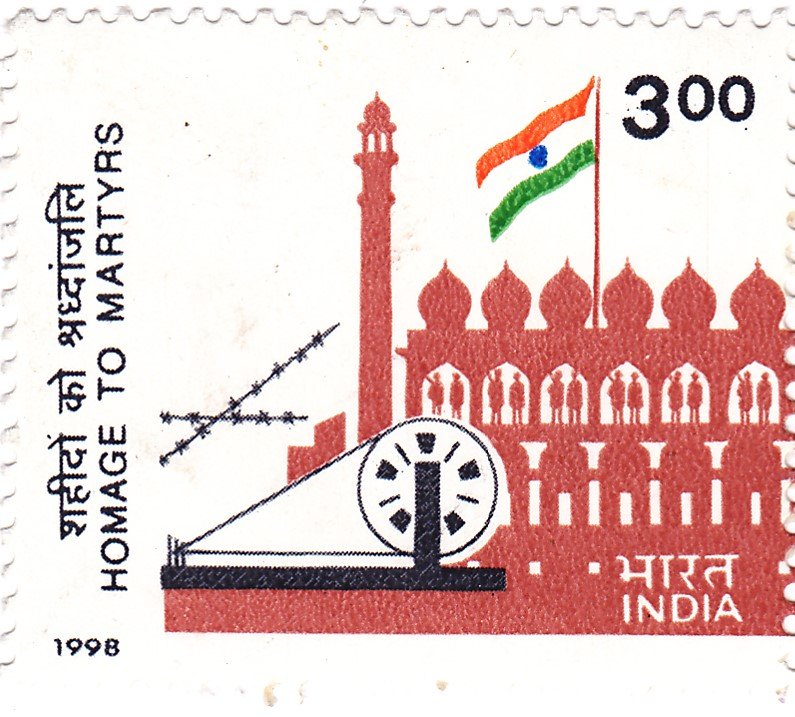
Red Fort, Delhi and Spinning Wheel
Technical Data
| Date of Issue | August 15, 1998 |
|---|---|
| Denomination | Rs. 3 |
| Quantity | 700,000 |
| Perforation | comb 14 |
| Printer | Security Printing Press, Nashik |
| Printing Process | Photogravure |
| Watermark | No Watermark |
| Colors | Multicolor |
| Credit (Designed By) | |
| Catalog Codes |
Michel IN 1639 Stamp Number IN 1700 Yvert et Tellier IN 1405 Stanley Gibbons IN 1803 |
| Themes | Fortresses / Strongholds | Textile Industry |
Symbols of India’s Freedom and Self-Reliance
The Red Fort, Delhi and the Spinning Wheel (Charkha) are two of the most powerful symbols associated with India’s struggle for independence. Together, they represent political freedom, national pride, economic self-reliance, and the spirit of sacrifice that shaped modern India.
Both icons occupy a special place in the history of the Indian freedom movement.
Red Fort, Delhi: Symbol of National Freedom
Red Fort is one of India’s most historic monuments and a lasting symbol of sovereignty.
Built in the 17th century, the Red Fort became deeply connected with India’s freedom struggle and the birth of independent India.
Importance During Independence
On 15 August 1947, when India attained freedom after nearly a century of mass struggle, the Red Fort became the national stage of independence.
It has since remained the place where the Prime Minister of India hoists the national flag every Independence Day, honoring the sacrifices of countless freedom fighters.
Symbolism of Red Fort
The Red Fort represents:
- Freedom from colonial rule
- National unity
- Democratic governance
- Pride in Indian heritage
- The victory of people’s movements
It stands as a reminder of the long struggle that culminated in independence.
Spinning Wheel (Charkha): Symbol of Self-Reliance
Spinning Wheel, popularly known as the Charkha, became one of the strongest symbols of India’s freedom movement under Mahatma Gandhi.
Gandhi promoted the spinning wheel as a tool of economic independence and resistance against British rule.
Why the Charkha Became Important
During colonial rule, British economic policies damaged Indian handloom industries and made India dependent on imported cloth.
The spinning wheel encouraged Indians to:
- Spin their own yarn
- Wear handmade khadi
- Boycott foreign goods
- Support village industries
- Build economic independence
Gandhiji and the Charkha
For Gandhi, the spinning wheel was more than a machine. It represented:
- Dignity of labour
- Simplicity
- Equality
- Rural upliftment
- National unity through shared effort
Millions of Indians adopted khadi and spinning as part of the freedom struggle.
Red Fort and Charkha Together
While the Red Fort symbolizes political independence, the Spinning Wheel symbolizes economic freedom and self-reliance.
Together they reflect two key goals of India’s national movement:
- Freedom from foreign rule
- Freedom from economic dependence
These ideas were central to the making of modern India.
Legacy in Modern India
Even today, both symbols remain deeply relevant:
Red Fort
- Venue of Independence Day celebrations
- National heritage monument
- Reminder of democratic freedom
Spinning Wheel
- Symbol of khadi and sustainable living
- Inspiration for local manufacturing
- Reminder of self-reliance and rural empowerment
Conclusion
The Red Fort, Delhi and the Spinning Wheel are timeless symbols of India’s journey to freedom. One marks the triumph of independence, while the other reflects the spirit of self-reliance that strengthened the freedom movement. Together, they continue to inspire patriotism, dignity, and national progress.
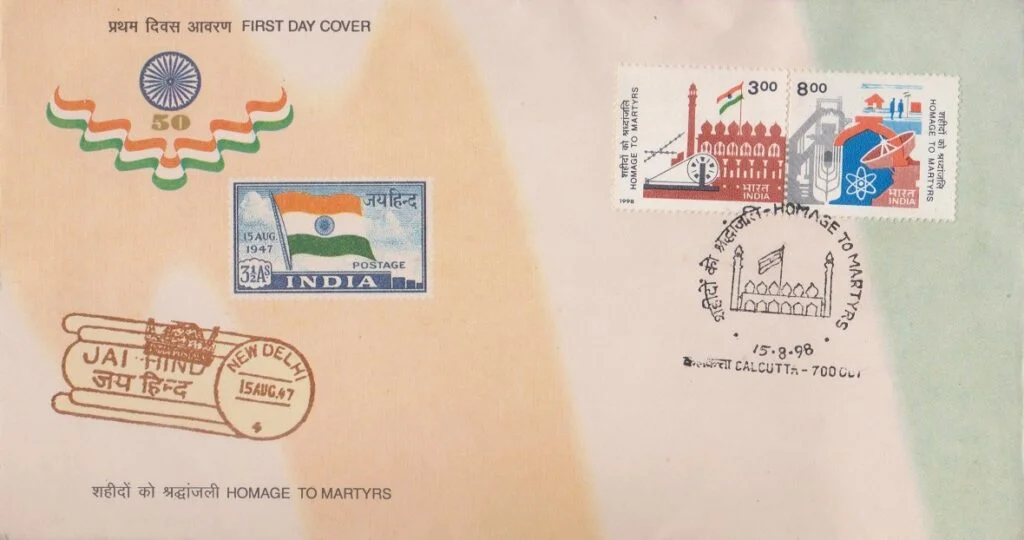
First Day Cover