
Pandit Chatur Lal
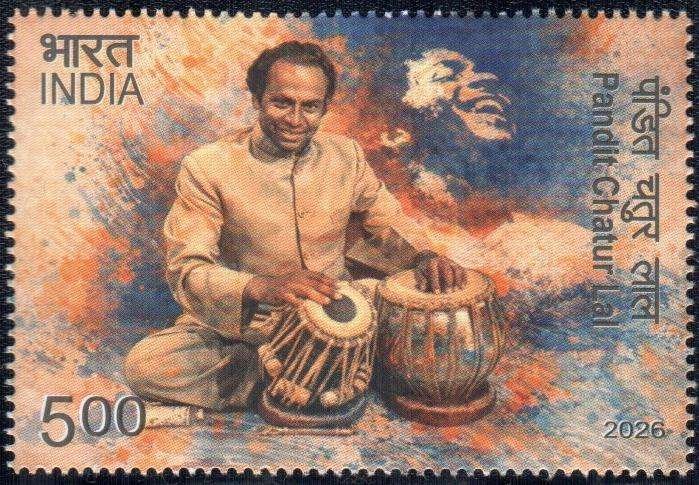
Technical Data
| Date of Issue | April 16, 2026 |
|---|---|
| Denomination | Rs. 5 |
| Quantity | 302,800 |
| Printer | Security Printing Press, Hyderabad |
| Printing Process | Wet Offset |
| Colors | Multicolor |
| Credit (Designed By) | Mr. Anuj Kumar |
| Catalog Codes |
Colnect codes IN 2026.04.16-01 |
| Themes | Music | Musical Instruments | Musicians |
Early Life & Passion
Pandit Chatur Lal was a legendary figure in Indian classical music, known for his mastery of the tabla. He was born in Udaipur, Rajasthan, and showed deep dedication to music from a young age.
His intense practice often continued late into the night—so much so that it reportedly led to police complaints due to the noise.
In 1947, he moved to Delhi, where his association with All India Radio helped him gain national and international recognition.
Global Recognition & Collaborations
In the mid-1950s, Chatur Lal toured internationally with renowned musicians like:
- Pandit Ravi Shankar
- Ustad Ali Akbar Khan
These tours introduced Indian classical music to Western audiences for the first time on a large scale.
With support from violinist Yehudi Menuhin, he performed at prestigious venues such as:
- MoMA (New York)
- Rockefeller Center
Menuhin described him as a “natural showman” and a “supreme pioneer” of Indian music abroad.
Major Contributions
Chatur Lal played a key role in redefining the role of percussion in Indian classical music.
- 1955: Helped bring Indian classical music to global audiences
- 1957: Released “The Drums of India” — the first-ever tabla solo LP record
- Contributed to the Oscar-nominated Canadian film “A Chairy Tale”
- Collaborated with jazz drummer Papa Jo Jones, creating a unique East–West musical fusion
Innovation in Tabla
He introduced the concept of “Taal Vadya Kacheri”, a performance focused entirely on rhythm instruments.
His playing style was known for:
- Lightning-fast rhythms
- Deep sensitivity
- Elevating tabla from accompaniment to a main performance art
Philosophy & Legacy
Chatur Lal believed strongly in the importance of accompaniment in music. His words reflect this:
“All my life served a single purpose: Sangat (accompaniment) both in art and in life.”
Though he passed away young in 1965, his legacy continues through:
- Honors and recognitions
- The “Taa-Dhaa” museum in New Delhi
- A commemorative postage stamp issued by the Department of Posts
Additional Insight
Chatur Lal was also among the early musicians who helped bridge Indian classical music and Western jazz, influencing cross-cultural collaborations that are common today.
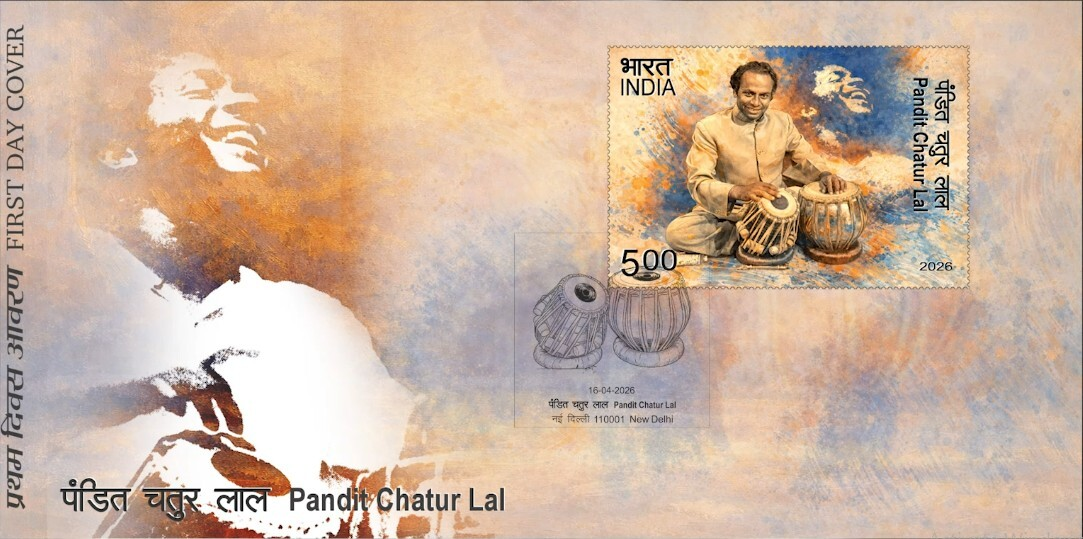
First Day Cover
Leave a Comment
You must be logged in to post a comment.