
Red Panda

Technical Data
| Date of Issue | October 1, 2009 |
|---|---|
| Denomination | Rs. 5 |
| Quantity | 800,000 |
| Perforation | 13½ |
| Printer | Security Printing Press, Hyderabad |
| Printing Process | Wet Offset |
| Watermark | No Watermark |
| Colors | Multicolor |
| Credit (Designed By) | Mr. Suresh Kumar |
| Catalog Codes |
Michel IN 2406 Stamp Number IN 2346 Stanley Gibbons IN 2628 WADP Numbering System - WNS IN059.2009 |
| Themes | Animals (Fauna) | Mammals | Pandas |
The Red panda is one of the most charming and endangered mammals of the Eastern Himalayas. Native to the high-altitude forests of South Asia, the Red Panda is an important symbol of wildlife conservation in India, particularly in the biodiversity-rich North-East region.
Habitat and Distribution
The Red Panda inhabits temperate forests at elevations ranging from 5,000 to 13,000 feet. In India, it is primarily found in Sikkim, Arunachal Pradesh, and parts of North Bengal. These regions provide dense bamboo undergrowth and cool climatic conditions essential for its survival.
The species thrives in mixed deciduous and conifer forests where bamboo forms a significant portion of the understory.
Physical Characteristics
The Red Panda is easily recognized by its reddish-brown fur, white facial markings, pointed ears, and long bushy tail marked with faint rings. Its thick fur helps it survive cold mountain climates, while its semi-retractable claws and flexible ankles make it an excellent climber.
Despite being classified in the order Carnivora, the Red Panda’s diet is predominantly herbivorous.
Diet and Behavior
Bamboo constitutes nearly 90% of the Red Panda’s diet. It also consumes fruits, berries, acorns, roots, and occasionally insects or small birds. Solitary and mostly nocturnal, the Red Panda spends much of the day resting on tree branches and becomes active during dusk and dawn.
Its shy and elusive nature makes it difficult to spot in the wild.
Conservation Status and Threats
The Red Panda faces serious threats from habitat loss, deforestation, and forest fragmentation. Expansion of agriculture, logging, and infrastructure development reduce bamboo forests, directly impacting its food supply. Climate change also poses emerging challenges to its mountain ecosystem.
Conservation initiatives, protected areas, and community-based forest management programs are crucial to safeguarding this endangered species.
Commemorative Stamp Recognition
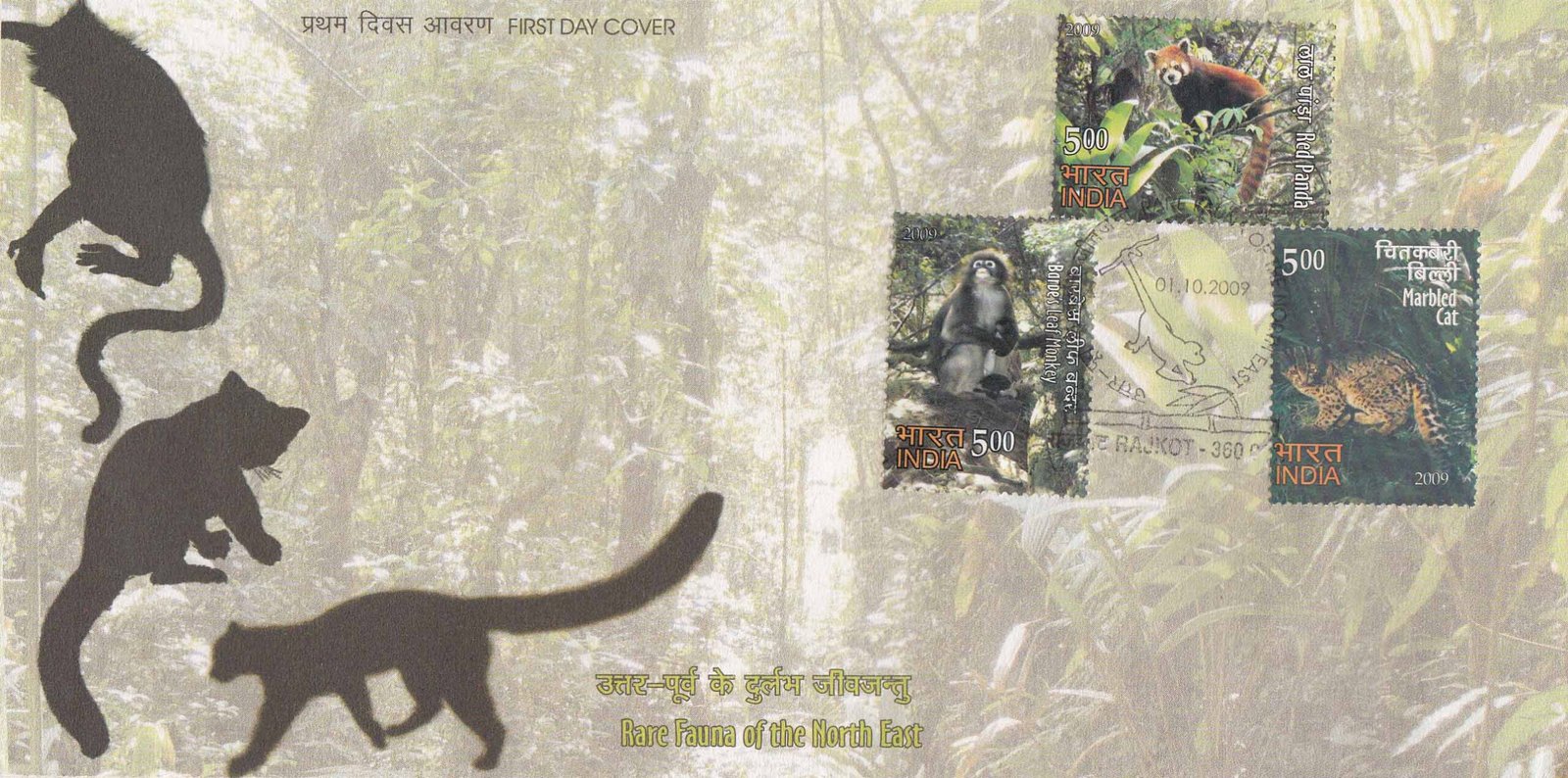
To raise awareness about endangered wildlife, India Post has issued commemorative stamp featuring rare species from North-East India, including the Red Panda. These philatelic releases highlight the importance of preserving fragile Himalayan ecosystems and encourage public participation in wildlife conservation.
First Day Cover
Leave a Comment
You must be logged in to post a comment.