
Rod Puppets
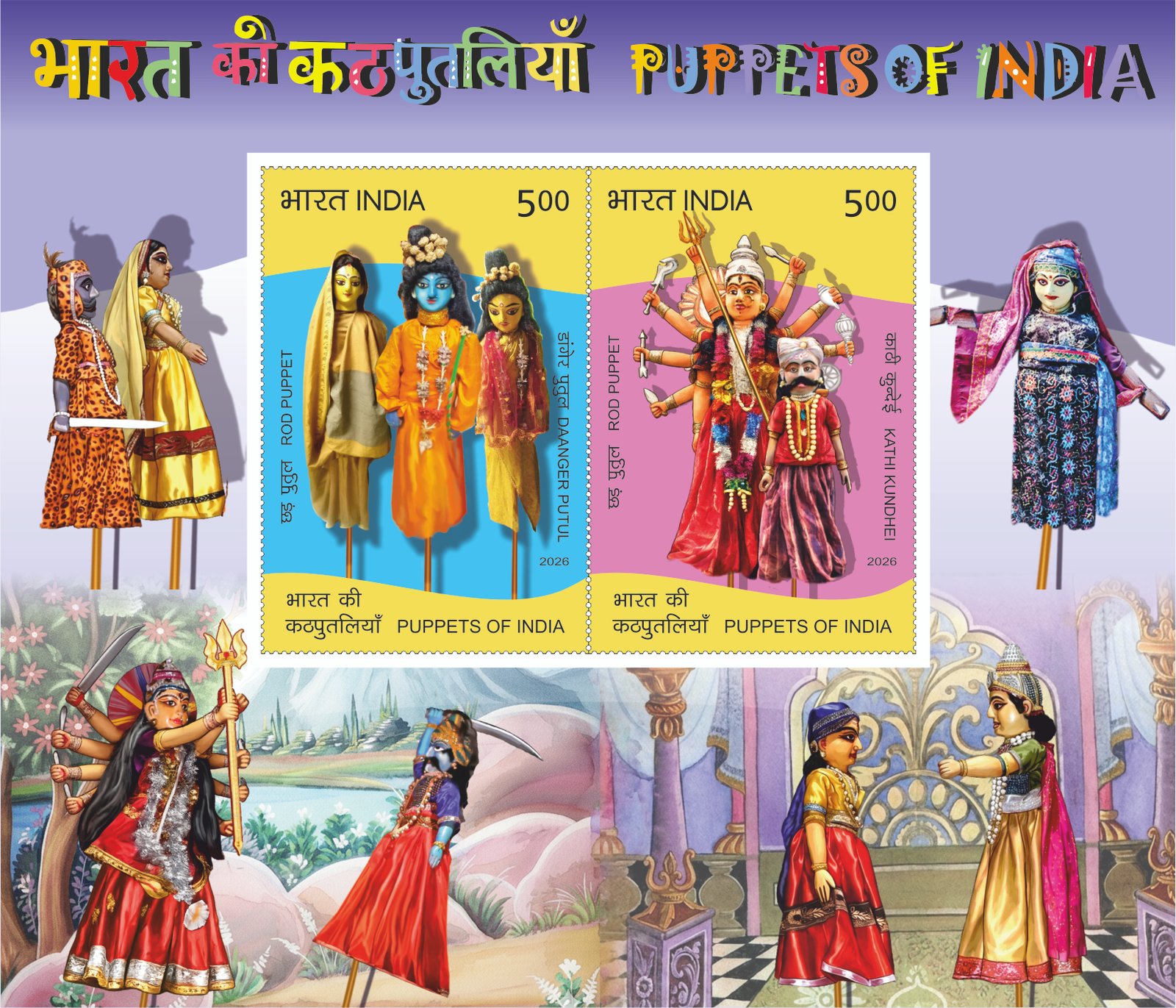
Technical Data
| Date of Issue | February 13, 2026 |
|---|---|
| Denomination | Rs. 10 |
| Quantity | 111,000 |
| Printer | Security Printing Press, Hyderabad |
| Printing Process | Wet Offset |
| Colors | Multicolor |
| Credit (Designed By) | Sh. Sankha Samanta |
| Catalog Codes |
Colnect codes IN 2026.02.13-02 |
| Themes | Puppets |
Strength, Scale and Dramatic Expression
Rod puppetry is one of India’s most dynamic traditional theatre forms, combining sculptural artistry with vigorous performance technique. Unlike string or glove puppets, rod puppets are controlled by rods attached to the head and sometimes the hands, enabling bold gestures, expansive movement, and commanding stage presence. This form continues to thrive particularly in Jharkhand, Odisha, and West Bengal.
Rod puppet traditions in India draw extensively from the epics—Ramayana and Mahabharata—as well as the Puranas, regional legends, and social narratives. Through these stories, puppeteers communicate moral values, heroic ideals, and contemporary commentary, sustaining a living bridge between mythology and community life.
Distinctive Features of Rod Puppetry
- Large Size: Rod puppets are often larger than glove puppets and may range from 60 centimeters to over one meter in height.
- Solid Construction: Heads are carved from wood and carefully painted, while bodies are clothed in elaborate costumes.
- Expressive Movement: The central rod supports the head and torso, while additional rods control the hands, enabling dramatic gestures and dance-like actions.
- Musical Accompaniment: Performances include live singing, percussion, and dialogue, enhancing the theatrical impact.
The design, costume, and coloration reflect the characters portrayed—heroes, villains, gods, demons, and royalty—making each puppet both a sculptural object and a dramatic persona.
Major Rod Puppet Traditions
Daanger Putul (West Bengal)
Daanger Putul Nach is a prominent rod puppet tradition of West Bengal. The repertoire includes episodes from the Ramayana, Bengali folk tales, and social dramas inspired by Jatra theatre.
The puppets, often up to 1.25 meters tall, are carved from wood and painted in the traditional pata style. Performances are elaborate and may last several hours, accompanied by instruments such as khol, nagara, harmonium, and cymbals. Puppeteers operate behind a bamboo-and-cloth stage with painted backdrops, creating a vibrant visual spectacle.
Kathi Kundhei (Odisha)
Kathi Kundhei—literally “stick doll”—is Odisha’s rod puppet tradition. Performances begin with a ritual invocation, after which the Sutradhara introduces episodes from the Ramayana or Mahabharata, such as the battles between Durga and Mahishasura or Rama and Ravana.
The puppets, about 60 centimeters tall, have carved wooden heads and jointed shoulders. While rods control the main structure, internal strings sometimes assist in arm movement, creating fluid gestures. The staging is accompanied by drummers, cymbal players, and reed instruments.
Cultural and Artistic Significance
Rod puppetry is more than entertainment—it is a repository of regional identity, oral tradition, and intergenerational knowledge. Traditionally transmitted within families, children learn the craft by observing and assisting elders in carving, costume-making, music, and performance.
The art reflects a synthesis of theatre, sculpture, painting, music, and storytelling. Its physicality and scale allow for powerful dramatic expression, making rod puppetry particularly effective in open-air village performances.
Philatelic Recognition
Acknowledging the richness of India’s puppetry traditions, India Post has issued a Miniature Sheet on Puppets of India, celebrating the diverse forms of glove, string, rod, and shadow puppets.
Through this commemorative issue, rod puppets are honoured as vibrant embodiments of India’s artistic heritage—preserving epic narratives, local histories, and community values across generations.
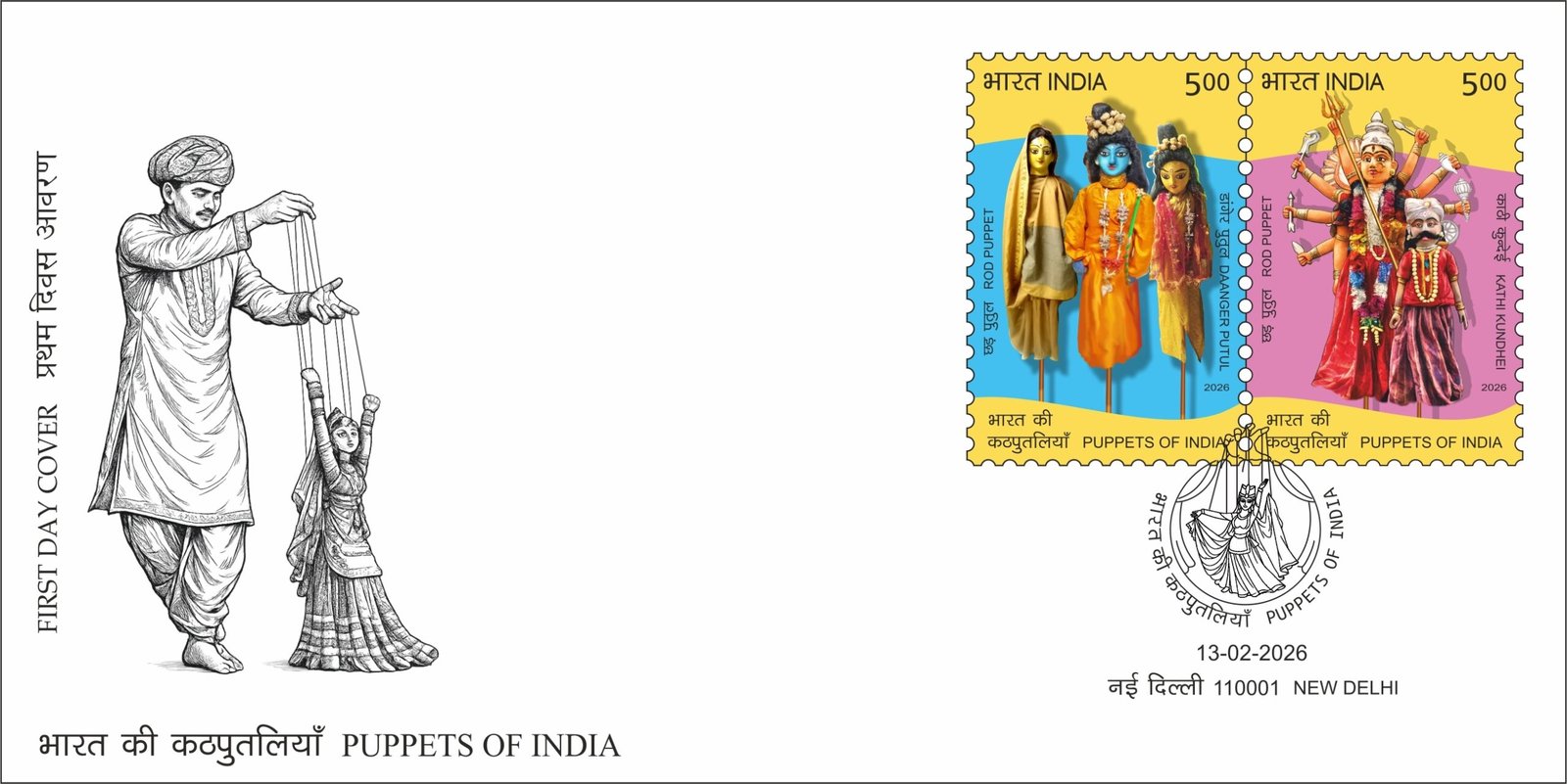
First Day Cover
Leave a Comment
You must be logged in to post a comment.