
About this stamp
Table of Contents
Ritu Rang – Hemant
The “Ritu Rang” stamp series by India Post is a tribute to the rich tradition of Indian Miniature Painting, reflecting the art and literature that celebrate the seasons of India. Here’s a detailed overview:
Indian Miniature Painting
Historical Context:
- Origins: Miniature painting in India began during the Mughal era, evolving through various regional styles such as Kangra, Rajasthan, and Deccan.
- Evolution: The art form incorporated diverse themes, from Mughal court scenes to local legends and literature.
Artistic Significance:
- Literary Influence: Miniatures often depicted themes from texts like Jayadeva’s “Gita Govinda” and Keshav Das’s “Kavipriya” and “Rasikpriya,” blending poetic expression with vibrant colors.
- Sensitivity: The miniatures captured all aspects of life with meticulous attention to detail, celebrating both the grand and the minute.
Seasons Depicted in Miniature Art
Kalidasa’s Influence:
- “Ritusamhara”: This classic work by Kalidasa describes the six seasons of India—Vasant (Spring), Greeshm (Summer), Varsha (Monsoon), Sharad (Autumn), Hemant (Winter), and Shishir (Late Winter)—through romantic and lyrical descriptions.
Continuing Tradition:
- Seasonal Representation: Indian art continued this tradition, illustrating the beauty of each season through poetic and visual means.
Details of the “Ritu Rang” Stamps
The stamp series features four paintings, each representing one of the seasons:
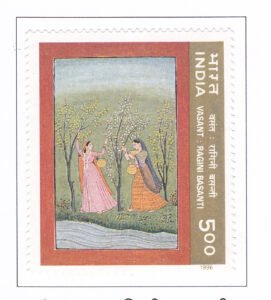
- Vasant (Spring):
- Artwork: Depicts the vibrant and renewing spirit of spring.
- Musical Mode: Illustrated through Rag Basanti, capturing the essence of blooming flowers and new beginnings.
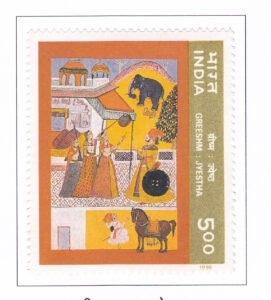
- Greeshm (Summer):
- Artwork: Shows the intense heat of summer, with a warrior’s campaign hindered by the sweltering conditions.
- Essence: Highlights the heat haze and its impact on daily life.
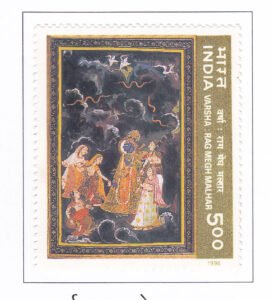
- Varsha (Monsoon):
- Artwork: Celebrates the monsoon season with imagery of rain and revelry.
- Musical Mode: Depicted through Rag Megh Malhar, praising the life-giving rains.
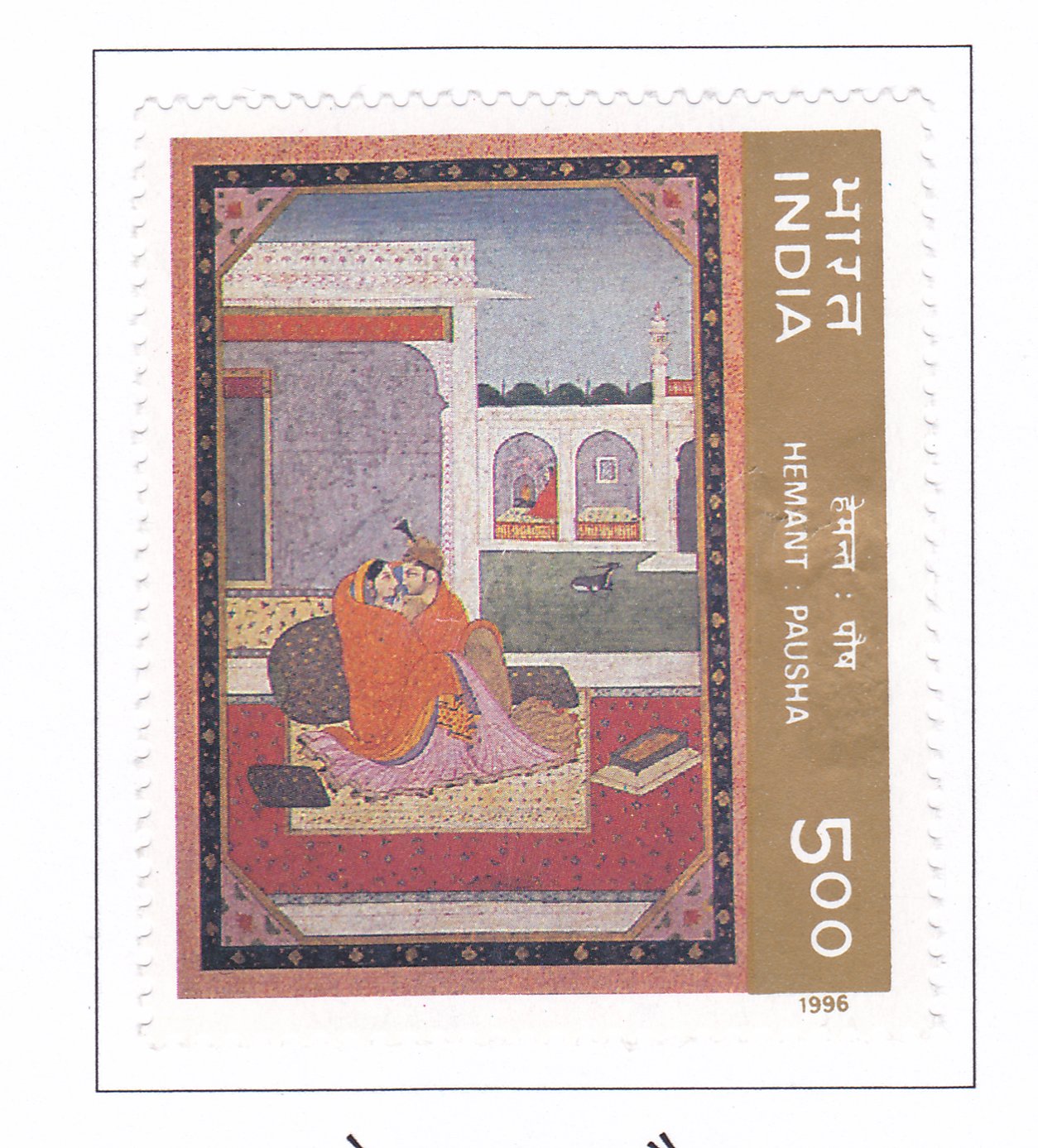
- Hemant (Winter):
- Artwork: Captures the cold of winter and the comfort of warmth.
- Essence: Shows the biting cold of winter and the warmth of fire and quilts.
Special Features
- First Day Cover: Features the thematic artwork of the stamps.
- Cancellation Design: Incorporates a border design that complements the miniatures.
The “Ritu Rang” stamps beautifully encapsulate the essence of each season through traditional miniature art, paying homage to India’s rich cultural and artistic heritage.