About this stamp
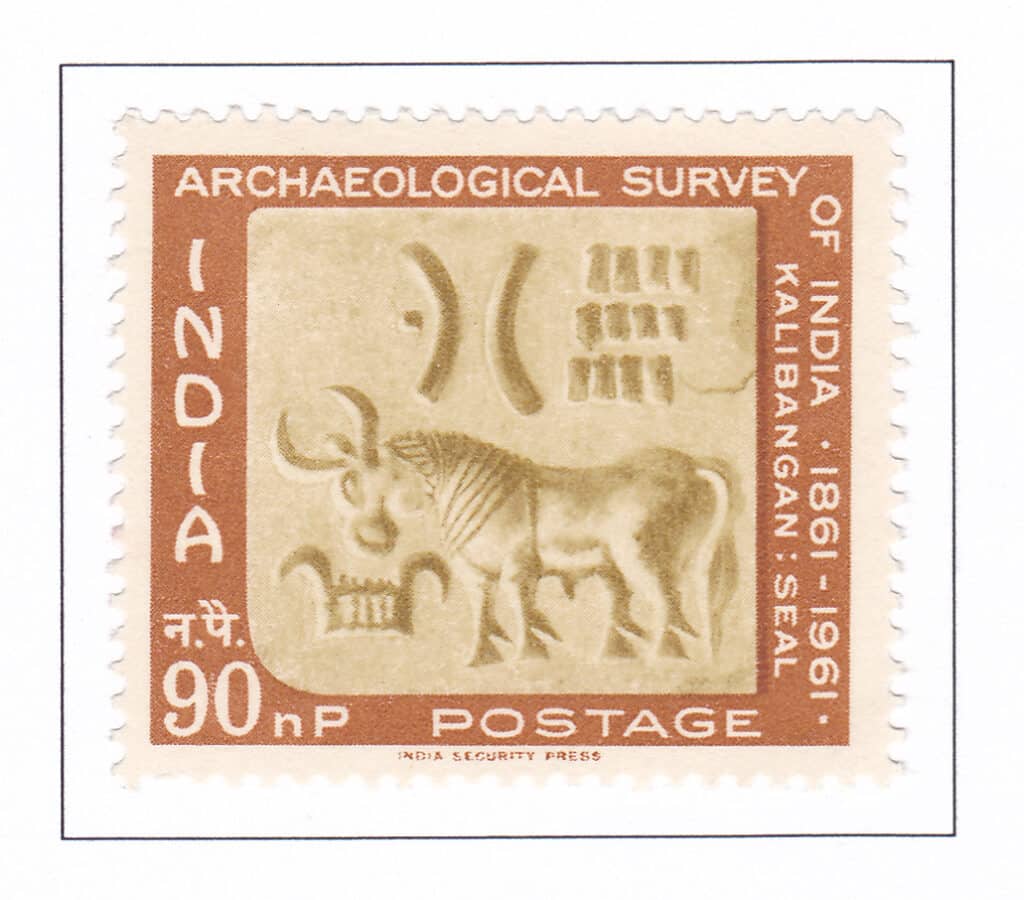
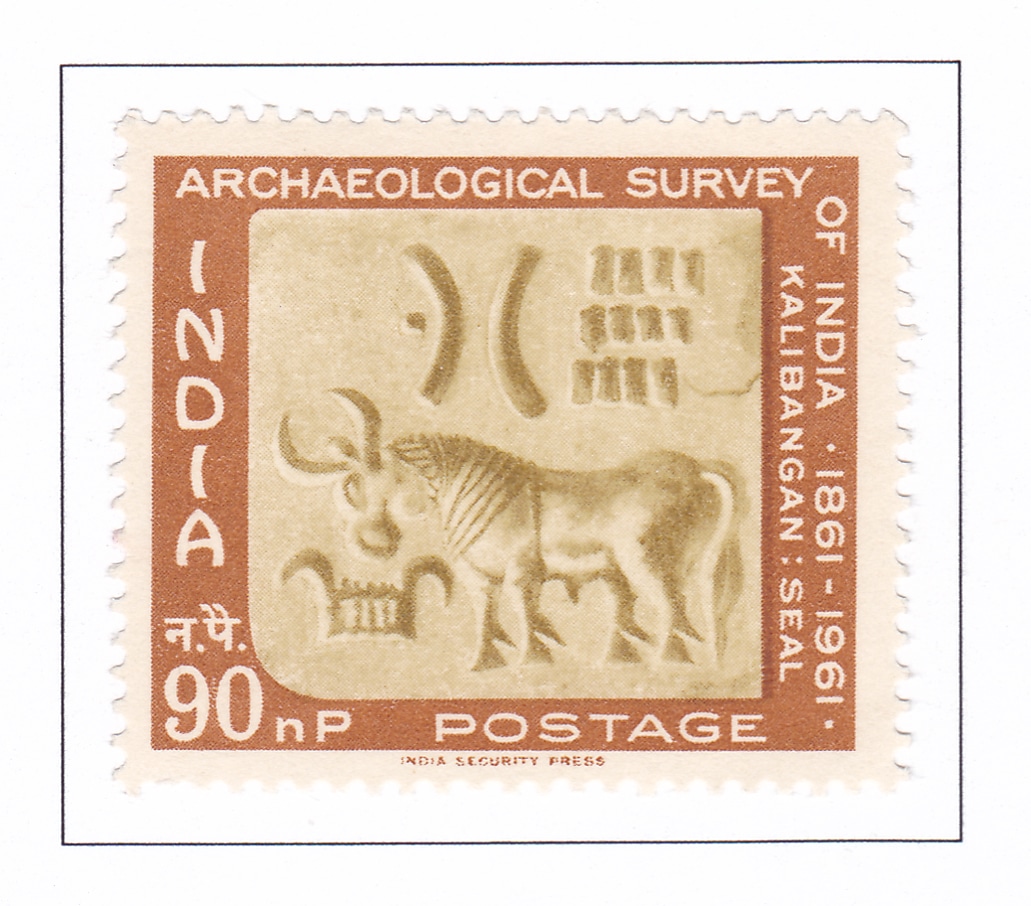
The north-western region of Rajasthan, concealed beneath rolling sand dunes, holds evidence of a once-thriving civilization that rivaled, if not surpassed, the prosperity of ancient civilizations worldwide. Archaeological exploration along the banks of the now-dry Ghaggar River, formerly known as Sarasvati, in District Ganganagar, has unveiled numerous ancient sites dating back to the days of the Indus Valley Civilization. Among these sites, Kalibangan stands out, excavated in the year of its centenary by the Archaeological Survey of India.
Kalibangan’s significance suggests it may have been a third provincial capital alongside Harappa and Mohenjo-daro within the expansive Indus Valley Empire. The extensive findings at Kalibangan include pottery, chert blades, copper implements, ornaments, terracotta figurines, gamesmen, weights, and seals. The seals, crafted from steatite and inscribed with the enigmatic Harappan script, often depict animal figures or scenic compositions. These seals were likely used for stamping packages containing trade commodities, indicating the extent of trade and commerce in ancient India.
The discovery of a Harappan dockyard at Lothal, near the Arabian Sea coast in Gujarat, further underscores ancient India’s engagement in maritime trade with neighboring and distant lands. Seals of the typical Indus style have been unearthed in Mesopotamia, suggesting the extent of trade connections between the two regions.
The seals serve as crucial artifacts for dating the Harappa culture, as they have been found in datable contexts in western Asia, particularly during the period of Sargon of Akkad (circa 2350 BCE). In the absence of direct dating methods like Carbon-14 tests, the seals provide valuable insights into the chronology of the Harappan civilization.
To commemorate the centenary of the Archaeological Survey of India, the Posts and Telegraphs Department is issuing two special postage stamps on December 14, 1961. These stamps aim to celebrate the remarkable progress made by the Archaeological Survey of India in uncovering India’s ancient past, offering contemporary society a deeper connection to its historical roots and aspirations.
For More Information
Read more here: