
Rampur Raza Library
Technical Data
| Date of Issue | June 19, 2009 |
|---|---|
| Denomination | Rs. 20 |
| Quantity | 500,000 |
| Perforation | 13½ |
| Printer | Security Printing Press, Hyderabad |
| Printing Process | Wet Offset |
| Watermark | No Watermark |
| Colors | Multicolor |
| Credit (Designed By) | Shri Kamleshwar Singh |
| Catalog Codes |
Michel IN BL69 Stamp Number IN 2330a Stanley Gibbons IN MS2598 WADP Numbering System - WNS IN033MS.2009 |
| Themes | Buildings | Coins | Libraries |
Stamps in this Miniature Sheet
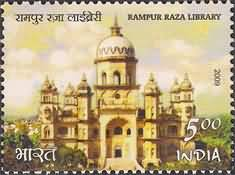


The Rampur Raza Library is one of India’s most distinguished repositories of rare manuscripts, miniature paintings, and printed works. Formally established by the Government of India on 1 July 1975 through an Act of Parliament, it was declared an institution of national importance.
Before attaining this status, the library functioned as a state library under the patronage of Nawab Raza Ali Khan (1930–1966), whose vision preserved and expanded its extraordinary collection.
Vast Collection of Rare Books and Manuscripts
The Rampur Raza Library houses:
- Around 50,000 printed books in Arabic, Persian, Sanskrit, Hindi (in both Arabic and Devanagari scripts), and Pushto
- Over 15,000 rare manuscripts in these languages
- 205 exquisite miniature paintings on palm leaf, popularly known as Bhoj Patra
Its collection reflects centuries of intellectual, literary, and artistic achievement across civilizations.
Renowned scholar Shibli Nomani (Maulana Shibli Numani), after visiting the library in 1914, praised it as unparalleled in India and richer than many great libraries of Egypt, Syria, Turkey, and Europe.
Art historian Percy Brown, author of Indian Paintings under the Mughals, described it as unique, especially for its remarkable illustrated manuscripts.
Arabic Collection: Priceless Calligraphic Masterpieces
Among its Arabic treasures, copies of the Holy Quran stand out prominently. The library preserves:
- A 7th-century Quran manuscript written in early Kufic script on parchment, attributed to Hazrat Ali
- A beautifully ornamented Quran calligraphed by the 13th-century master Yaqut al-Musta’simi of Baghdad
- The rare manuscript Diwan-al-Hadira (1221), once part of the royal library of Ibrahim Adil Shah of Bijapur
- Sharhul Kafia of Razi, bearing marginal notes by Sadullah Khan, Prime Minister of Shah Jahan, along with seals and signatures of Mughal emperors
These works represent the pinnacle of Islamic calligraphy and manuscript artistry.
Persian Collection: Medicine, Philosophy and Miniature Art
The Persian manuscripts include rare works on medicine, philosophy, and art. Notable among them is Zakhira-i-Khwarism-Shahi by Zainuddin Ibrahim Gurgani (11th century).
The manuscript of Diwan-e-Hafiz is another prized possession, admired by scholars and Sufi devotees worldwide.
Many Persian miniature paintings in the collection reflect the Mongol and Chinese artistic influences associated with the Herat School.
Ramayana and Sanskrit-Hindi Manuscripts
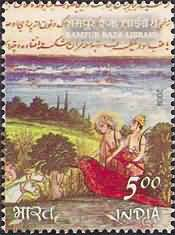
One of the most remarkable highlights is a Persian translation of the Ramayana by Sumer Chand, illustrated during the reign of Mughal emperor Farrukhsiyar in 1715.
The library also preserves the Ramayana written in Grantha script, along with rare Hindi and Sanskrit works such as:
- Prabodh Chandrika on Hindu grammar
- A commentary on Jyothish Ratnamala by Shripat Bhatta
- The original complete version of Madhumati by Malik Manjan
- Padmavat by Malik Mohammad Jaisi with Persian translation
These manuscripts beautifully demonstrate cultural and linguistic exchange across traditions.
Urdu and Turkish Collections
The Urdu section, though smaller, contains invaluable works such as:
- Diwan of Shah Hatim
- Kulliyat of Mir Taqi Mir
- Diwan-i-Soz
- Manuscript of Diwan-e-Ghalib with corrections in the poet’s own handwriting
- Rare copies of the first Urdu short story, Rani Ketki Ki Kahani
The Turkish collection includes Babur’s Tozak and reflects the linguistic influence of Turkish on Indian languages. The word “Urdu” itself is of Turkish origin.
The library also preserves works of prominent Pushto writers such as Khushal Khan Khattak and the Sufi poet Rahman Baba.
Unique Artifacts and Global Manuscripts
Beyond manuscripts, the Rampur Raza Library holds rare astronomical instruments and art objects. Many manuscripts once belonged to historic libraries of Mecca, Medina, Egypt, Iran, Iraq, Afghanistan, and Halab (Aleppo), making the collection internationally significant.
Even today, a visit to the Rampur Raza Library evokes the grandeur of classical scholarship and artistic refinement.
Miniature Sheet on Rampur Raza Library
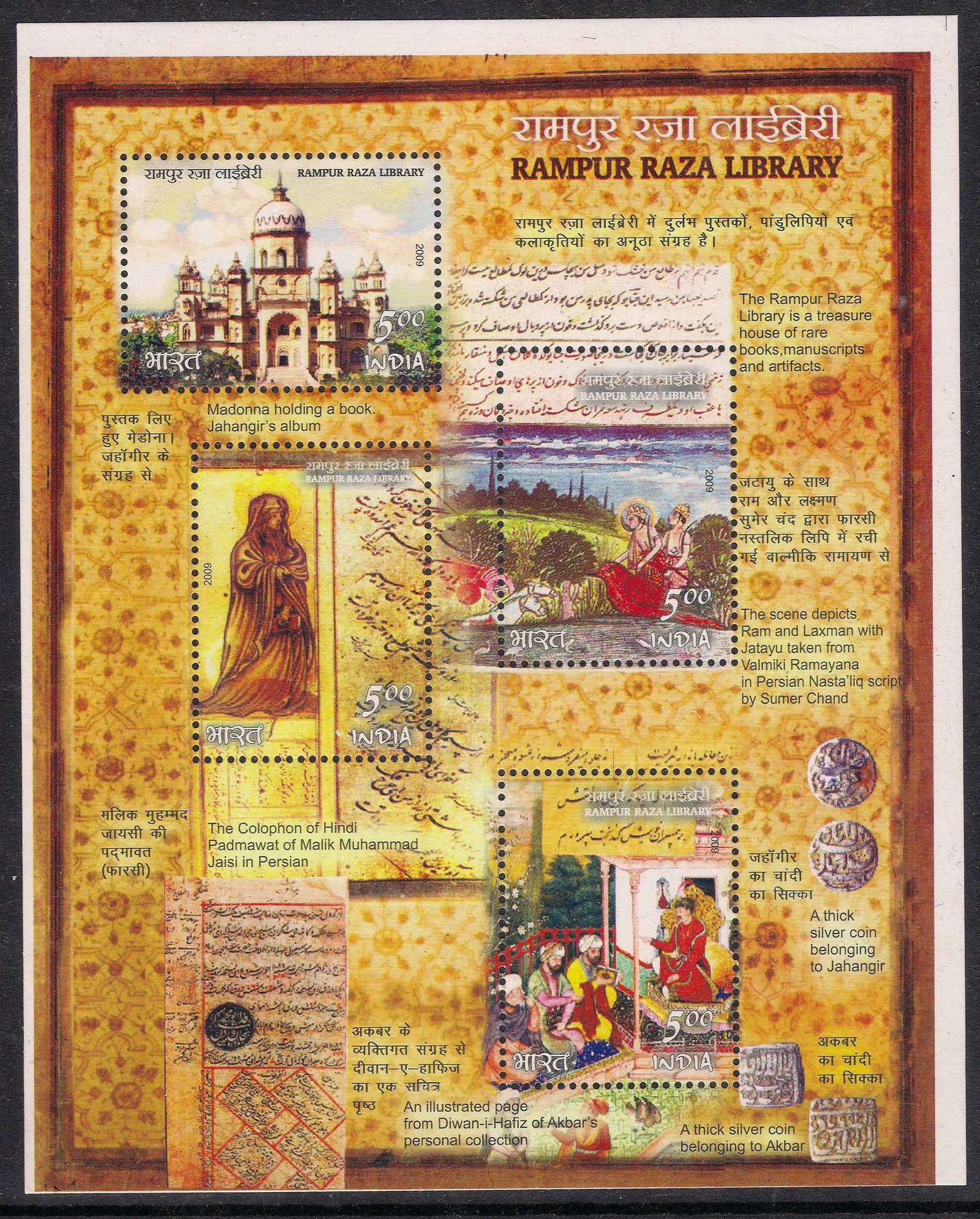
To honour this extraordinary institution, India Post issued a Miniature Sheet consisting of four commemorative postage stamps dedicated to the Rampur Raza Library.
These stamps celebrate its invaluable contribution to preserving India’s cultural, literary, and artistic heritage and highlight its status as a national treasure of manuscripts and rare collections.
A Living Legacy of Knowledge
The Rampur Raza Library continues to stand as a beacon of scholarship and cultural harmony. Its unparalleled manuscript collection, miniature paintings, rare books, and art objects make it one of the most important research libraries in India.
As a symbol of India’s rich intellectual tradition, the library invites scholars, historians, and visitors alike to experience a heritage that has flourished for centuries.
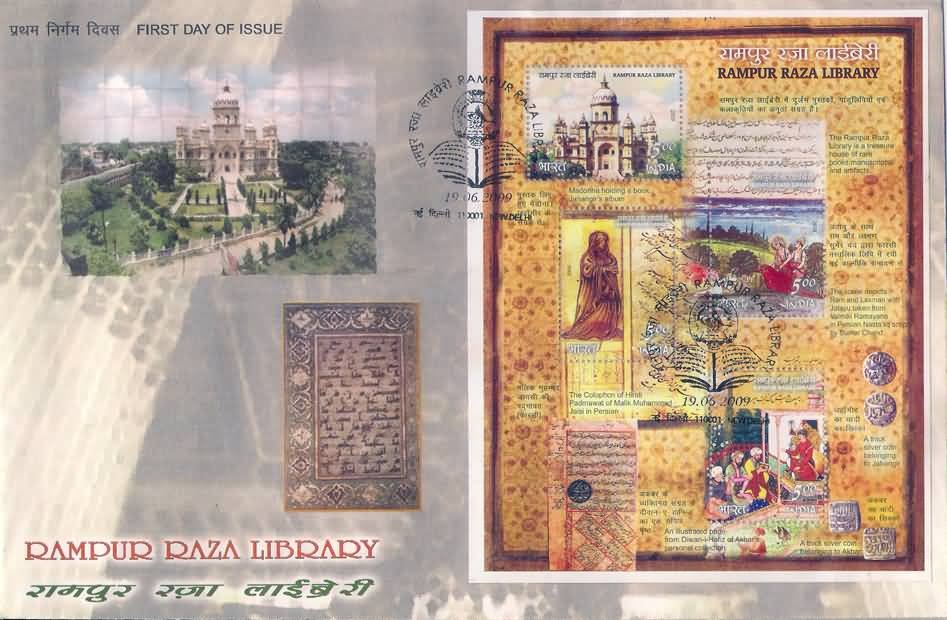
First Day Cover
Leave a Comment
You must be logged in to post a comment.