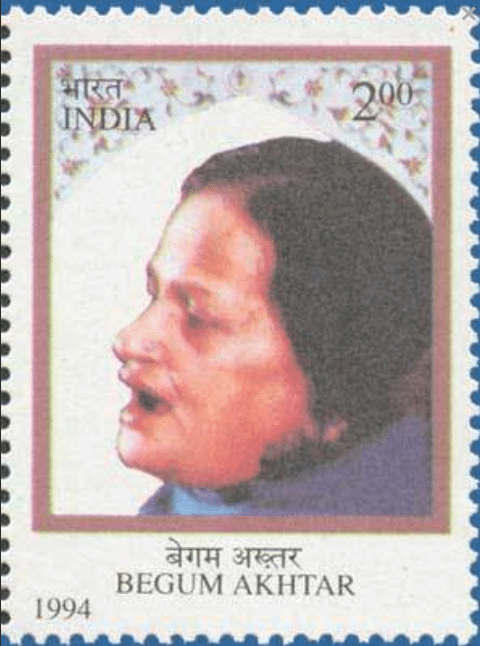
About this stamp
Overview:
Begum Akhtar, also known as Malika-i-Ghazal, is celebrated as the mother of ghazals in the Indian subcontinent. Her profound impact on the genre has made her a legendary figure in Indian music history.
Early Life:
- Birth and Early Years: Born on October 7, 1914, in Faizabad, she showed musical talent from a young age.
- First Recognition: She was barely seven when she was captivated by the music of Chandra Bai, a singer with a touring theatre group. Hearing great musicians such as Gauhar Jaan and Malka Jaan later turned her from films to Indian classical music.
Musical Contributions:
- Rise to Fame: Begum Akhtar’s dedication and passion for ghazal singing elevated the genre to new heights, making it a prominent musical form.
- Popular Hits: Known for her ghazals, her rendition of “Deewana Banana Hai To Deewana Banade” became immensely popular, captivating music lovers across India.
- Secularism and Gender Assertion: Begum Akhtar became a symbol of both gender assertion and secularism. Her song “Ganga Maiya” is particularly noted for its resonance with listeners across different communities.
Legacy:
- Impact on Music: Her unique style and emotional depth in ghazal singing have left a lasting impression on Indian music.
- Commemoration: The Department of Posts issued a commemorative postage stamp to honor Begum Akhtar, celebrating her contributions to Indian art and culture. This stamp serves as a tribute to her legacy as the queen of ghazals.
Significance:
Begum Akhtar’s influence extends beyond her musical achievements. She is remembered for her role in bringing ghazals to the forefront and for her contributions to promoting secularism and gender equality through her art.
For More Information
Read more here: