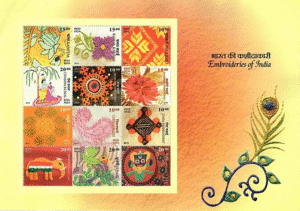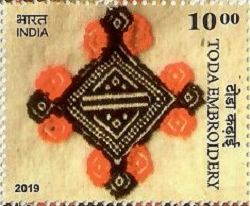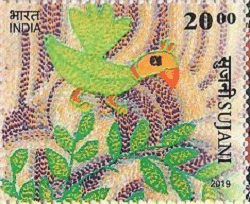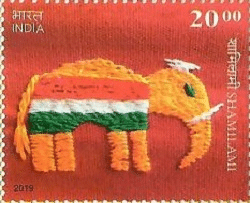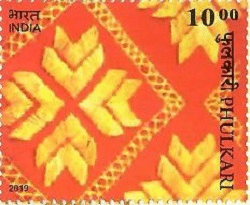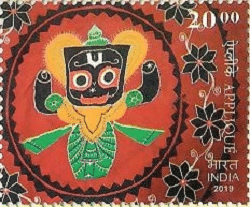
About this stamp
Applique Embroidery of India – A Tapestry of Tradition and Craftsmanship
A Legacy Sewn in Stitches
Among the many diverse and intricate embroidery traditions of India, Appliqué holds a special place for its vibrant creativity and handcrafted charm. The art of appliqué involves stitching separately prepared fabric motifs onto a larger base, transforming plain surfaces into ornate works of art. Each creation tells a story — of design, devotion, and the enduring spirit of Indian craftsmanship.
Historical Threads of the Craft
The appliqué technique is believed to have reached India around the 17th century, where it flourished in different regional forms. What began as a practical means to repair or beautify worn fabrics gradually evolved into an elaborate decorative art. Over time, it became deeply woven into the social and cultural fabric of Indian life — adorning temples, homes, garments, and ceremonial spaces.
Regional Expressions and Cultural Significance
Across India, appliqué found unique expressions. In Rajasthan, it became a celebratory craft, used to decorate homes with colourful appliqué hangings to welcome newborns and mark festive occasions. The Banjara tribal women further enriched the technique by blending it with embroidery and gota work, creating intricate motifs on coarse fabrics such as velvet. These designs, prepared by sewing pieces of zari ribbons and patterned textiles, reflect the community’s rich nomadic heritage and vibrant aesthetic.
Technique and Artistic Detailing
Appliqué embroidery is a harmonious blend of precision and imagination. Craftsmen and women cut fabric pieces — often in floral, geometric or symbolic shapes — and stitch them onto a base cloth, creating layered, multidimensional effects. The interplay of colour, texture, and pattern transforms the simplest fabrics into artful compositions, embodying both tradition and innovation.
From Utility to Art Form
Originally used for tents, wall hangings, and ceremonial textiles, appliqué soon became an artistic expression extending to garments, accessories, and home décor. Today, it continues to inspire designers and artisans who reimagine this traditional art for contemporary fashion and interior design, keeping the legacy alive while embracing modern sensibilities.
A Philatelic Tribute
The issuance of a commemorative postage stamp on Appliqué Embroidery of India celebrates this enduring heritage — a tribute to the skilled hands and creative minds that have preserved this centuries-old craft. Each stitch in appliqué embroidery represents not just aesthetic beauty but also the timeless connection between India’s artisans and their artistic ancestry.