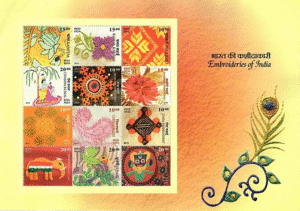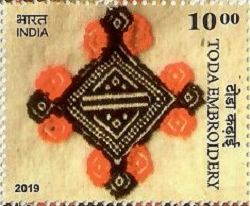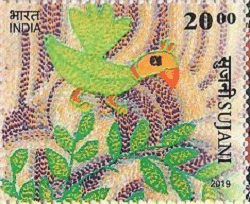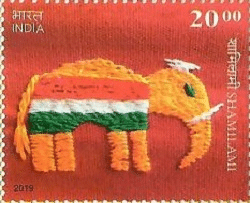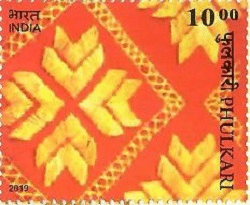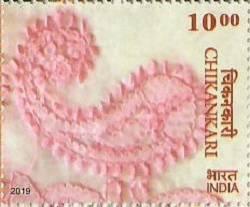
About this stamp
The Elegance of Lucknow’s Timeless Embroidery
A Legacy Sewn in White
Among India’s most refined and delicate embroidery traditions, Chikankari stands as a symbol of grace and subtlety. Known for its ethereal white-on-white threadwork, Chikankari embodies the soul of Lucknow, the city of Nawabs, poetry, and unparalleled artistry. Every stitch of this craft speaks of refinement, patience, and royal patronage that transformed simple muslin into sheer poetry on fabric.
Historical Roots: From Mughal Courts to Modern Ramps
The origins of Chikankari trace back to the Mughal era, believed to have been introduced by Empress Noor Jahan, the wife of Emperor Jahangir. A connoisseur of art and beauty, Noor Jahan encouraged this intricate needlework that soon became a favourite among the royal courts.
What began as a decorative art for fine muslin garments evolved into a distinctive identity of Lucknow’s cultural heritage. Over centuries, Chikankari became not just embroidery, but a language of elegance, often seen on delicate kurtas, saris, dupattas, and home textiles.
The Art of Shadow Work
Chikankari, derived from the Persian word ‘chikan’ meaning elegant patterns on fabric, is famous for its shadow work technique. Traditionally, white thread is embroidered on fine white muslin, cotton, or voile, giving the designs a soft, shadow-like effect.
However, modern Chikankari has embraced vibrant hues — from soft pastels to rich jewel tones — while maintaining the finesse that defines this art. The motifs often draw inspiration from nature: roses, jasmine, lotuses, creepers, and paisleys, all delicately brought to life through needle and thread.
The Process: From Printing to Perfection
Creating a Chikankari masterpiece is a meticulous process involving multiple stages and skilled artisans. It begins with block printing of designs using a mixture of glue and indigo. The fabric is then passed to embroiderers who bring the motifs alive using over 40 different stitches — each with its unique texture and expression.
Some of the most prominent stitches include:
- Jali work – for creating net-like patterns
- Buttonhole stitch – for defining petals and edges
- French knots – for adding raised floral details
- Running stitch – for outlining and structure
Each stitch contributes to the layered delicacy that gives Chikankari its timeless charm.
An Emblem of Lucknow’s Craftsmanship
The charm of Chikankari lies in its understated beauty — it doesn’t shout for attention but draws you in with its quiet sophistication. The craft became a livelihood for thousands of women artisans in and around Lucknow, who passed the skill from one generation to the next.
Chikankari work adorns phirans, kurtas, sarees, stoles, and home furnishings, making it both a traditional heirloom and a contemporary fashion statement. Designers across the world have reimagined Chikankari, blending it with silk, chiffon, and georgette to suit modern tastes while retaining its vintage essence.
A Stitch Preserved Through Time
Despite the passage of centuries, Chikankari remains one of India’s most recognizable and cherished embroidery traditions. The craft continues to receive national and international acclaim for its beauty and craftsmanship. It also serves as a testament to the artistic excellence of Lucknow, a city that continues to inspire through its artistry, culture, and grace.
To celebrate this exquisite legacy, India Post issued a commemorative postage stamp honouring Chikankari — a fitting tribute to an art form that transformed plain fabric into a canvas of dreams.
Conclusion
Chikankari is not just embroidery; it is heritage woven in thread, a whisper of history that continues to enchant the modern world. From the royal ateliers of Noor Jahan to today’s global runways, Chikankari has remained timeless — delicate, dignified, and eternally beautiful.