About this stamp
The Dandi March, led by Mahatma Gandhi, stands as one of the most iconic and pivotal events in India’s struggle for independence. Initiated against the backdrop of the Indian National Congress’s declaration of Purna Swaraj (total independence) in December 1929, the march symbolized a powerful act of civil disobedience against the oppressive salt laws imposed by the British colonial government.
On March 12, 1930, at 6:30 in the morning, Gandhi commenced the historic march from his ashram on the banks of the Sabarmati River in Ahmedabad. Accompanied by 78 satyagrahis from diverse backgrounds, Gandhi, despite his frail appearance at the age of 61, displayed remarkable energy and determination throughout the journey. Covering a distance of approximately 385 kilometers (241 miles) to reach the seaside village of Dandi in Gujarat, Gandhi and his followers halted at 22 places along the way, engaging in prayers, spinning, and addressing public gatherings.
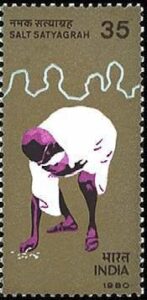
The march reached Dandi on April 5, 1930, and on the next morning Gandhi, amidst a tense and solemn atmosphere, defied the salt laws by picking up a handful of salt from the sea at Dandi. This symbolic act marked the beginning of a mass movement as millions across the nation followed Gandhi’s lead, defying the salt laws and courting imprisonment.
The arrest of Jawaharlal Nehru on April 14 and Gandhi himself on May 4 signaled the end of the Dandi March, but it ignited a fervent spirit of resistance and unity among the Indian populace. The Dandi March served as a catalyst for the larger independence movement, eventually leading to India’s liberation from British rule.
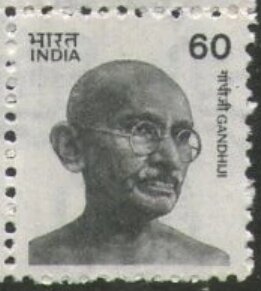
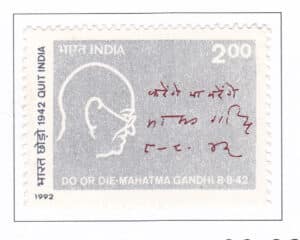
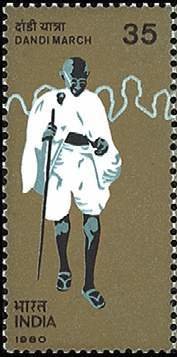
To honor the significance of this historic event and pay homage to the Father of the Nation, the Indian Posts and Telegraphs Department issued a set of two se-tenant stamps. These stamps depict Gandhi marching to Dandi and defying the salt laws, capturing the essence of his courageous act and the spirit of national solidarity that it inspired. The first-day cover, designed by Charanjit Lal, features a facsimile of Gandhi’s message to the world and an artist’s impression of his marching feet against a backdrop symbolizing the nation’s solidarity with Gandhi’s cause.
For More Information
Read more here: