About this stamp
A Symbol of Victory and Grandeur
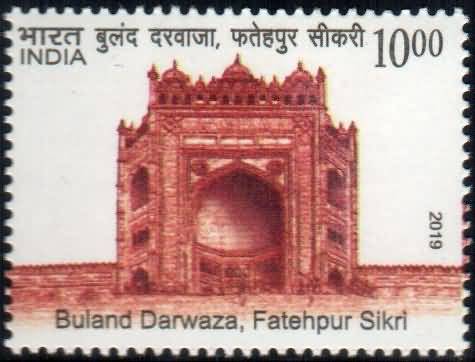
The Buland Darwaza, also known as the “Gate of Victory,” is one of the most magnificent architectural masterpieces of the Mughal era. It was built in 1601 A.D. by the great Mughal Emperor Akbar to commemorate his victorious conquest of Gujarat. Towering proudly at the entrance of the Jama Masjid in Fatehpur Sikri, the gateway stands as a monumental testament to Akbar’s imperial vision, architectural brilliance, and religious tolerance.
Architectural Splendour
A striking example of Mughal architecture, the Buland Darwaza is constructed using red and buff sandstone, beautifully adorned with white and black marble inlay work. The gateway rises to an impressive height of 54 metres from the ground level, making it one of the tallest gateways in the world.
Its semi-octagonal design, crowned by elegant chhatris, pillars, and towering arches, gives it an imposing yet graceful presence. A long flight of steps ascends towards the gate, further amplifying its majestic height and grandeur. The intricate carvings, floral motifs, and inscriptions on the surface exemplify the sophistication of Mughal artistry.
A Message of Tolerance and Faith
One of the most remarkable features of the Buland Darwaza is the Persian inscription engraved on its central arch, which reflects Emperor Akbar’s broad-mindedness and deep respect for all faiths. The inscription reads:
“Jesus, son of Mary, said: The world is a bridge, pass over it, but build no houses upon it.”
This profound message signifies Akbar’s spiritual wisdom and secular ideals, serving as a timeless reminder of harmony and coexistence.
Historical and Cultural Significance
The Buland Darwaza not only served as a ceremonial entrance to Fatehpur Sikri but also as a symbol of power, victory, and vision. It reflects the fusion of Persian and Indian architectural styles, showcasing Akbar’s inclusive approach towards art, culture, and governance.
Even centuries later, the Buland Darwaza continues to captivate historians, architects, and visitors alike with its monumental scale and exquisite craftsmanship. Standing tall against the skyline of Fatehpur Sikri, it remains a symbol of Mughal pride and India’s glorious architectural heritage.
Commemorative Postage Stamp
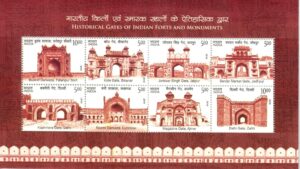
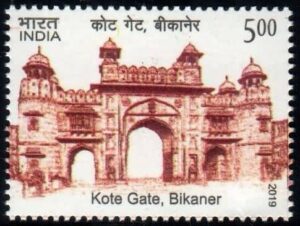
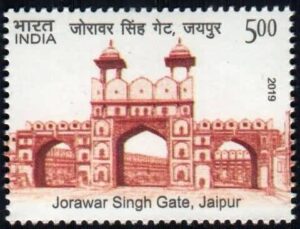
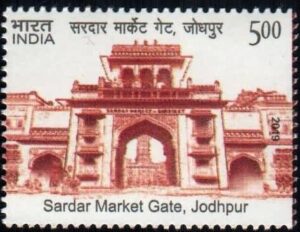
To celebrate India’s architectural brilliance and its historical legacy, the Department of Posts issued a commemorative postage stamp on the Buland Darwaza as part of the series on Historical Gates of Indian Forts and Monuments.
The stamp immortalizes this magnificent gateway as a tribute to the artistic grandeur, cultural synthesis, and enduring legacy of Mughal architecture.