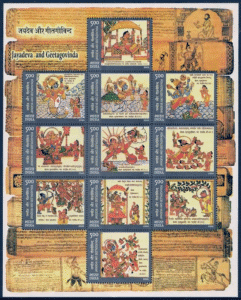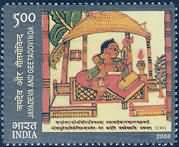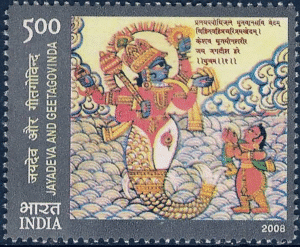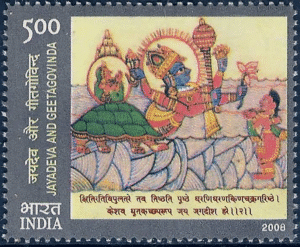
About this stamp
The Future Avatar in Dashavatara Tradition
Kalki is regarded as the tenth and final avatar of Lord Vishnu in the Dashavatara tradition of Hinduism. According to sacred texts and devotional literature, Kalki is the prophesied warrior who will appear at the end of the present age, known as Kali Yuga, to restore righteousness (dharma) and cosmic order.
The concept of Kalki holds a central place in Vaishnav philosophy and has been celebrated in scriptures, devotional poetry, classical arts, and temple traditions across India.
Kalki in Geetagovinda and Dashavatara
The celebrated Sanskrit masterpiece Gita Govinda by saint poet Jayadeva beautifully describes the ten incarnations of Vishnu, including Kalki, in the famous Dashavatara stotra.
In this devotional composition, Kalki is portrayed as a divine warrior who will ride a white horse and wield a blazing sword to destroy evil forces and re-establish virtue. Jayadeva’s lyrical verses transformed the Dashavatara theme into a powerful devotional expression that has been sung in temples and performed in classical dance traditions for centuries.
The Dashavatara hymns, including references to Kalki, are chanted as sacred mantras in temples throughout India.
Symbolism and Spiritual Significance of Kalki
Kalki symbolizes hope, renewal, and the triumph of good over evil. His future appearance represents:
- The restoration of moral and spiritual order
- The destruction of injustice and corruption
- The beginning of a new era of truth and harmony
In Hindu cosmology, time is cyclical. Kalki’s arrival marks the end of Kali Yuga and the dawn of a new Satya Yuga — an age of truth and righteousness.
Influence on Art, Literature and Performance
The figure of Kalki has inspired:
- Temple sculptures and paintings
- Classical dance performances
- Devotional songs and kirtans
- Pattachitra and manuscript illustrations
Through works like Geetagovinda, the Dashavatara tradition, including Kalki, gained immense popularity across regions such as Odisha, Bengal, Rajasthan, Gujarat, and South India.
Commemorative Stamp on Dashavatara
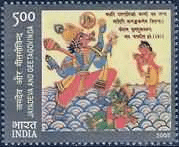
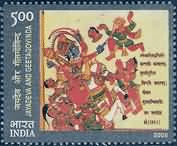
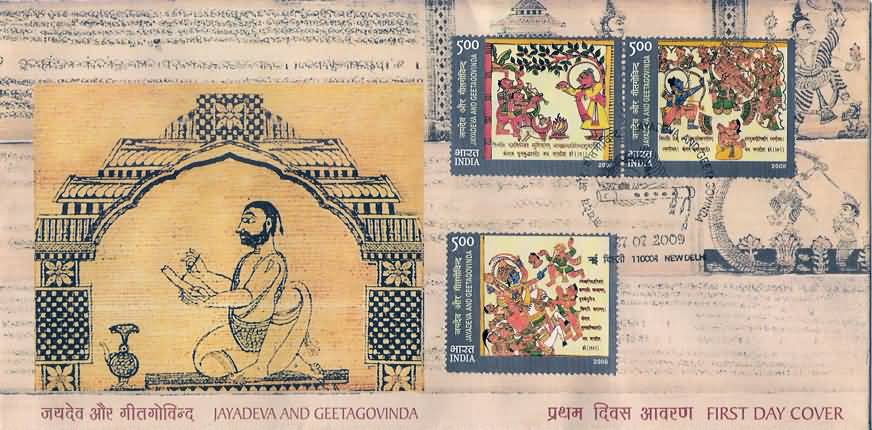
Recognizing the cultural and spiritual importance of Jayadeva’s Dashavatara compositions, India Post issued a commemorative postage stamp dedicated to Jayadeva and Geetagovinda. The Dashavatara theme, including Kalki, is prominently featured in this philatelic tribute.
Kalki: A Timeless Vision of Renewal
Kalki remains a powerful symbol of divine justice and cosmic balance in Hindu thought. From sacred scriptures to classical performances, the prophecy of Kalki continues to inspire faith, devotion, and artistic creativity across generations.
As part of the Dashavatara tradition immortalized in Geetagovinda, Kalki represents the eternal promise that righteousness will ultimately prevail.