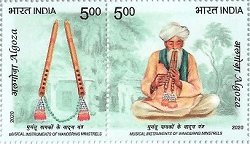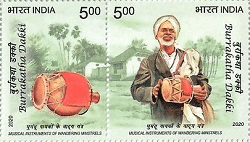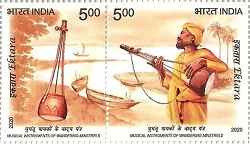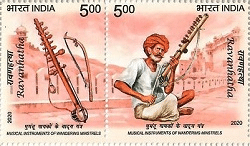
About this stamp
The Soulful Instrument of Rajasthan
India’s Rich Musical Heritage
India’s musical traditions date back thousands of years, with evidence found in the Bhimbetka rock shelters and Harappan excavations. Ancient texts like Natya Shastra by Bharata Muni classified instruments into four groups: chordophones (string), aerophones (wind), membranophones (percussion), and idiophones (solid self-sounding). These instruments are not just for music but also reflect the cultural and social history of communities.
Wandering Minstrels and Folk Music
Wandering minstrels played a vital role in keeping India’s folk music alive. They traveled from village to village, singing ballads of heroes, patrons, and legends. Their instruments were both functional and aesthetically pleasing, embodying regional culture while connecting people through music and storytelling.
The Kamaicha – A Stringed Marvel
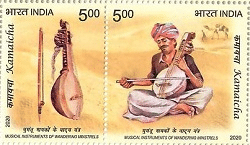
The Kamaicha belongs to the chordophone category. It is a bow-stringed instrument featuring:
- A large bowl-shaped resonator covered with skin.
- A rectangular fingerboard and a round peg box.
- Three gut strings and eight drone steel strings tied to a metal hook, stretched across a bridge, and fastened to pegs.
- A bow made of Shisham wood and horse hair for playing.
The Manganiar Community’s Legacy
The Kamaicha is deeply associated with the Manganiar community of West Rajasthan, who are traditional folk musicians. It serves as the main accompaniment to their soulful desert songs, which blend devotion, folklore, and celebration. The instrument’s deep, resonant sound reflects the cultural essence of Rajasthan’s musical heritage.
Honouring the Tradition
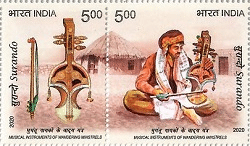
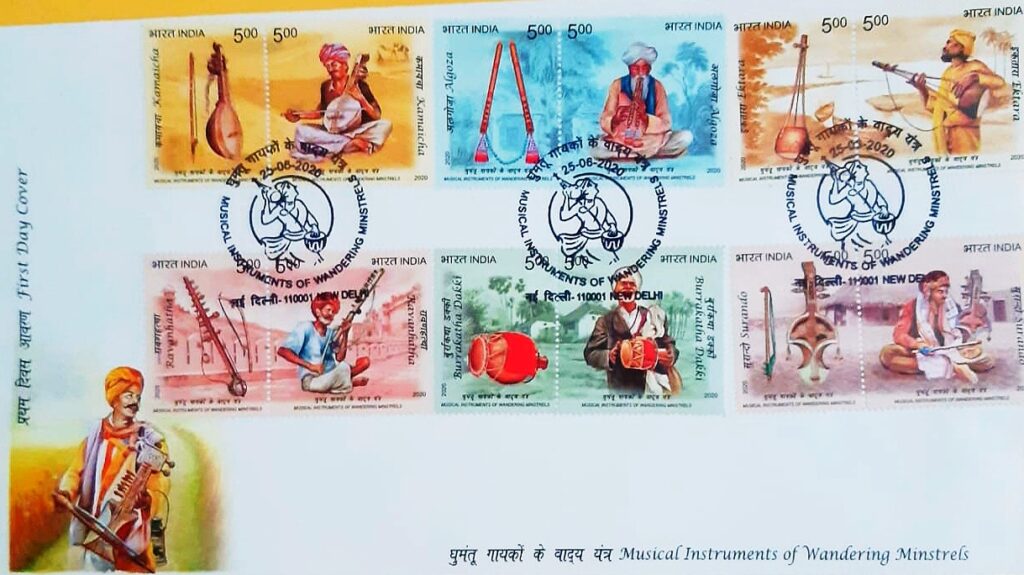
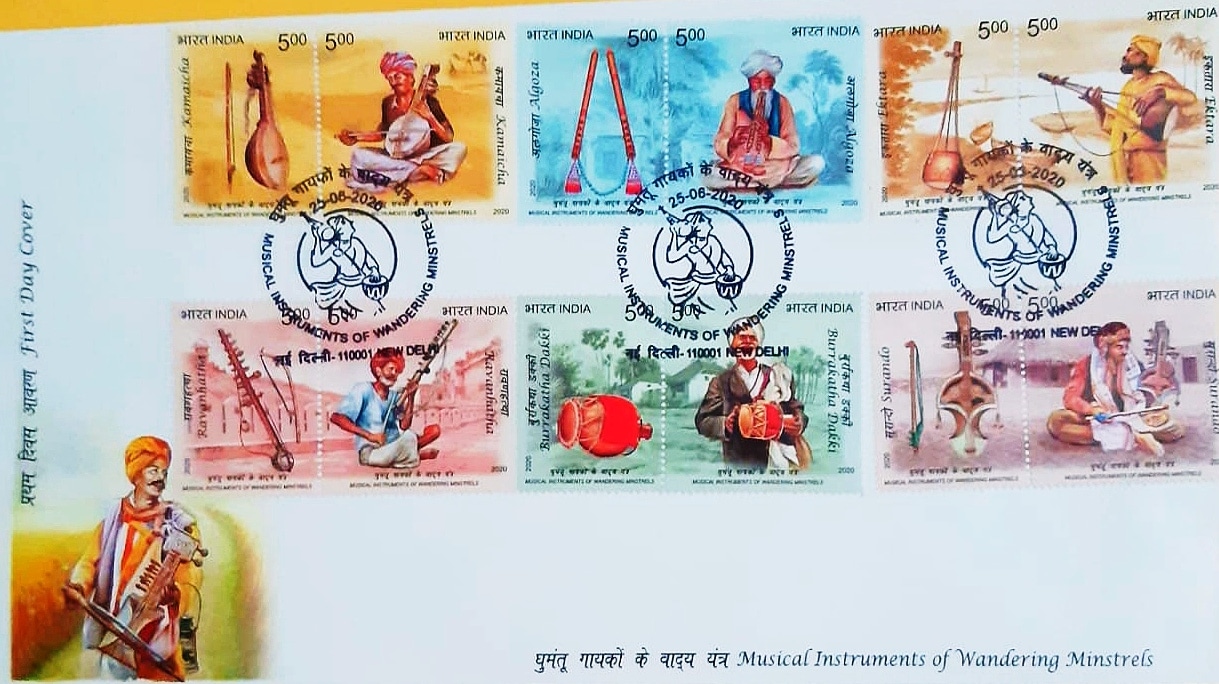
Recognizing the significance of wandering minstrel instruments, including the Kamaicha, the Department of Posts issued six pairs of se-tenant Commemorative Postage Stamps celebrating these timeless symbols of India’s folk music.
For More Information
Read more here: