About this stamp
Nandalal Bose, born on December 3, 1882, emerged as one of the foremost masters in the Bengal Renaissance, shaping the trajectory of Indian art in its journey from tradition to modernity. His leadership in the art movement bridged the gap between the conventional and the contemporary, laying the foundation for the flourishing state of Indian art today. His passing on April 16, 1966, marked the end of an era.
Joining the Calcutta Art School in 1905 under the tutelage of Abanindranath Tagore, Nandalal’s early life was deeply influenced by the Tagore family. His tenure with Rabindranath at Santiniketan, where he later became the Principal of Kala Bhavan in 1922, provided an ideal environment for nurturing his artistic and educational philosophies. Inspired by the natural surroundings and the educational ideals of Rabindranath, Nandalal integrated creative art with everyday life.
His extensive travels to places like Ajanta, the Bagh Caves, Japan, China, Malaya, Burma, and Ceylon enriched his understanding of the rich artistic heritage of Asia. A close admirer of Mahatma Gandhi, Nandalal’s art reflected his deep reverence for tradition and his individualistic style.
His early works in wash and later in tempera showcased his mastery of Indian tradition through paintings like ‘Ramayana scenes’ and ‘Nala-Damayanthi’. At Santiniketan, his experimentation with bolder techniques while retaining traditional themes displayed his artistic evolution.
The 1930s and 40s marked a period of vigor and vitality in his art, evident in works like ‘Svarna Khumba’ and ‘Landscape’. Responding to Gandhi’s call to make art accessible to the common man, Nandalal created the famous Haripura Congress posters depicting folk musicians and artisans.
As he approached 80, Nandalal returned to painting with brush and ink, exploring abstract aspects of realization. His art, characterized by deep references to life and reality, combined with innate design sense, showcased his versatility across various techniques and mediums.
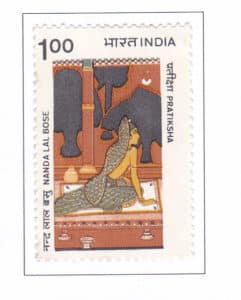
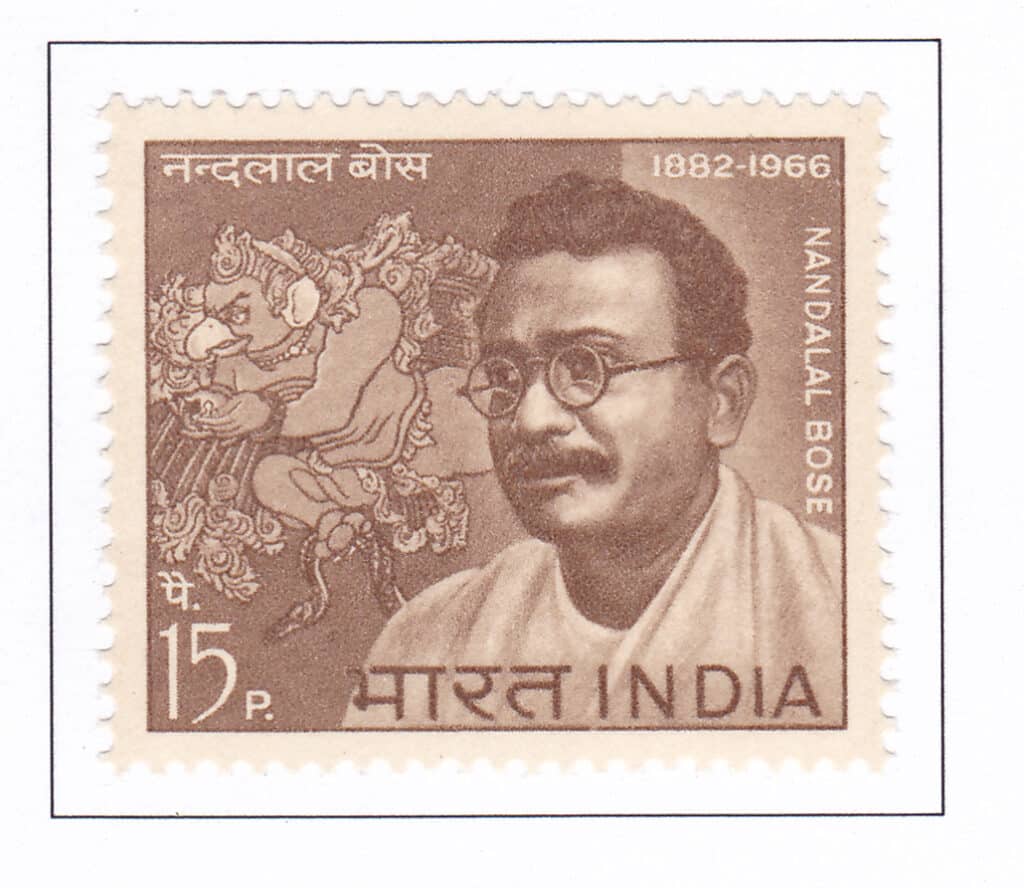
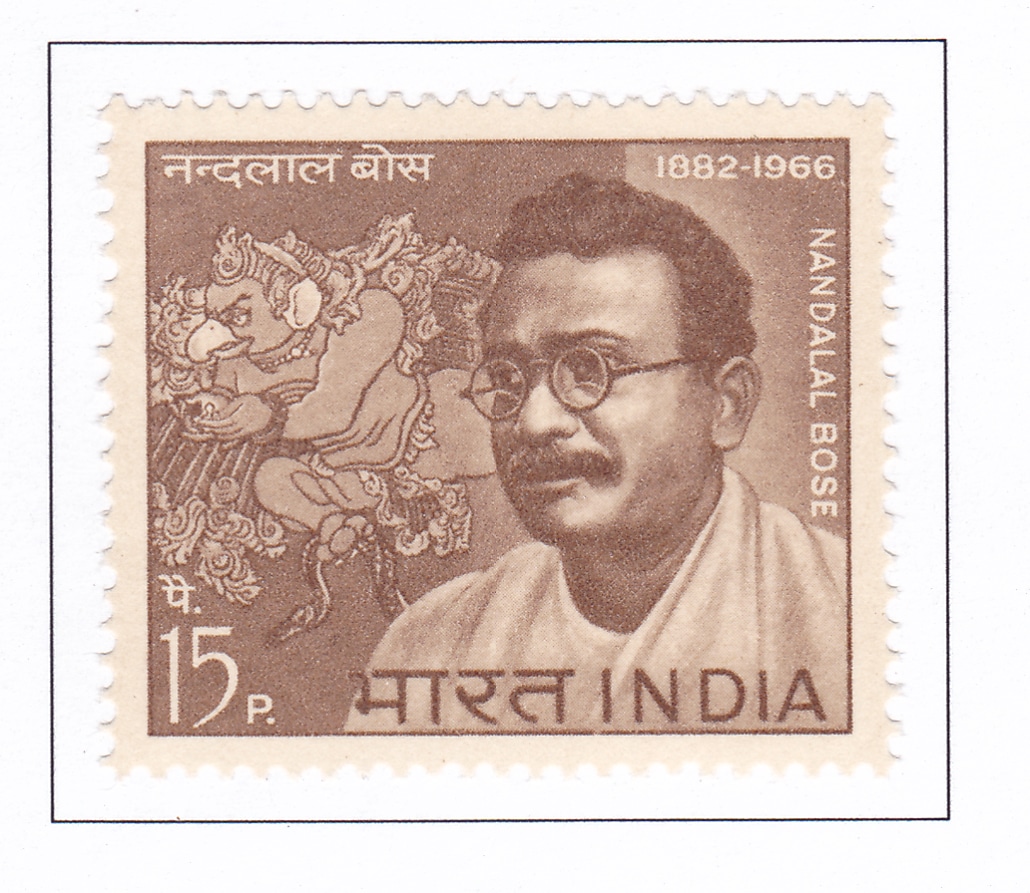
Nandalal Bose’s legacy lives on through his vast body of work and the countless students who continue to be inspired by his teachings. On the first anniversary of his passing, the Indian Posts and Telegraphs Department honors Acharya Nandalal Bose with a special commemorative stamp, featuring his portrait and one of his famous works, “Garuda.”
For More Information
Read more here: