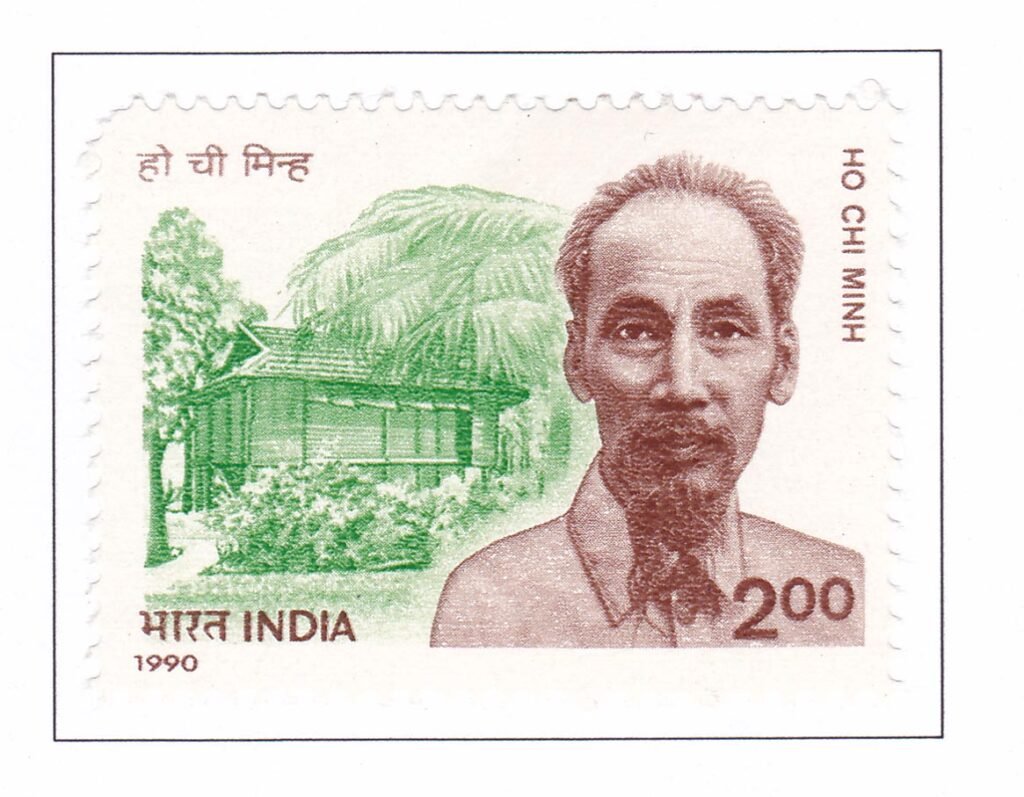
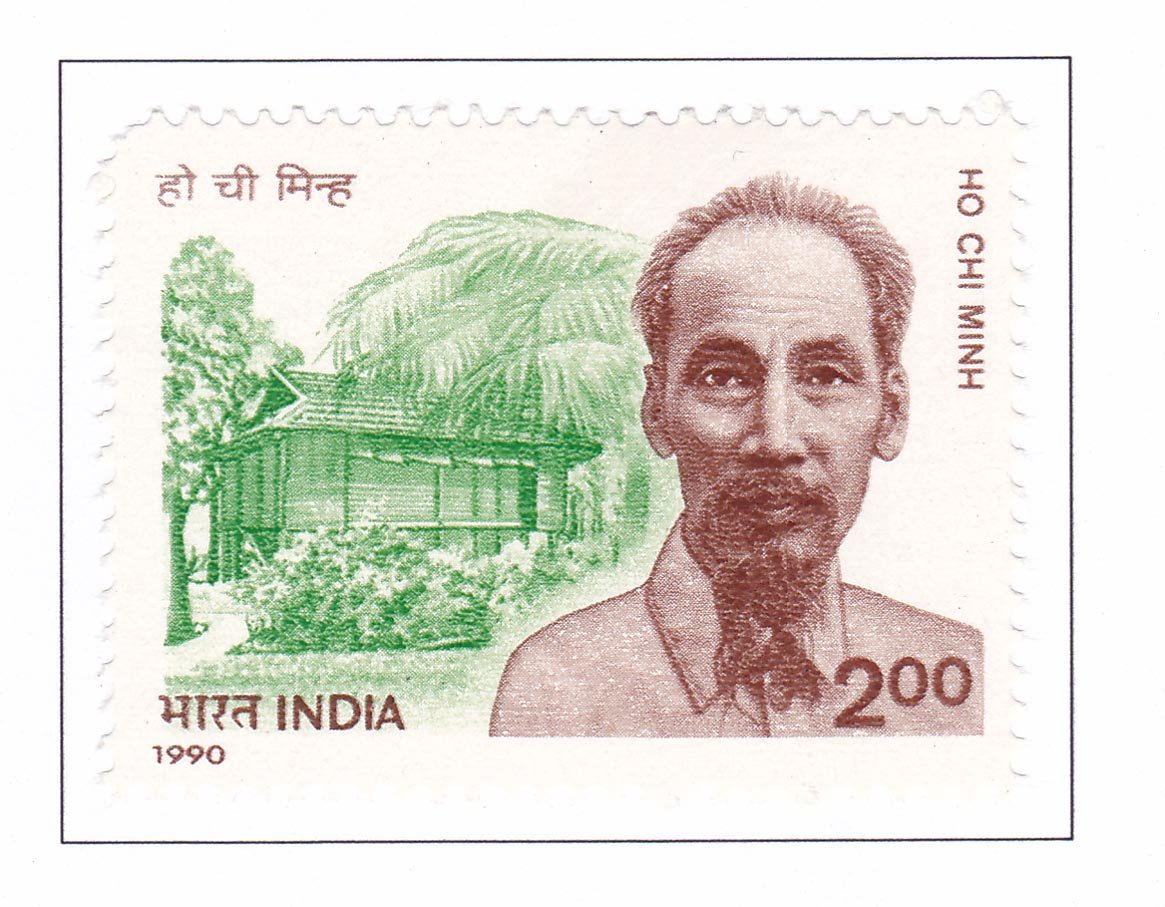
About this stamp
Ho Chi Minh, the prominent figure in Vietnamese history, played a pivotal role in Vietnam’s struggle for independence from colonial rule. Here are the key points about his life and contributions:
Early Life and Ideological Journey:
- Born Nguyen Sinh Cung on May 19, 1890, in Kim Lien village, Vietnam. He later adopted the names Nguyen Tat Tanh and Nguyen Ai Quoc (“Nguyen the patriot”) before settling on Ho Chi Minh in 1942.
- Inspired by the ideals of the French Revolution and influenced by thinkers like Rousseau and Montesquieu, he left Vietnam in 1911 to seek ways to liberate Vietnam from French colonialism.
Political Activism Abroad:
- During his 30 years abroad, Ho Chi Minh actively participated in various socio-political movements. He joined the French Socialist Party and helped found the French Communist Party.
- In 1930, he convened a conference in Hong Kong, uniting various Communist groups into the Communist Party of Vietnam and developing its political platform and strategy.
Leadership in Vietnam:
- Ho Chi Minh returned to Vietnam secretly in 1941 and formed the Viet Minh, the Independence League, believing in the global struggle against colonialism, imperialism, and fascism.
- In August 1945, he called for a national congress and initiated a general insurrection. On September 2, 1945, he declared the establishment of the Democratic Republic of Vietnam, becoming its head of the provisional government.
Struggle and Legacy:
- The struggle for Vietnamese liberation continued until 1954 when a temporary partition was agreed to end the bloodshed.
- Ho Chi Minh passed away on September 2, 1969, but his legacy inspired the Vietnamese people to continue their fight for a reunified and independent Vietnam, achieved in April 1975.
Personal Life and Influence:
- Known for his simplicity and humility, Ho Chi Minh chose to live modestly in a hut rather than a presidential palace, cultivating his own vegetables.
- Besides politics, he was involved in journalism, poetry, playwriting, acting, and lecturing. He also worked to promote and preserve Vietnamese cultural traditions.
Ho Chi Minh’s leadership, dedication to independence, and simplicity continue to resonate in Vietnam’s history and cultural memory, symbolizing the spirit of national resilience and determination.