
About this stamp
Celebrating Friendship Through National Birds
India and Papua New Guinea (PNG) share warm, cordial and longstanding diplomatic relations grounded in Commonwealth ties, mutual respect and cooperation. India established its Resident Mission in Port Moresby in 1996, and PNG set up its Mission in New Delhi in 2006, further strengthening bilateral engagement.
Both nations enjoy a growing partnership across diverse sectors—including trade and commerce, industrial and economic collaboration, science & technology, education, and cultural exchange. Regular high-level interactions and multilateral cooperation platforms enable India and Papua New Guinea to exchange ideas on issues of common global and regional interest.
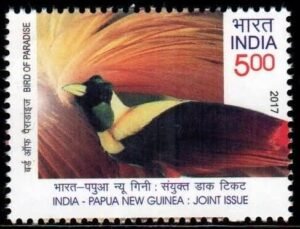
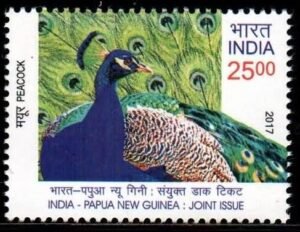
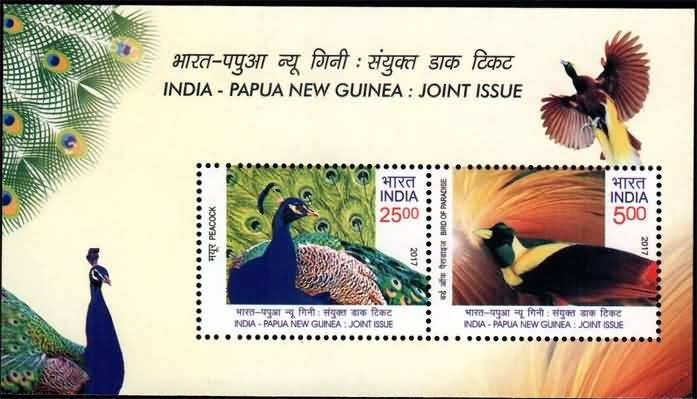
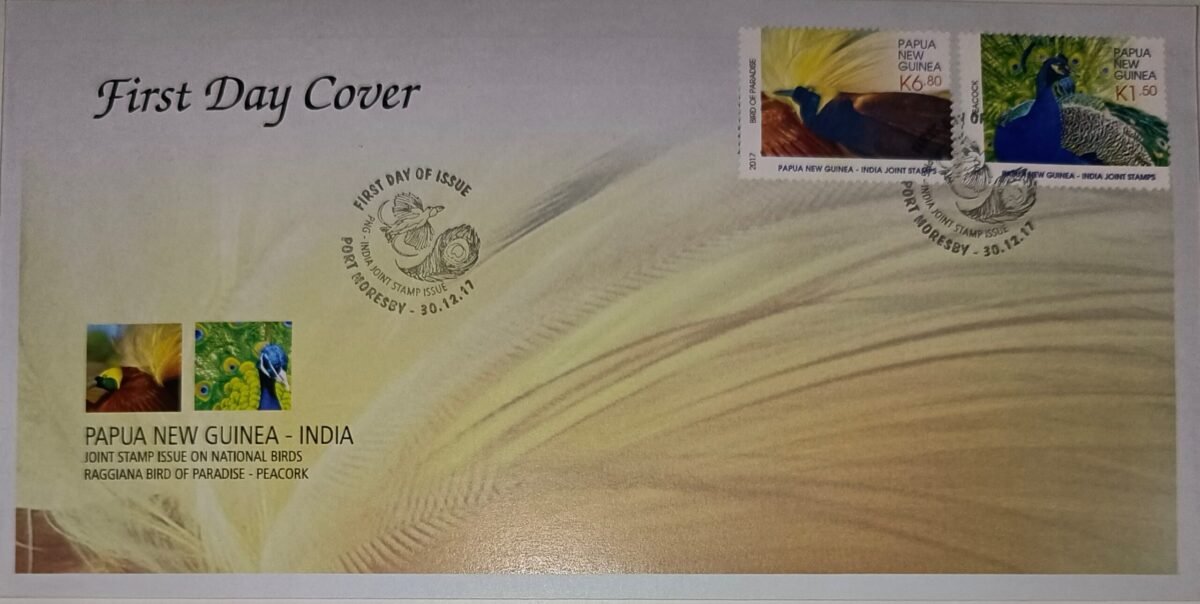
To honour this special relationship, the Postal Administrations of India and Papua New Guinea have jointly released a Commemorative Stamp Issue featuring their national birds—the Peacock of India and the Raggiana Bird of Paradise of Papua New Guinea—symbolising beauty, identity and heritage of both nations.
Peacock – National Bird of India
The Peacock (Pavo cristatus), the National Bird of India, is a symbol of grace, beauty, joy and love. Majestic and vibrant, the peacock is a swan-sized bird with a fan-shaped crest, long slender neck and a striking white patch beneath each eye.
- Male Peacock: Renowned for its iridescent blue neck and breast and a spectacular bronze-green train of nearly 200 elongated tail feathers, used in its world-famous courtship dance.
- Female Peahen: Smaller, brownish and lacking the long train; lays 3–5 eggs in tree hollows, bushes or shallow ground depressions.
The peacock holds a revered place in Indian culture, mythology and art. Known as “Mayur” or “Mor”, it appears in classical dance, folk art, miniature paintings, temple sculptures, jewellery and textiles.
It is associated with Lord Krishna, who adorned a peacock feather on his crown, and is the divine vahana (vehicle) of Lord Kartikeya, son of Lord Shiva. The sight of a dancing peacock heralds the arrival of the monsoon, inspiring poetry, music and celebrations for centuries.
Adaptable and hardy, the peacock thrives in varied climates—from the deserts of Rajasthan to colder regions abroad. Although not strong fliers, they run swiftly on powerful legs. In India, the species is protected under the Wildlife (Protection) Act, 1972.
Raggiana Bird of Paradise – National Bird of Papua New Guinea
The Raggiana Bird of Paradise (Paradisaea raggiana), locally known as the “Kumul”, is the national emblem of Papua New Guinea. Adopted in 1971, it proudly features on PNG’s national flag and lends its name to the national rugby league team, The Kumuls.
This striking species measures about 34 cm and is admired for its vibrant plumage:
- Male: Maroon-brown body, greyish-blue bill, yellow iris, ornate yellow crown, emerald-green throat and a golden collar. It sports long black tail wires and luxurious flank plumes that vary from red to orange depending on the subspecies.
- Female: More modest maroon-brown plumage, lacking the elaborate tail features.
A vital component of New Guinea’s ecosystem, the Raggiana Bird of Paradise feeds on fruits and arthropods and plays a crucial role in seed dispersal, especially for mahogany and nutmeg trees.
The species practices polygamous breeding in communal courtship sites known as “leks”, where males perform elaborate displays to attract females. Nests, built 2–11 meters above ground, are bowl-shaped structures crafted from leaves, ferns, stems and plant fibres.
A Symbolic Joint Tribute
This beautifully curated India–Papua New Guinea Joint Stamp Issue serves as a symbol of friendship, shared values and cultural pride. By featuring the Peacock and the Raggiana Bird of Paradise—two of the world’s most admired birds—this philatelic release celebrates the natural heritage and deepening ties between the two nations.
For More Information
Read more here: