About this stamp
On the Stamp
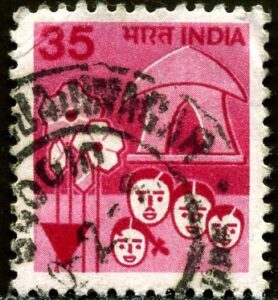
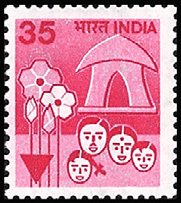
The faces of a family of four, father, mother and two children, beside a thatched hut and three flowers, with the inverted triangle of family planning at the foot of the stems, printed in cerise, on a 35 paise stamp.
Family Welfare
This 35 paise definitive stamp was issued on 15 September 1980, in the series of everyday stamps on rural India. The inverted red triangle was the symbol of India’s family planning programme, begun in 1952; its story is told on the 1967 Family Planning stamp.
The red triangle was proposed in December 1968 by Frank Wilder as a sign for family planning and contraception services in developing countries, much as the red cross stands for medical care. In India it was taken up by Deep Tyagi, a family planning official, and India was the first country to use it; Ghana, Gambia, Zimbabwe, Egypt and Thailand followed. It was put up outside clinics and shops that offered family planning services and printed on contraceptives supplied by the government.
The stamp was printed by photogravure at the Security Printing Press, Nashik.
For More Information
Read more here: