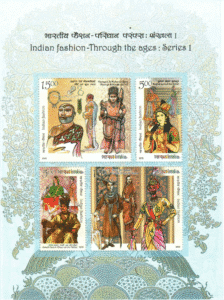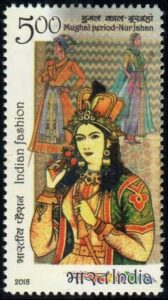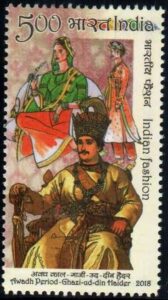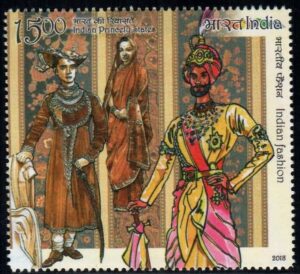
About this stamp
Indian Mauryan Period: The Evolution of Early Fashion
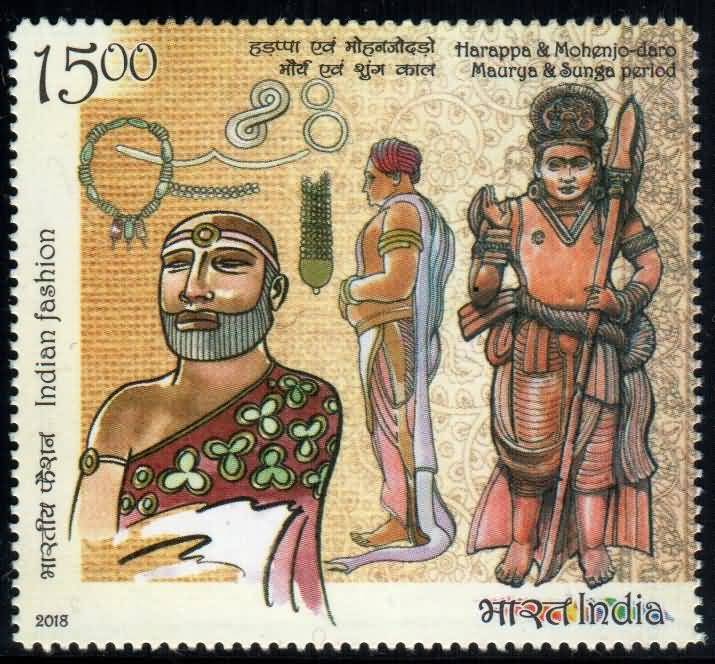
Fashion has always been a reflection of a civilization’s culture, values, and lifestyle. During the Mauryan Period (321–185 BCE), India witnessed significant advancements in art, culture, and textile traditions. The era not only symbolized political unity under emperors like Chandragupta Maurya and Ashoka the Great, but also marked a refined evolution in clothing and adornment — blending functionality, artistry, and symbolism. To celebrate India’s rich sartorial legacy, the Department of Posts has issued a commemorative postage stamp highlighting the elegance and sophistication of fashion during the Mauryan Period.
The Essence of Mauryan Attire
The Mauryan age was characterized by simplicity combined with elegance. The most common attire of the period was the antarīya, a lower garment resembling a draped skirt. It was often worn in a lehnga style — wrapped around the waist and tied securely. Over this, an embellished cloth known as patka was wrapped around the waist, pleated neatly into the antarīya. For the upper body, people wore the uttarīya, a long scarf or shawl that could be draped in different ways depending on personal preference, gender, or social rank.
Textile Techniques and Artistry
The Mauryan period was remarkable for its advancement in textile production and dyeing techniques. Resist dyeing, hand printing, and glazed cotton were commonly used methods. The famous Greek ambassador Megasthenes observed and documented the rich textile practices of the time, noting the use of vibrant colors, intricate prints, and finely woven fabrics. Felting of fibers, rather than weaving, was also a distinctive feature of this era’s textile craftsmanship.
Social Symbolism and Class Distinction
Clothing in the Mauryan period was deeply connected to social and economic status. The royal and upper classes adorned themselves in fine muslin, silk, and ornamented textiles, often dyed in rare natural hues. In contrast, the common people wore garments made from locally woven cotton or hemp fabrics, emphasizing comfort and practicality. This distinction not only highlighted economic differences but also reflected the hierarchical nature of Mauryan society.
Influence of Religion and Culture
The rise of Buddhism and Jainism during this time also shaped clothing practices. Monks and spiritual leaders wore simple robes, symbolizing humility and renunciation. The emphasis on minimalism and ethical living influenced the broader cultural perception of fashion, balancing luxury with restraint.
A Legacy of Textile Innovation
The Mauryan period laid the foundation for India’s long-standing textile heritage. Its techniques of dyeing, printing, and draping influenced successive dynasties and continue to echo in India’s modern handloom and traditional clothing practices.
Commemorating India’s Ancient Fashion Heritage
Through the commemorative postage stamp, the Department of Posts pays tribute to the timeless elegance of Mauryan fashion — a harmonious blend of art, culture, and identity. The stamp celebrates India’s ancient craftsmanship that continues to inspire the nation’s vibrant fashion landscape even today.