About this stamp
Evolution of the Indian National Flag
Symbol of National Pride
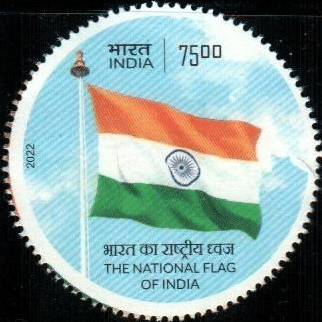
The flag is more than just cloth and colours—it is the soul of a nation, embodying its values, heritage, and aspirations. The National Flag of India, popularly known as the Tiranga, is an identity of the people before the world and evokes deep patriotic emotions.
Design and Meaning
The Tiranga has three equal horizontal stripes:
- Saffron (Kesari) at the top, symbolizing courage and sacrifice.
- White in the middle, denoting peace and truth.
- Green at the bottom, representing faith, fertility, and growth.
At its centre is the Ashoka Chakra, a navy-blue Dharma Chakra with 24 spokes, derived from the Lion Capital of Emperor Ashoka at Sarnath. It stands as a symbol of law, dharma, and progress.
Early Flags of India’s Freedom Struggle
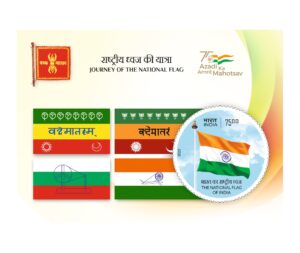
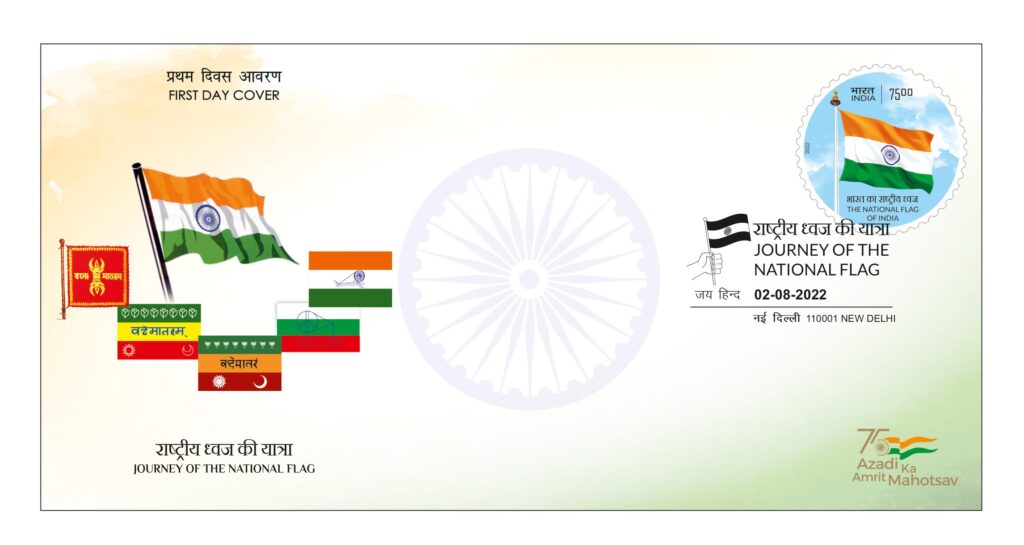
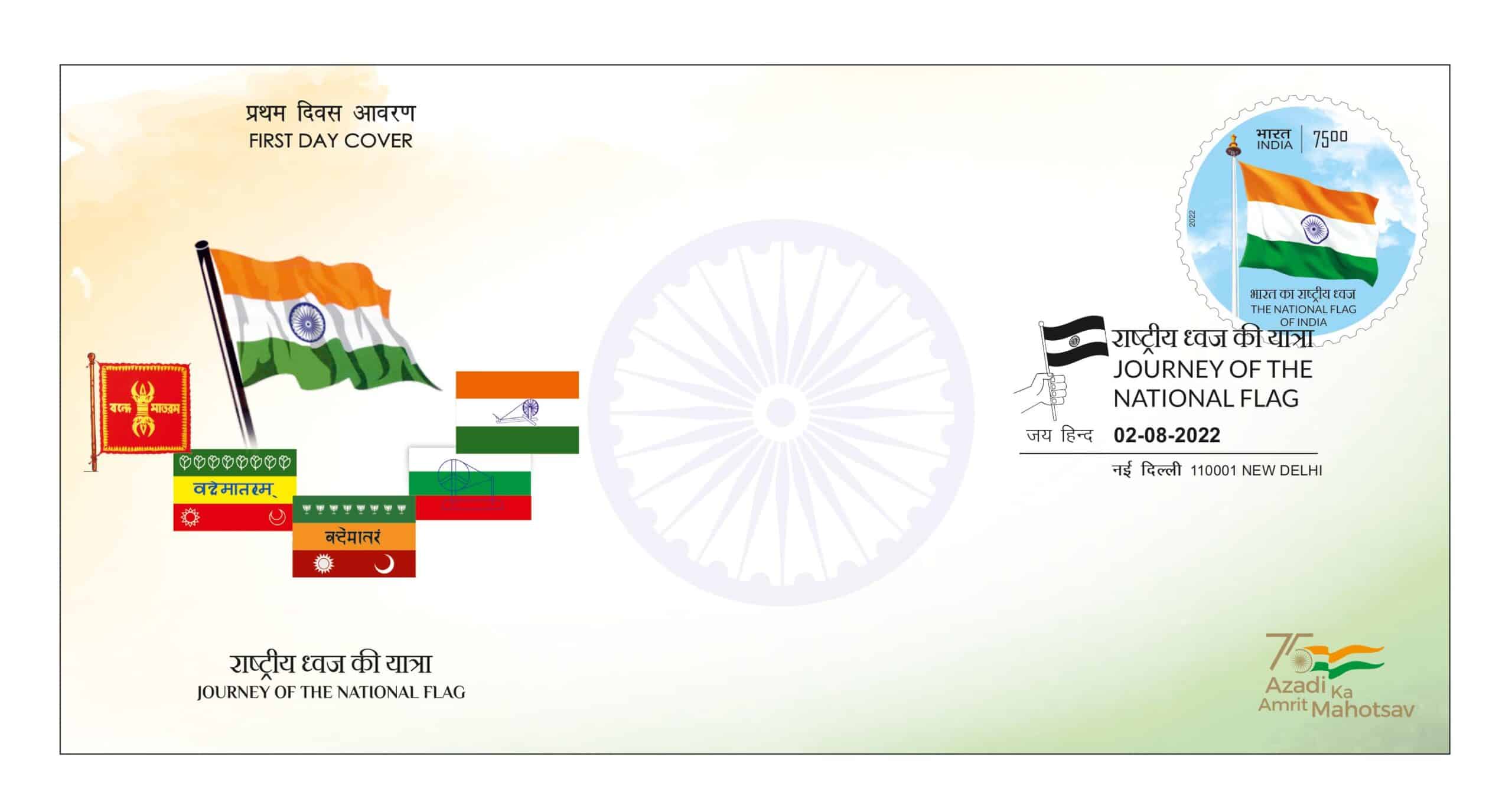
- 1905: The first Indian flag was created by Sister Nivedita, an Irish disciple of Swami Vivekananda. It bore the words Vande Mataram in Bengali script and a Vajra, symbolizing strength.
- 1906: Another tricolour emerged in Kolkata, with green, yellow, and red stripes, featuring the Sun, crescent moon, and lotus flowers. It was hoisted by Sir Surendranath Banerjee to protest the Partition of Bengal.
- 1907: Madam Bhikaji Cama, along with Veer Savarkar and Shyamji Krishna Varma, unfurled a tricolour in Stuttgart, Germany, making it the first Indian flag to be hoisted on foreign soil.
Towards the Modern Tricolour
- 1921: Pingali Venkayya, at Mahatma Gandhi’s insistence, designed a tricolour with a spinning wheel (Charkha) symbolizing self-reliance and swadeshi.
- 1931: A modified flag with saffron, white, and green stripes, and a navy-blue Charkha at the centre was adopted as a symbol of India’s national movement.
Adoption of the Present Flag
On 22 July 1947, the Constituent Assembly adopted the current design of the Tiranga. At midnight on 14–15 August 1947, Smt. Hansa Mehta, leading 70 women, presented the first National Flag of independent India to Dr. Rajendra Prasad.
The flag first served as the symbol of the Dominion of India (1947–1950) and thereafter as the National Flag of the Republic of India.
Har Ghar Tiranga – A Modern Movement
In present times, the Government of India has initiated the Har Ghar Tiranga campaign to encourage citizens to bring the flag closer to their hearts—not just as a formal institution, but as a personal symbol of pride and patriotism.
Commemoration
The Department of Posts proudly issues a Commemorative Postage Stamp on the Evolution of the Indian Flag, saluting the sacrifices of freedom fighters and honouring the Tiranga as the eternal symbol of India’s unity and pride.