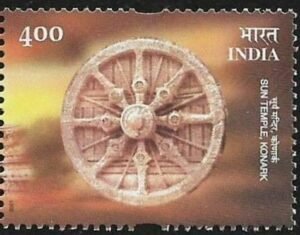
About this stamp
Commonwealth Day holds significance as it commemorates the evolution of the Commonwealth, originally formed as an informal organization primarily consisting of countries with substantial British settler populations such as Canada, Australia, New Zealand, and South Africa. The Balfour Formula of 1926 provided the initial definition of the Commonwealth’s status and mutual relationships, emphasizing the autonomy of member countries within the British Empire while maintaining allegiance to the Crown.
The Statute of Westminster in 1931 further solidified the legal framework of the Commonwealth, affirming the equality of member states and their freedom in domestic and external affairs. However, with India’s independence in 1947, the nature of the Commonwealth underwent a transformation. While India chose to join the Commonwealth, the concept of allegiance to the Crown became obsolete in the context of a republic. Instead, India’s association with the Commonwealth was based on the acceptance of the King as the symbol of the free association of independent member nations and as the Head of the Commonwealth.
The Commonwealth, characterized by its voluntary association of independent sovereign states, lacks a formal constitution. However, a declaration of Commonwealth principles was issued in 1971, emphasizing consultation, cooperation, and the promotion of international understanding and world peace.
Today, the Commonwealth comprises 47 member states, reflecting its diverse and inclusive nature. In a bid to raise awareness about the Commonwealth and support the Commonwealth Fund for Technical Cooperation, Commonwealth Heads of Government agreed in principle to issue special Commonwealth stamps every five years. The inaugural issue commemorating Commonwealth Day occurred on March 14, 1983, signifying the importance of fostering unity, cooperation, and mutual understanding among member nations. The Indian Posts and Telegraphs Department played a significant role in honoring this occasion by issuing a set of two stamps.