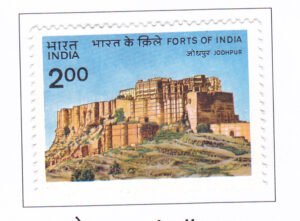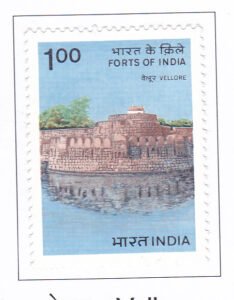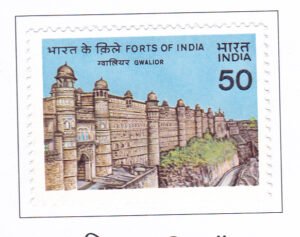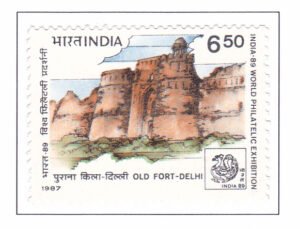

About this stamp
Simhagad Fort
Historical Background
Simhagad Fort, formerly known as Kondhana, has a storied history deeply intertwined with the valor and strategic maneuvers of various rulers in Indian history.
- Early History: The earliest documented mention of Simhagad Fort appears in Isamis Futuh-us-Salatin. It was originally held by the Kolis until it was taken over by Mohammad-bin-Tughluq. Later, it came under the control of Malik Ahmed Nizam, founder of the Nizamshahi dynasty of Ahmadnagar in 1483 AD.
- Under Shivaji Maharaj: The fort gained prominence during the reign of Shivaji Maharaj. Initially given in jagir to Shivaji’s father, Sahaji Bhosle, by the Nizamshah of Ahmadnagar, it was later captured by Shivaji himself from the Bijapur Sultan. Legend has it that Shivaji renamed the fort as Simhagad (Lion’s Fort) in honor of his general Tanaji Malusare, who lost his life while capturing it.
- Geographical and Architectural Features: Simhagad Fort is strategically located about 15 miles southwest of Pune, standing at an elevation of 4322 feet above sea level and 2300 feet above the Pune plains. The fort is shaped like an axe with a short handle, covering an area of about two square miles. Its rugged topography is fortified with strong walls and 33 towers or bastions.
- Military Significance: The fort’s design includes natural defenses such as steep precipices, which Tanaji Malusare famously scaled during his daring invasion. This incident has become legendary in Indian military history, symbolizing bravery and sacrifice.
Legacy and Cultural Importance
Simhagad Fort is not merely a historical site but a cultural symbol representing the resilience and bravery of the Maratha warriors and their struggle against various invasions and occupations by different powers over the centuries.
Commemoration
The Indian Posts & Telegraphs Department celebrates the rich history and cultural significance of Simhagad Fort with a set of four commemorative stamps. These stamps honor its legacy as a bastion of courage and defiance, standing as a testament to India’s enduring spirit and architectural grandeur.
Simhagad Fort’s rugged beauty and historical significance continue to captivate visitors and historians alike. The stamps issued by the Indian Posts & Telegraphs Department serve as a reminder of its rich heritage and enduring legacy in India’s fortification history.