About this stamp
The Jor Bangla Temple, also known as the Kesta Rai Temple, is one of the most distinctive monuments of Bishnupur, West Bengal, renowned for its unique form and exquisite terracotta craftsmanship. The temple was built in 1655 AD by Malla King Raghunath Singha, during a period when Bishnupur emerged as a major centre of temple architecture and art.
Architecturally, the Jor Bangla Temple is remarkable for its innovative design. The structure resembles two traditional Bengali ‘do-chala’ huts joined together, from which the name “Jor Bangla” (twin huts) is derived. The curved roof of these paired huts is surmounted by a char-chala shikhara, creating a harmonious blend of vernacular architecture and temple symbolism. The base of the temple measures approximately 11.8 m × 11.48 m, and it rises to a height of 10.7 m above the platform.
The walls of the temple are richly embellished with terracotta panels, making it a visual masterpiece. These sculptures vividly depict scenes from the Ramayana and Mahabharata, episodes from Krishna Leela, hunting scenes, floral motifs, and portrayals of contemporary social life. The detailing and narrative flow of these panels reflect the high level of artistic skill achieved by terracotta artisans under Malla patronage.
Beyond its religious importance, the Jor Bangla Temple stands as a testament to Bengal’s tradition of storytelling through clay. By transforming baked bricks into expressive narratives of mythology and everyday life, the temple exemplifies how local materials were elevated into enduring works of sacred art.
Commemorative Postage Stamps
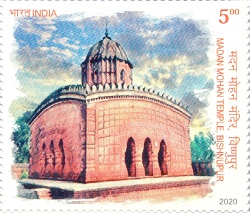
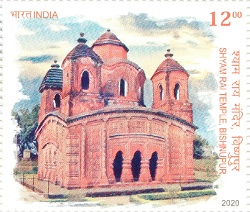
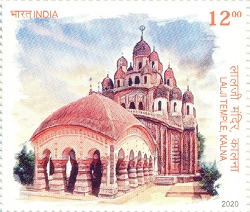
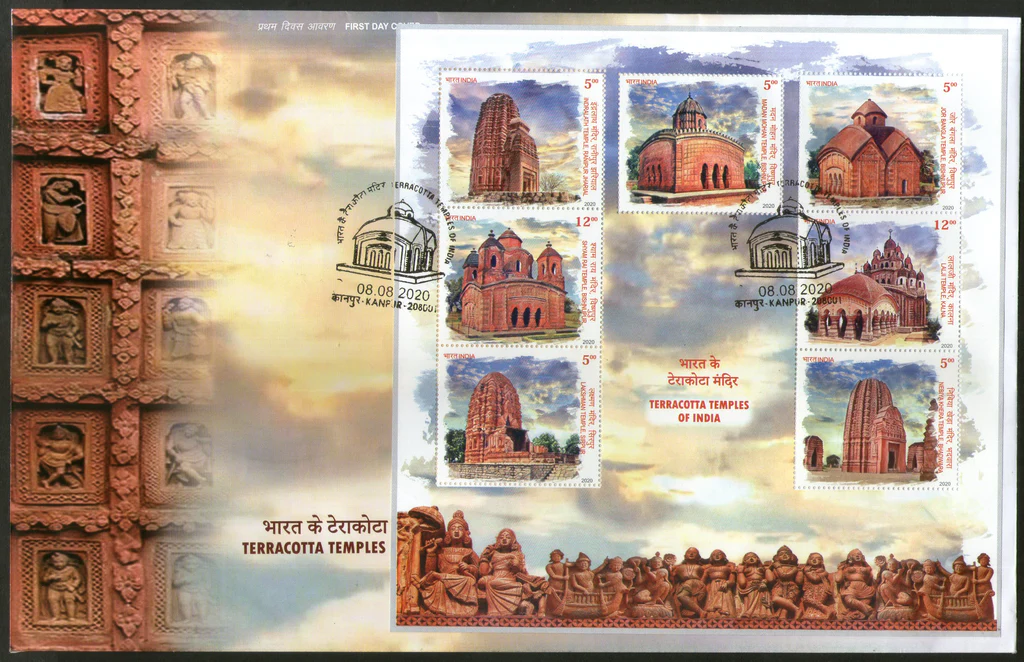
In recognition of the artistic and cultural value of India’s terracotta heritage, the Department of Posts has issued Commemorative Postage Stamps on the Terracotta Temples of India. The Jor Bangla Temple, Bishnupur, is featured in this commemorative set, celebrating its unique architectural form and its significant place in India’s architectural and cultural history.