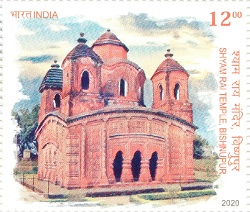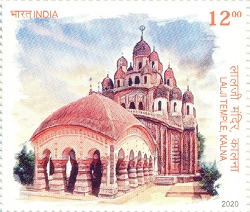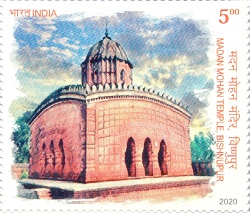
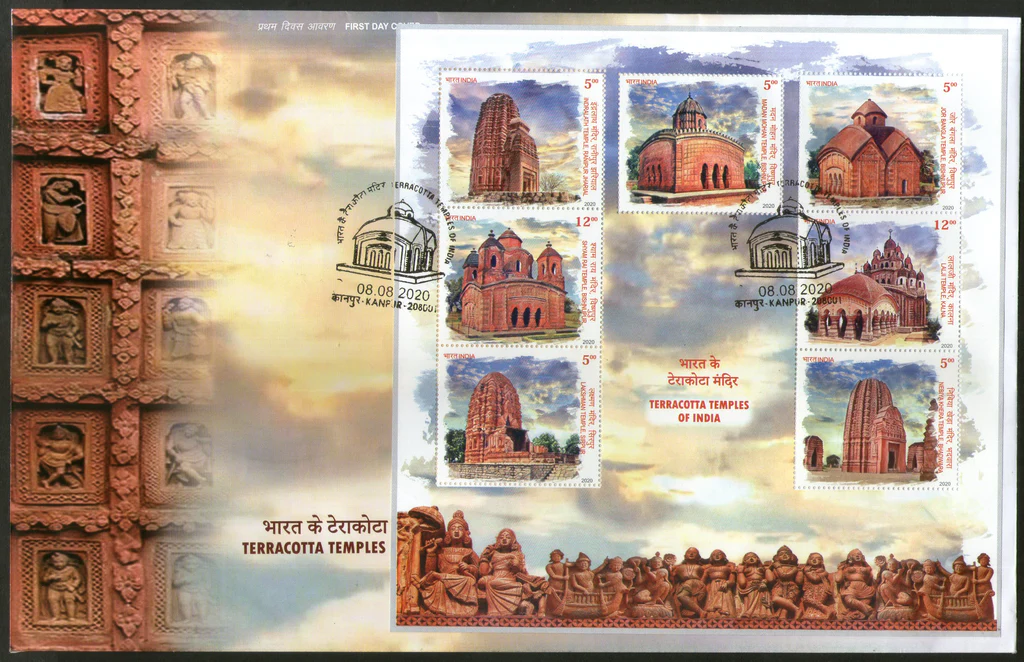
About this stamp
The Madan Mohan Temple is one of the prominent terracotta temples of Bishnupur, West Bengal, reflecting the rich architectural legacy of the Malla rulers. The temple was built in 1694 AD by the Malla king Durjan Singha and is considered a relatively younger example among the well-known terracotta temples of Bishnupur.
Architecturally, the Madan Mohan Temple belongs to the Eka-Ratna style. It stands on a square base measuring 12.2 m × 12.2 m and rises to a height of 10.7 m above a moderate platform. The roof follows the typical Bengali ‘chala’ style, surmounted by a single shikhara (tower), which lends the temple a graceful and balanced appearance. The structure is primarily built of earthen bricks and rests on a tall plinth or platform.
The most striking feature of the temple is its frontal façade, which is profusely decorated with intricate terracotta plaques. These panels narrate episodes from the epics and Puranas, along with elaborate depictions of Krishna Leela. The terracotta work demonstrates exceptional craftsmanship, where baked clay tiles are used to tell stories from mythology and religious traditions, bringing life and movement to the brick surfaces.
The Madan Mohan Temple is not only a place of worship but also an important example of how terracotta architecture flourished in Bengal. It represents the creative spirit of artisans who transformed humble clay into enduring expressions of devotion, culture, and art.
Commemorative Postage Stamps
To honour India’s rich terracotta temple tradition, the Department of Posts has issued Commemorative Postage Stamps on the Terracotta Temples of India. The Madan Mohan Temple, Bishnupur, is included in this commemorative set, highlighting its architectural significance and celebrating its contribution to India’s cultural and artistic heritage.