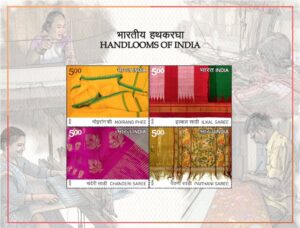
About this stamp
On the Stamp
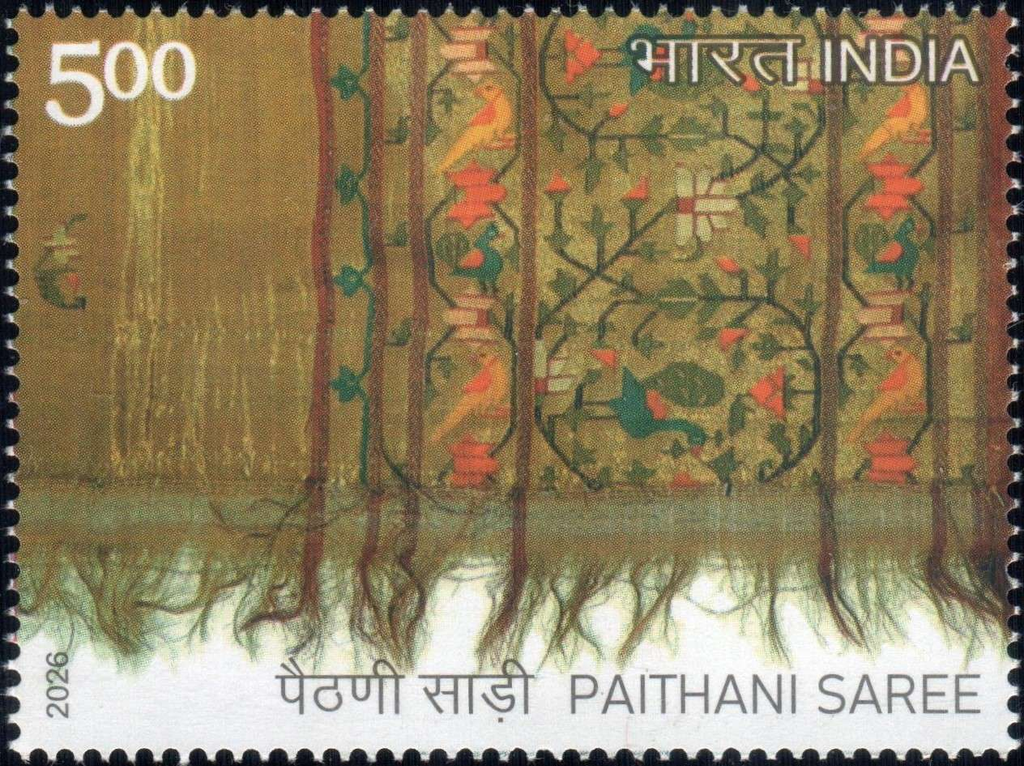
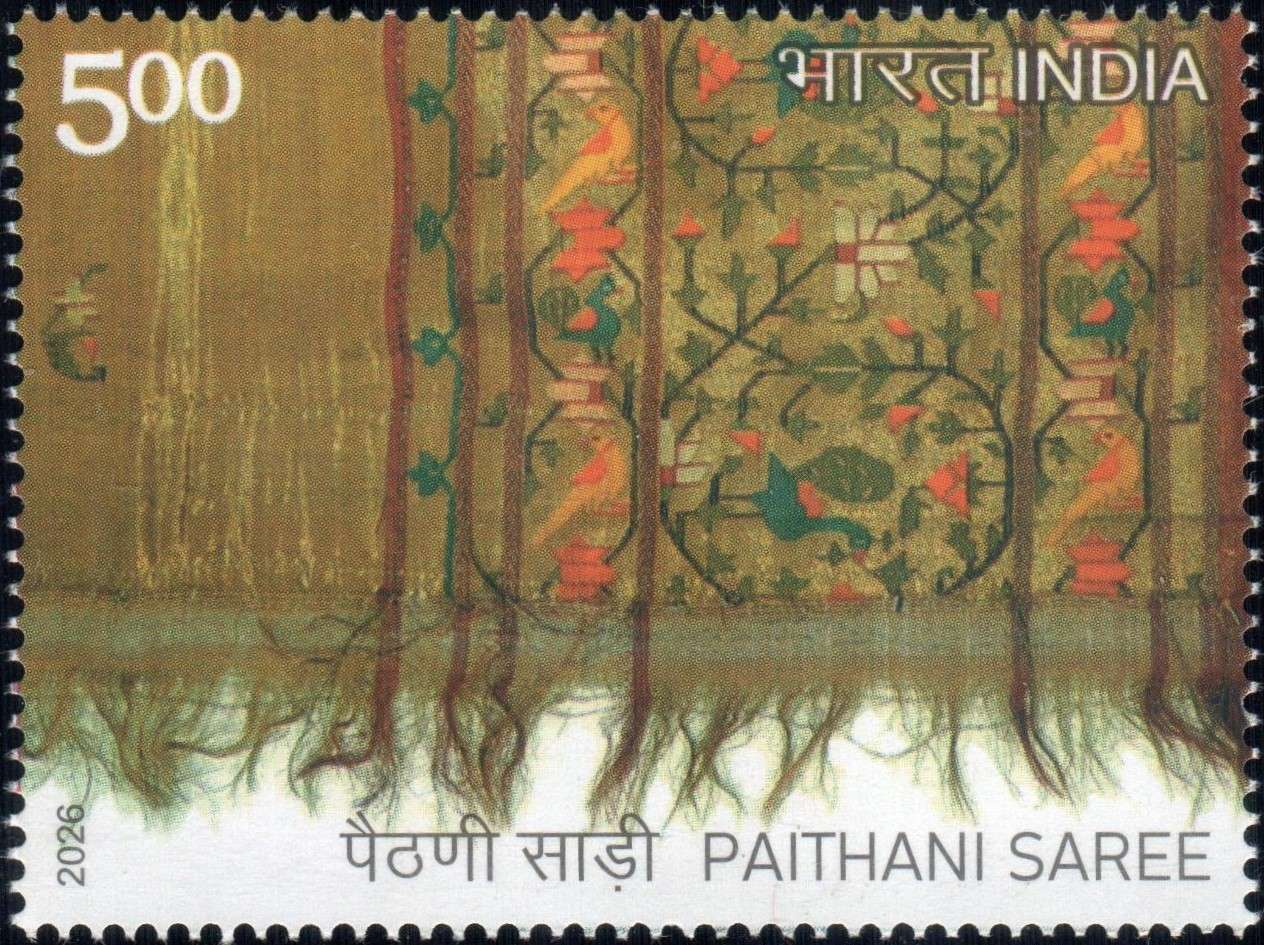
The ₹5 stamp shows the end of an olive-gold Paithani saree. A panel of birds, flowers and climbing vines in red, green and gold is framed by narrow vertical bands, and loose threads hang from the lower edge. It is one of four stamps on the souvenir sheet issued by India Post on 7 August 2026.
From Paithan to Yeola
The saree is named after Paithan in Maharashtra, an old trading town once known as Pratishthan. Its silks were already traded abroad under the Satavahanas, around the 2nd century BCE to the 2nd century CE. Later, weavers were moved to Yeola in Nashik district, today the largest centre of Paithani weaving.
A Paithani is silk woven with gold and silver zari, its patterns built up in the weft by hand. Its motifs include the peacock (Mor), Asawali (a flowering vine), Panja and Muthada. A saree with a complex design can take a weaver many months, by some accounts up to two years.
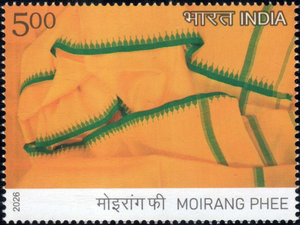
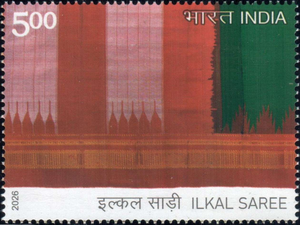
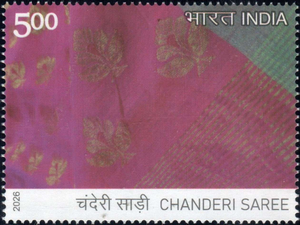
The other stamps on this sheet are Chanderi Saree, Ilkal Saree and Moirang Phee. The story of this issue is told on the page for Handlooms of India.
For More Information
Read more here: