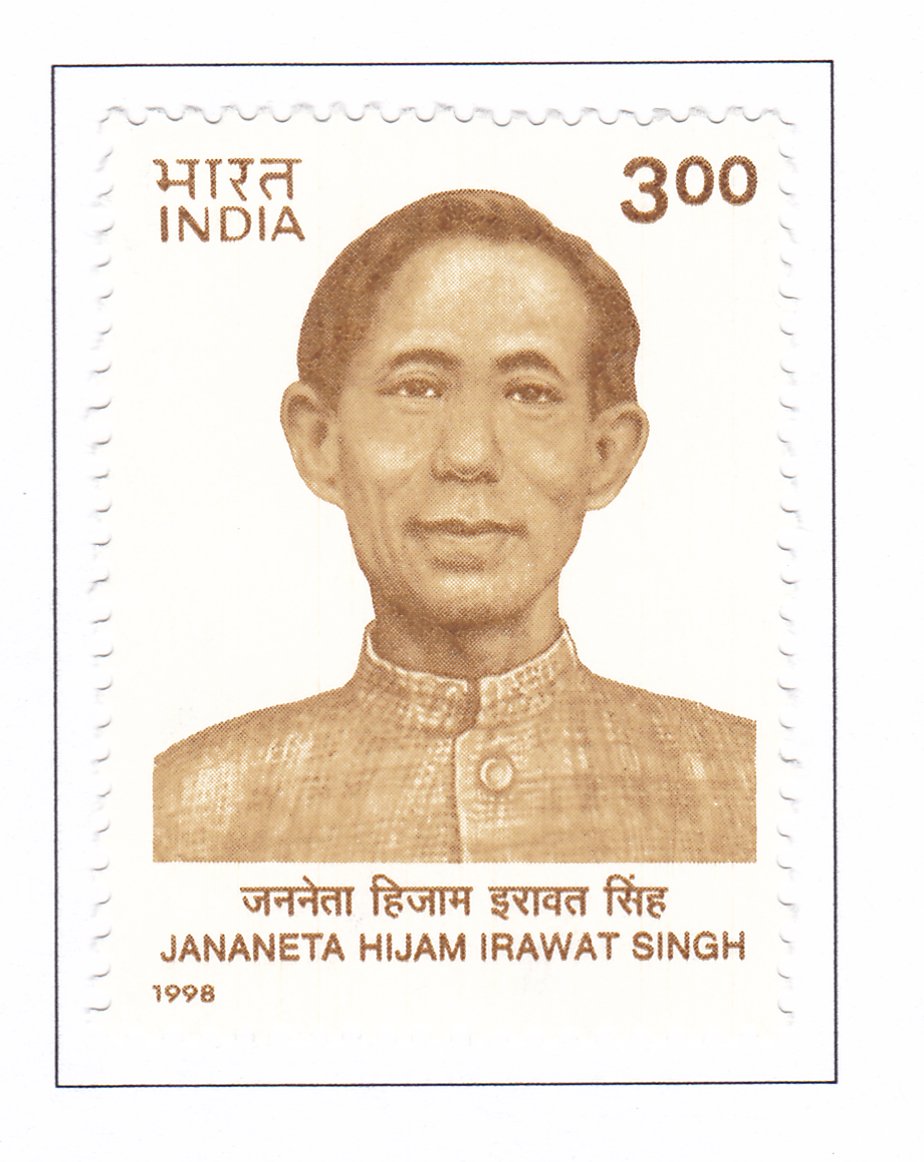
Jananeta Hijam Irawat Singh (1896-1951)
Technical Data
| Date of Issue | September 30, 1998 |
|---|---|
| Denomination | Rs. 3 |
| Quantity | 400,000 |
| Perforation | comb 13 x 13½ |
| Printer | Security Printing Press, Nashiks |
| Printing Process | Photogravure |
| Watermark | No Watermark |
| Colors | Yellow brown |
| Credit (Designed By) | |
| Catalog Codes |
Michel IN 1649 Stamp Number IN 1709 Yvert et Tellier IN 1414 Stanley Gibbons IN 1812 |
| Themes | Famous people | Men | Reformers |
Freedom Fighter, Social Reformer, and Political Pioneer of Manipur
Hijam Irawat Singh was one of the most influential leaders in the history of Manipur. A freedom fighter, social reformer, political visionary, and literary figure, he dedicated his life to the upliftment of common people and the struggle against colonial rule and social injustice.
Remembered as a pioneer of modern political consciousness in Manipur, Hijam Irawat Singh remains an enduring symbol of courage and public service.
Early Life of Hijam Irawat Singh
Hijam Irawat Singh was born on 30 September 1896 in Imphal into a humble family.
He lost both parents in early childhood and faced significant hardship. To continue his education, he worked through manual labour and earned his own living.
Despite these challenges, he was an excellent student and also excelled in sports, earning a place in the Manipur Maharajah’s Hockey Team.
Inspired by Mahatma Gandhi
In 1924, Hijam Irawat Singh attended a public meeting in Kolkata, where he heard Mahatma Gandhi speak.
Deeply inspired by Gandhi’s message, he decided to dedicate his life to the service of the people.
Magistrate and Champion of Social Justice
In 1927, Irawat became a Magistrate. Instead of using the office for privilege, he used the position to understand the problems faced by ordinary people.
He launched mass campaigns for:
- Socio-economic upliftment
- Justice for oppressed communities
- Ending religious exploitation
- Fighting economic inequality
Fight Against Mangba-Shengba
During that period, Manipur was under British colonial influence with the cooperation of the local monarchy.
One harsh practice was Mangba-Shengba, a form of excommunication for religious offences carried out by the Maharajah and priests.
Hijam Irawat Singh led public protests against this discriminatory system and successfully challenged the practice.
This made him a major voice for equality and reform.
Founder of Nikhil Manipur Mahasabha
Irawat was one of the founders of the Nikhil Manipur Mahasabha, established in 1934.
Originally known as the Nikhil Hindu Manipur Mahasabha, the organization sought to unite Manipuri people living inside and outside Manipur.
In 1938, Irawat transformed it into a political party to resist:
- British colonial rule
- Feudal monarchy
- Social oppression
This marked the beginning of organized political activism in Manipur.
Leadership in the Nupilal Movement
The historic Nupilal (Women’s War) of Manipur took place on 12 December 1939 against severe rice scarcity.
Women protesters looked to Irawat for leadership. Under his guidance, the women’s movement grew into a broader political agitation.
Because of his leadership, he was arrested on 9 January 1940 and imprisoned in Imphal Jail, later transferred to Sylhet Jail.
Peasant Movement and Kisan Leadership
After his release on 20 March 1943, his entry into Manipur was banned by the Manipur Durbar.
He moved to the Cachar region and organized peasant movements.
He later became:
- Secretary of the Surma Valley Kisan Sabha
- Chairman of the same organization
His work strengthened farmers’ rights and agrarian activism.
Elected Representative and Cultural Leader
In 1948, Hijam Irawat Singh was elected to the Manipur State Assembly.
He was also a cultural visionary who helped establish the Indian People’s Theatre Association (IPTA) in Manipur and Surma Valley.
Through literature, theatre, and activism, he inspired political awareness among the people.
Contribution to Literature
Irawat was a pioneer of modern Manipuri literature.
In recognition of his literary contributions, he was posthumously awarded the title:
Sahitya Ratana
by the Manipuri Sahitya Parishad.
Death and Legacy
Hijam Irawat Singh passed away on 26 September 1951 at Tangbaw Village near the border of Burma (now Myanmar).
His legacy lives on as a champion of justice, democracy, women’s leadership, workers’ rights, and cultural awakening.
Commemorative Stamp
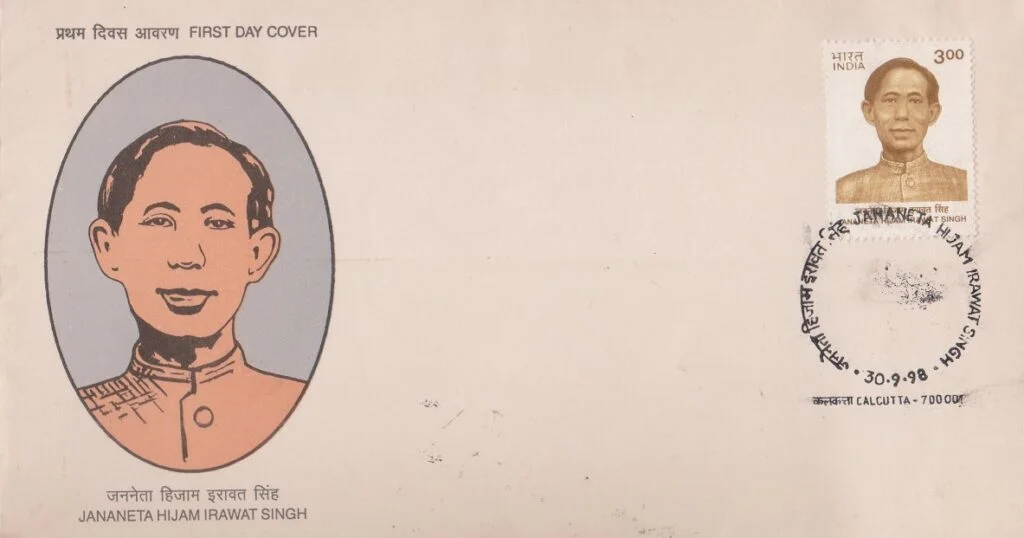
To honor his immense contribution, the Department of Posts issued a commemorative postage stamp on his birth anniversary.
Conclusion
Hijam Irawat Singh was more than a political leader—he was a people’s reformer who fought oppression in all forms. His work in politics, social justice, peasant rights, women’s movements, and literature made him one of the most respected figures in the history of Manipur and modern India.
First Day Cover