About this stamp
The Solar System – A Cosmic Family Illuminated by the Sun
Understanding the Solar System
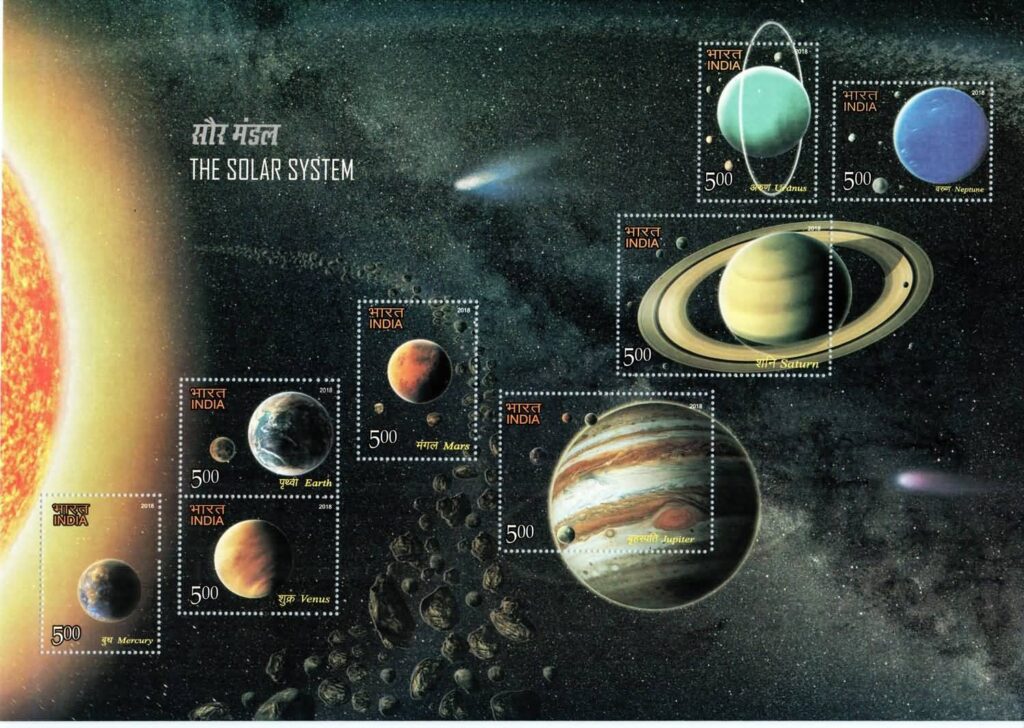
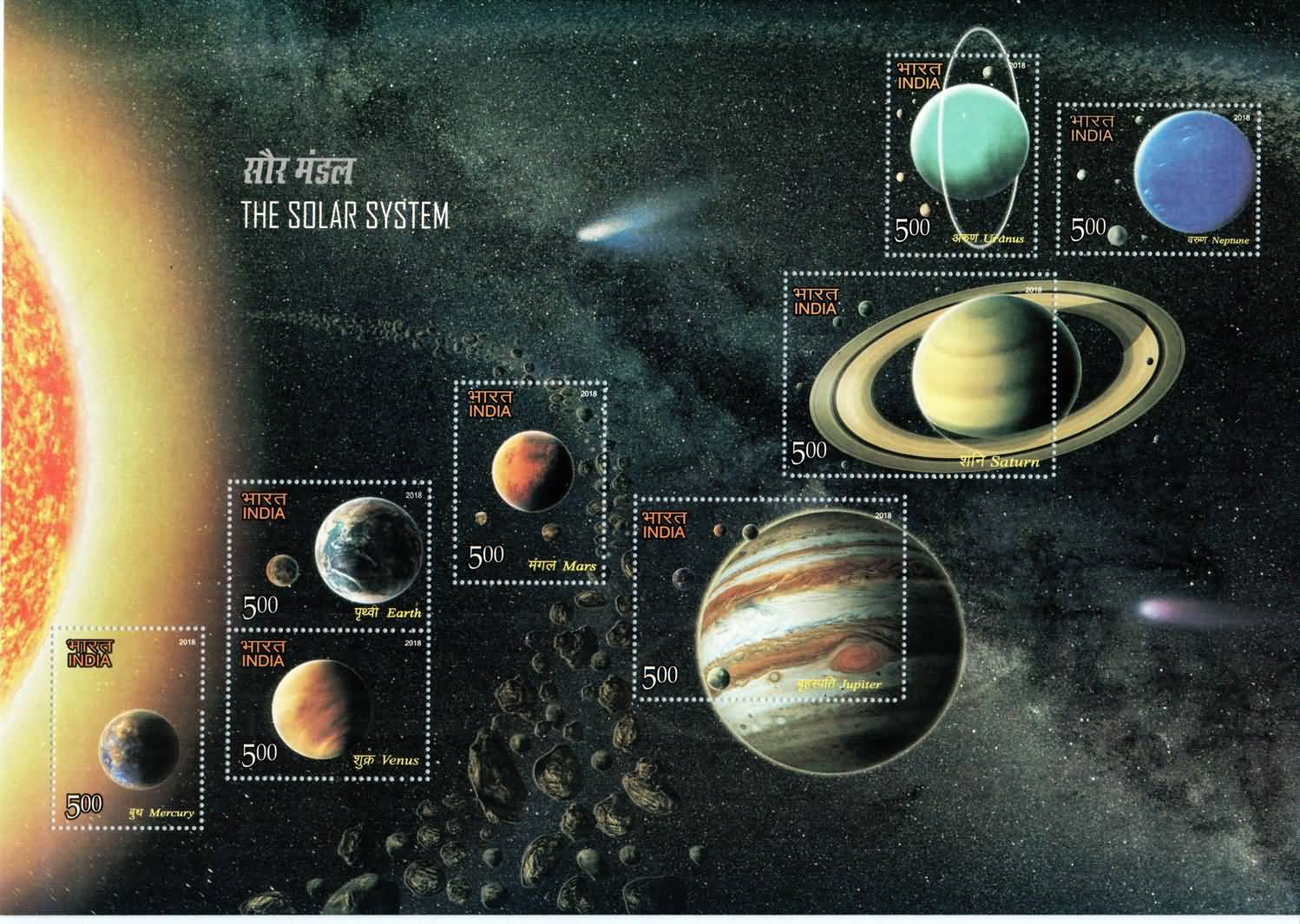
The Solar System is a magnificent celestial family, centered around the Sun — our life-giving star. It includes the eight major planets — Mercury, Venus, Earth, Mars, Jupiter, Saturn, Uranus, and Neptune — along with their moons, dwarf planets, asteroids, comets, and meteoroids. Together, they form a cosmic harmony that has fascinated humankind for centuries.
From Earth-Centered Beliefs to the Heliocentric Revolution
For thousands of years, ancient astronomers believed in a geocentric universe, placing Earth at its center. The heavens, they thought, were home to divine and unchanging celestial spheres. This worldview transformed dramatically in the 17th century, when great minds like Galileo Galilei, Johannes Kepler, and Isaac Newton reshaped humanity’s understanding of the cosmos.
Galileo, with his telescope, revealed that planets were not perfect spheres but worlds with their own features — the Moon’s craters, Jupiter’s moons, and the Sun’s sunspots. Huygens and Cassini further advanced this discovery, observing Saturn’s rings and its many moons. Around this era, the term “Solar System” first appeared in English, symbolizing our realization that the Sun, not Earth, is the true center of our planetary family.
The Inner Planets – The Rocky Worlds
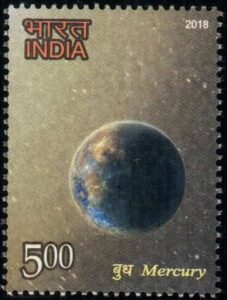
Mercury – The Swift Messenger
Mercury, the smallest and closest planet to the Sun, completes its orbit in just 88 days — the shortest in the Solar System. Its rocky, metallic surface endures extreme temperatures, from freezing cold to scorching heat. With no substantial atmosphere to retain warmth, Mercury remains a silent, cratered world, reflecting the Sun’s brilliance in solitude.
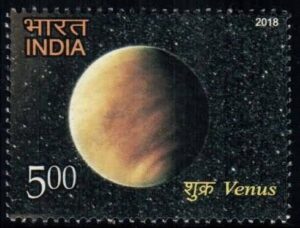
Venus – Earth’s Twin in Size, Not in Spirit
Venus, the second planet, is often called Earth’s sister planet because of their similar size and composition. However, beneath its thick, carbon dioxide–rich atmosphere lies a world of intense heat and crushing pressure. Rotating in the opposite direction to most planets, Venus shines as the brightest object in our night sky, yet hides a turbulent surface that remains one of the Solar System’s greatest mysteries.
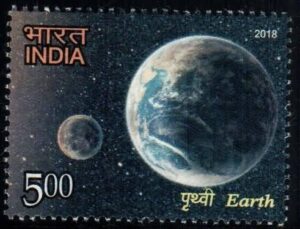
Earth – The Blue Planet of Life
Our home planet, Earth, is the third from the Sun and the only known world to support life. Over 4 billion years old, it balances oceans and continents under a protective atmosphere composed primarily of nitrogen and oxygen. With 71% of its surface covered by water and the perfect distance from the Sun, Earth stands as a unique oasis in the vast expanse of space.
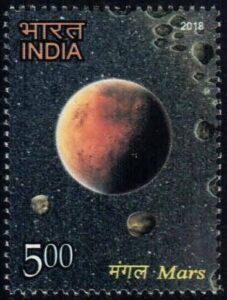
Mars – The Red Planet
The fourth planet, Mars, captivates with its reddish hue, caused by iron oxide dust. It has seasons, polar ice caps, and the largest volcano in the Solar System. Despite being smaller and colder than Earth, its mysterious landscape fuels our imagination — as we search for traces of ancient water and the possibility of life beyond our world.
Between Mars and Jupiter – The Asteroid Belt
Between Mars and Jupiter lies a region filled with countless rocky fragments known as the Asteroid Belt remnants of the early Solar System. These ancient bodies hold secrets of the primordial matter from which planets once formed.
The Outer Planets – The Giants Beyond
Jupiter – The Mighty King of Planets
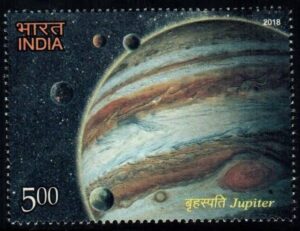
Jupiter, the fifth planet and the largest in our Solar System, is a gas giant composed mostly of hydrogen and helium. With a mass 318 times that of Earth, Jupiter’s immense gravity holds over 90 known moons and a faint ring system. Its most iconic feature, the Great Red Spot, is a storm that has raged for centuries a testament to the planet’s immense power and grandeur.
Saturn – The Lord of the Rings
The sixth planet, Saturn, is famous for its magnificent ring system, made up of countless ice and rock particles. Though lighter than water, Saturn’s sheer size makes it one of the most striking sights in the night sky. Composed primarily of hydrogen and helium, Saturn’s elegant rings and numerous moons continue to enchant astronomers and sky-watchers alike.
Uranus – The Tilted Ice Giant
Seventh from the Sun, Uranus is a planet unlike any other — it rotates on its side, giving it extreme seasonal variations. Made up of hydrogen, helium, and icy compounds such as methane, it has a pale blue color and a frigid atmosphere. Uranus completes a single orbit around the Sun once every 84 Earth years, gliding silently through the outer reaches of the Solar System.
Neptune – The Windy Blue World
Neptune, the eighth and farthest known planet from the Sun, is the densest of the gas giants and famous for its deep blue color. Its atmosphere, rich in methane, harbors the fastest winds in the Solar System. With a year lasting 164.8 Earth years, Neptune remains a mysterious and distant world — the final known planet in our celestial neighborhood.
Honouring the Solar System Through Philately
Department of Posts is pleased to issue a set of 8 Commemorative Postage Stamps depicting 8 planets of our Solar System on the theme “The Solar System”. Each planet, with its unique character and beauty, reminds us of our shared cosmic origins and the boundless universe we inhabit.
Through this special issue, the Department celebrates not only scientific discovery but also the enduring spirit of exploration that continues to drive humankind toward the stars.
For More Information
Read more here: