About this stamp
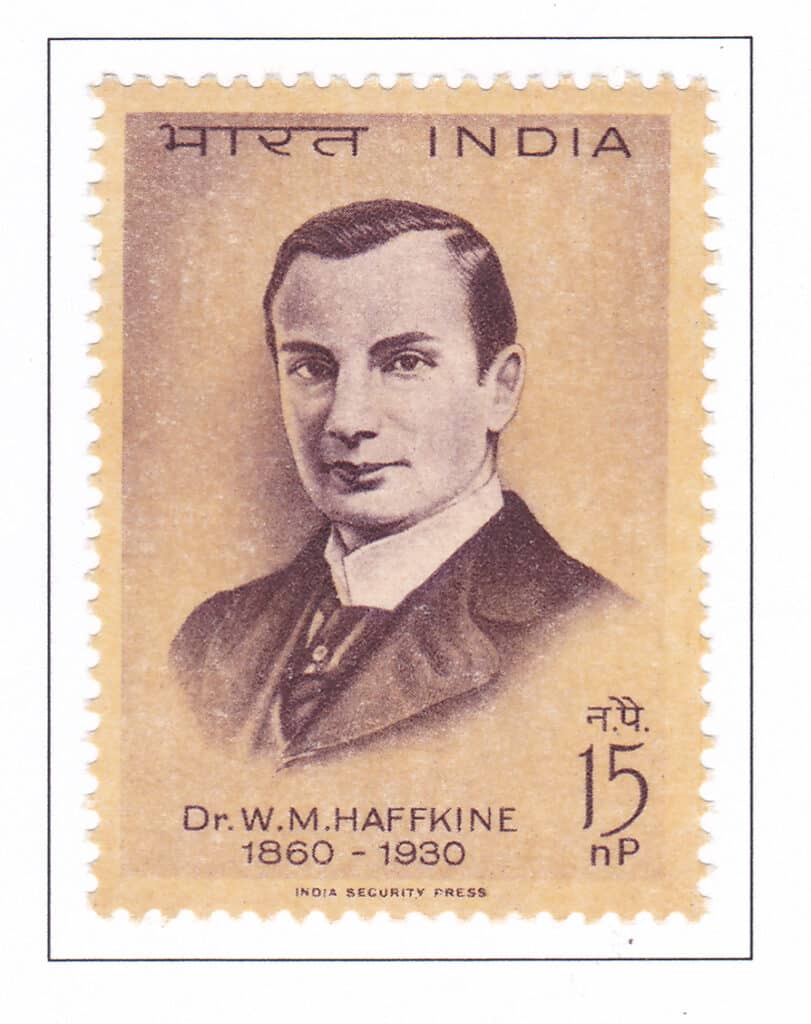
Dr. Waldemar M Haffkine, a pioneering bacteriologist, made significant contributions to public health, particularly in the fight against deadly diseases such as cholera and bubonic plague. Born on March 16, 1860, in Odessa, Russia, Haffkine’s early education in science laid the foundation for his illustrious career.
After graduating from the University of Odessa, Haffkine worked at the zoological museum in his hometown before becoming an Assistant Professor of Physiology at the University of Geneva in Switzerland at the age of 28. His association with renowned scientists like Louis Pasteur and Élie Metchnikoff influenced his work in microbiology and immunology.
Haffkine’s groundbreaking achievement came in the development of a vaccine against cholera, a deadly disease prevalent at the time. His cholera vaccine, successfully tested in India in 1893, proved to be highly effective and was widely adopted worldwide.
In 1896, when an epidemic of bubonic plague struck Bombay, Haffkine arrived from Calcutta to combat the disease. Working tirelessly at the Petit Laboratory in Grant Medical College, he overcame numerous challenges to develop a vaccine against the plague. On January 10, 1897, Haffkine publicly inoculated himself with the newly developed plague vaccine to demonstrate its safety, laying the foundation for plague prophylaxis and saving countless lives.
For his outstanding contributions to public health, the Government of India conferred upon him the title of the Companion of the Indian Empire (C.I.E.). Haffkine retired from India in 1914 and settled in France, where he continued his research until his death on October 26, 1930.
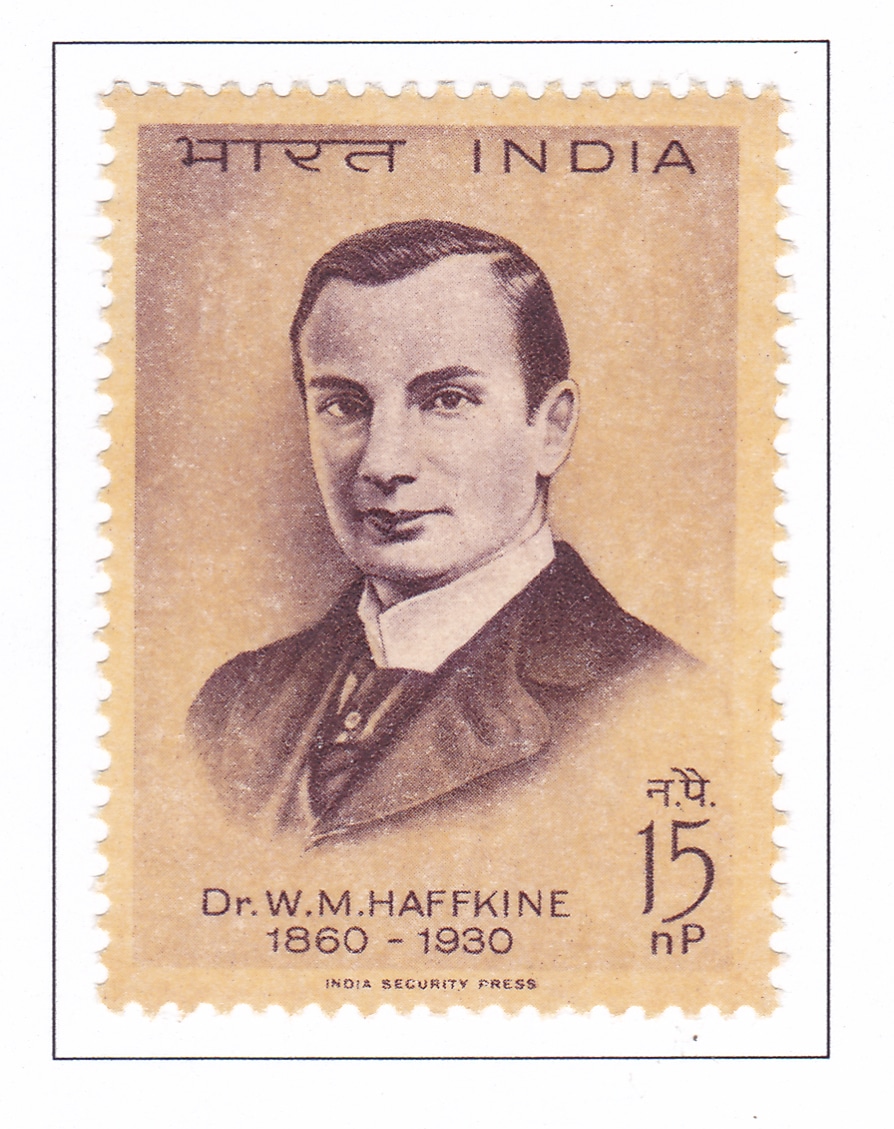
Haffkine’s legacy lives on through the Haffkine Institute in Bombay, named in his honor, which continues to conduct research in the field of communicable diseases. The commemorative stamp issued by the Posts and Telegraphs Department on his 104th birth anniversary is a fitting tribute to his invaluable contributions to humanity.
For More Information
Read more here: