Danish India: Letters Before the Adhesive Stamp
Tranquebar and Serampore linked the Indian coast, Bengal and Copenhagen through company letters, private shipping and the British Indian post.
Tranquebar and Serampore connected the Indian coast, Bengal and Copenhagen through company correspondence, private shipping and the British Indian post.
Tranquebar and Serampore linked the Indian coast, Bengal and Copenhagen through company letters, private shipping and the British Indian post.
Tranquebar and Serampore lay in different Indian settings; company rule, the Crown and British occupations frame how their letters are read.
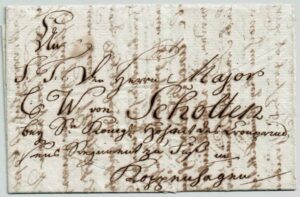
A Tranquebar letter of 1792 and the surviving letter-copybooks show why a trading link is not yet a proven postal route.
Christian VII’s 27 clauses set up three letter offices, a locked mail chest, registers and receipts: a chain of responsibility for every letter.
The 1803 tariff named different currencies and letter classes; the planned timetable soon met a first voyage five months late.
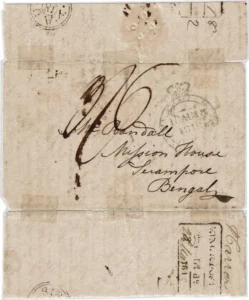
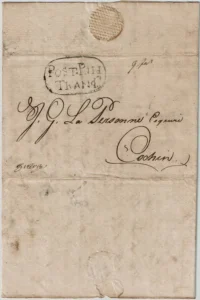
Two letters link a Danish settlement with British postal handling, in opposite directions and twelve years apart.
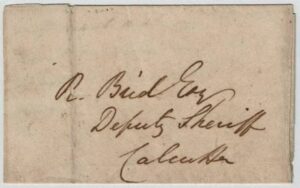
A clear paid letter of 1800, a disputed unpaid letter of 1822 or 1823, and two marks of 1843: read the dateline, the strike and the caption separately.
The 1837 Serampore press letter and the Tranquebar mission archive tie postal objects to the institutions that made and kept them.
The sale of 1845 came before Denmark’s first stamps; a good collection records each whole letter and the evidence it carries.