Portuguese India: Stamps, Territories and the Post Across Borders
From Goa’s numerals of 1871 to royal portraits, republican overprints, Ceres, the decimal reform and the move to Indian administration.
From Goa's 1871 numerals to royal portraits, republican overprints, Ceres, the decimal reform and the transition to Indian administration.
From Goa’s numerals of 1871 to royal portraits, republican overprints, Ceres, the decimal reform and the move to Indian administration.
A framework of places, dates, inscriptions and currencies for the stamps and postal items of Portuguese India.
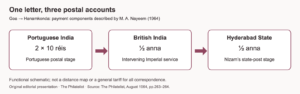
Royal letters, Mediterranean routes and one cover that crossed three administrations show how the post came before stamps.
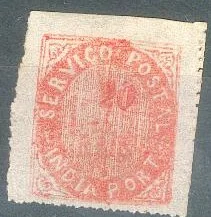
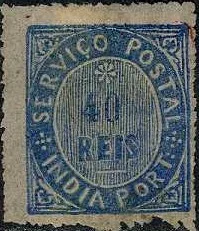
Five first values, the New Goa press, and the difference between an order to print and a stamp that was issued.
How to identify the local numeral issues, keeping the stamps of the time apart from later collectors’ material.
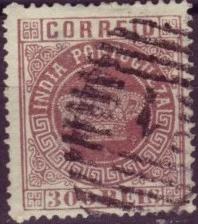
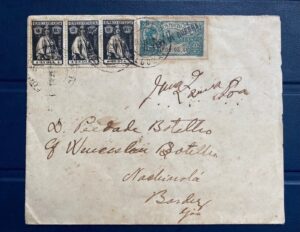
A Crown design shared across the colonies became a distinctive Portuguese India field through new values and repeated changes of value.
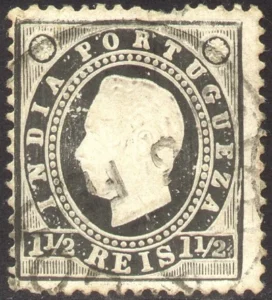
Luís I’s embossed head and the two Carlos I designs give a framework for the royal definitives and their later adaptations.
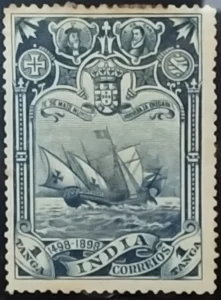
The commemoratives of 1898 turned the voyage of 1498 into a sequence of stamps that the republic later adapted.
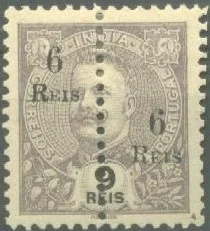
Republican overprints, the stamp shortage of 1912 and the surcharge decree of 1913, with the quantities of the time and a registered Daman cover.
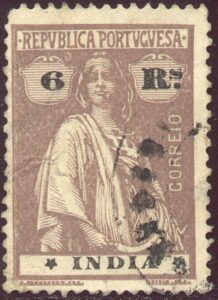
A long-lived definitive whose paper and perforation groups matter as much as its familiar republican figure.
Due stamps and adapted ordinary stamps record the other side of the postal account: money to be collected.
The extra stamp on a letter may pay a levy rather than postage or a deficiency: identify its job before working out a rate.
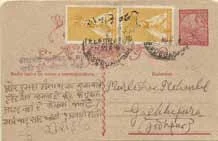
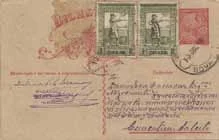
Postal cards keep their manufacture, printed instructions and business use, which a cut-out impression loses.
The St Francis Xavier issue and the Portugal and São Gabriel definitives began two different picture programmes in the early 1930s.
Separate the airmail stamps, the navigator pictorials and the colonial commemorations before reading a route or a franking.
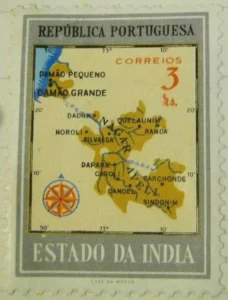
Later issues showed historical people, religion, philately and territorial claims, while older picture stocks went on receiving new values.
The decree of 1958, the change at the counter in 1959 and the stamps actually reported on sale are three different things.
The political transfer, the old postal material that survived it and the proposals that were never issued each need their own chronology.
Dated cancellations, numeral obliterators and cross-border frankings become useful when their jobs are kept apart; with the Indian rates of 1907.