About this stamp
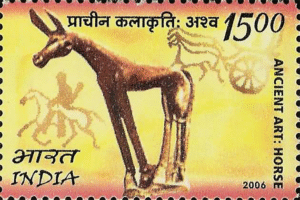
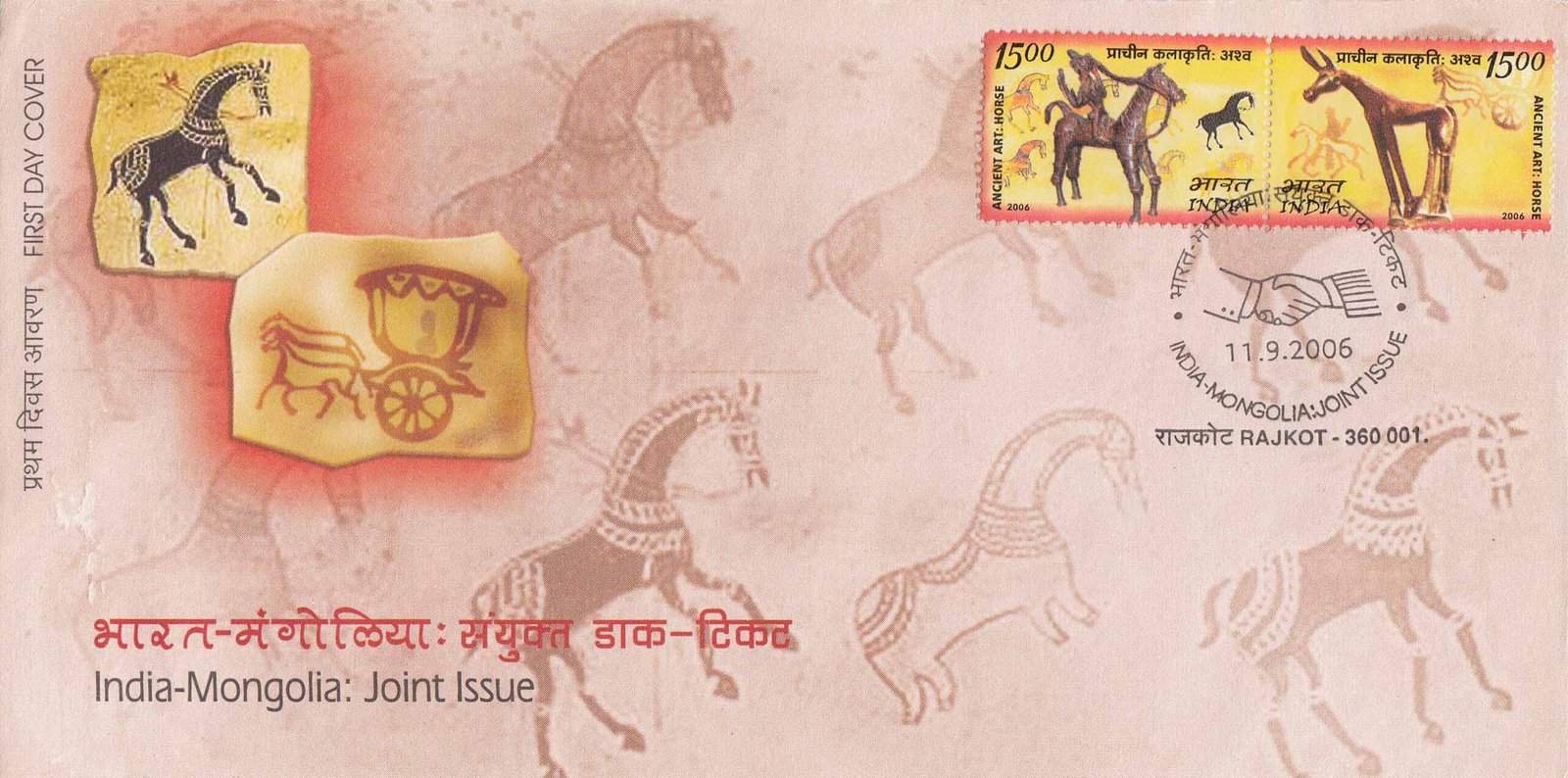
The Replica of Equestrian Deity Rao Dev is a striking example of India’s rich folk metal art tradition. This sculpture represents the equestrian deity Rao Dev and reflects the remarkable craftsmanship of tribal artisans from the Bastar region of central India. Known for its intricate ornamentation and graceful form, the statue showcases the artistic excellence associated with traditional metal casting techniques practiced for centuries in the region.
The bronze idol is crafted using the ancient lost-wax casting technique, a method widely practiced by skilled metal artisans known as Ghadva metalsmiths. This technique allows for highly detailed and finely ornamented sculptures, which are characteristic of the folk metal images produced in Bastar. The delicate embellishments and balanced composition of the statue demonstrate the extraordinary skill and creativity of these artisans.
The Bastar region, located in present-day Chhattisgarh (earlier part of Madhya Pradesh), has long been celebrated for its vibrant tribal culture and distinctive artistic traditions. Metal sculptures from this region often depict deities, animals, and scenes from everyday life, reflecting the deep spiritual and cultural beliefs of local communities.
The equestrian representation of Rao Dev symbolizes power, protection, and divine authority, themes that frequently appear in traditional Indian folk art. The statue stands as a fine example of how indigenous craftsmanship preserves religious symbolism while expressing aesthetic beauty.
Commemorative Postage Stamp
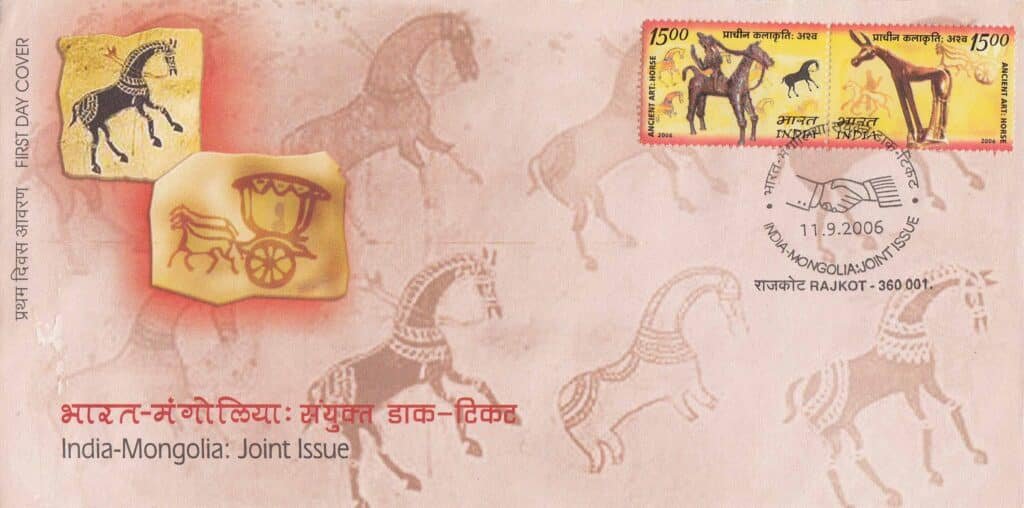
The Replica of Equestrian Deity Rao Dev was featured on a commemorative postage stamp jointly issued by the postal administrations of India and Mongolia to mark the 50th anniversary of diplomatic relations between the two countries.
This philatelic issue highlights the rich artistic heritage of both nations—India’s traditional Bastar metal craft represented by the Rao Dev sculpture, and Mongolia’s ancient artistic legacy represented by a Bronze Age horse statue—symbolizing the enduring cultural friendship between the two countries.